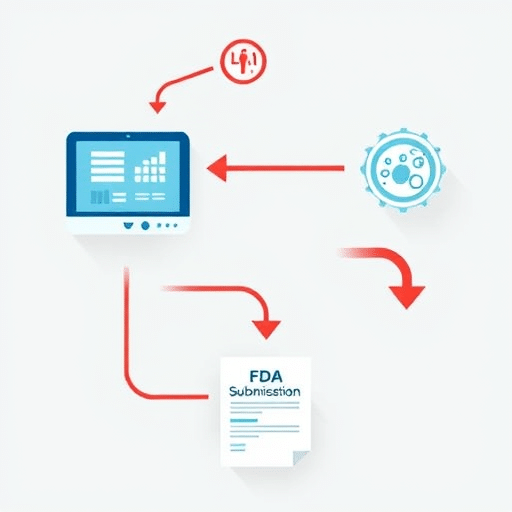
Wearable Heart Rate Accuracy in Clinical Trials is more than a technical specification; it is a cornerstone of data integrity when remote patient monitoring is embedded into study protocols. As the number of FDA‑cleared wearable devices multiplies, investigators must adopt systematic evaluation methods that map device outputs to the stringent accuracy thresholds mandated for clinical endpoints. This article outlines a practical framework for benchmarking wearable heart rate data against FDA metrics, ensuring that remote monitoring contributes trustworthy evidence to regulatory submissions.
1. Understand the FDA Accuracy Benchmarks
The FDA’s Digital Health Software Precertification Program and the 2023 guidance on “Accuracy of Wearable Cardio‑Vascular Devices” set out explicit criteria. Key metrics include:
- Mean Absolute Percentage Error (MAPE) < 3% for resting heart rate in a controlled setting.
- Root Mean Square Error (RMSE) < 5 bpm for ambulatory monitoring during moderate activity.
In clinical trials, the FDA often requires that devices meet these thresholds during a validation study that mirrors the target population and activity profiles. Familiarity with the exact numerical targets allows investigators to design their own benchmark studies confidently.
1.1 Align Study Design With FDA Requirements
When drafting a protocol, specify:
- The population characteristics (age range, comorbidities).
- The activity states to be captured (rest, walking, light exercise).
- Reference standards (telemetry, ECG, or dual‑sensor systems).
- Statistical methods for comparing wearable outputs to reference data.
Early alignment ensures that the validation data will be admissible during regulatory review.
2. Build a Robust Reference Data Collection Plan
Accuracy assessment hinges on high‑quality reference data. The most common approaches are:
- Simultaneous ECG recording using a 12‑lead or wearable Holter device.
- Use of FDA‑cleared pulse oximeters as secondary references for resting heart rate.
- Implementation of gold‑standard telemetry during controlled laboratory tests.
Design a calibration protocol that captures data across the entire spectrum of expected heart rates, including arrhythmic events if the study population includes such conditions.
2.1 Timing and Synchronization
Precise time alignment is critical. Use synchronized clocks (NTP) across devices, or embed timestamps in the raw data streams. Misalignment can artificially inflate error metrics. Consider a pilot test to verify synchronization before full deployment.
3. Data Pre‑Processing and Quality Assurance
Raw wearable data often contains gaps, outliers, or motion artifacts. Follow a structured pipeline:
- Signal Quality Index (SQI) filtering: Discard segments with SQI below 80%.
- Artifact detection via threshold‑based rules (e.g., sudden >20 bpm changes within 5 seconds).
- Imputation strategies: linear interpolation for brief gaps (<10 s), or more advanced Kalman filtering for longer missingness.
- Batch processing with automated logs to ensure reproducibility.
Document every step, including software versions and parameters, to satisfy audit trails required by regulatory bodies.
3.2 Handling Irregular Heartbeats
Arrhythmias present a special challenge. Instead of excluding them, quantify device performance separately for sinus rhythm and arrhythmic segments. The FDA guidance allows separate performance metrics for each rhythm category, providing a more nuanced assessment.
4. Statistical Comparison Framework
Accuracy evaluation uses several complementary statistical tools:
- Mean Absolute Error (MAE) and Mean Absolute Percentage Error (MAPE) for overall bias.
- Root Mean Square Error (RMSE) to capture variability.
- Bland–Altman analysis for agreement limits.
- Correlation coefficients (Pearson or Spearman) to assess linearity.
- Concordance correlation coefficient (CCC) for combined bias and precision.
Present results in tabular form, stratified by activity level, age group, and device type. A heat map can visually depict where the wearable meets or exceeds FDA thresholds.
4.1 Confidence Intervals and Power Calculations
Include 95% confidence intervals for each metric. Conduct a power analysis during protocol development to ensure sufficient sample size for detecting clinically meaningful differences (e.g., a 2 bpm bias). The FDA expects well‑documented statistical justification.
5. Device Cross‑Comparison and Batch Consistency
When multiple device models or firmware versions are deployed, evaluate consistency across batches:
- Perform a between‑device variability study using identical subjects.
- Apply mixed‑effects models to partition variance into device, subject, and residual components.
- Verify serial port and firmware integrity by checking checksums and cryptographic signatures.
Document any systematic differences and plan for re‑calibration if necessary.
6. Integrating Accuracy Metrics Into Trial Data Workflow
Embed accuracy checks into the data management pipeline:
- Automated alerts for device drift (e.g., sudden change in baseline heart rate).
- Real‑time dashboards that display MAPE and RMSE per participant.
- Periodic audit reports that flag segments exceeding FDA limits.
These mechanisms enable proactive intervention, reducing data loss and ensuring the trial’s integrity.
6.1 Example of a Real‑Time Dashboard
Visualize daily heart rate trends, overlay reference data points, and color‑code deviations. A simple implementation could use a JavaScript chart library, with thresholds highlighted in red when MAE > 3 bpm.
7. Reporting Findings to Regulatory Bodies
Prepare a Validation Report that includes:
- Study objectives and design.
- Device and reference data acquisition details.
- Statistical analysis plan and results.
- Graphical representations (scatter plots, Bland–Altman plots).
- Discussion of limitations and mitigation strategies.
Use clear, concise language and adhere to the FDA’s data formatting guidelines. A well‑structured report facilitates a smoother regulatory review process.
7.1 Addressing Common FDA Queries
- Explain the rationale for chosen activity levels.
- Justify exclusion criteria for low‑SQI data.
- Provide a risk assessment of potential measurement errors.
Anticipating these questions can reduce the back‑and‑forth often seen in the pre‑submission phase.
8. Future Trends in Wearable Accuracy Evaluation
Emerging technologies promise to refine accuracy assessments:
- Artificial intelligence algorithms for artifact rejection and adaptive calibration.
- Multi‑sensor fusion, combining photoplethysmography with accelerometry and inertial data to improve motion‑robust heart rate estimation.
- Blockchain‑based data provenance to ensure tamper‑evidence in remote monitoring.
Incorporating these innovations early can position trials at the cutting edge, potentially easing regulatory scrutiny.
9. Practical Checklist for Investigators
- Define FDA accuracy thresholds relevant to the study endpoint.
- Design reference data collection aligned with target population.
- Implement robust data preprocessing and artifact handling.
- Apply comprehensive statistical comparison methods.
- Assess device consistency across batches.
- Integrate real‑time accuracy monitoring into the workflow.
- Compile a detailed Validation Report for regulatory submission.
This checklist serves as a quick reference to ensure no critical step is overlooked.
10. Internal Link Placeholder
By rigorously applying these evaluation strategies, investigators can demonstrate that wearable heart rate data are both accurate and reliable, meeting FDA expectations and safeguarding the scientific validity of clinical trials.
Conclusion
Evaluating wearable heart rate accuracy for clinical trials is a multi‑faceted process that blends regulatory insight, meticulous data handling, and robust statistical analysis. When each component aligns with FDA benchmarks, the resulting remote monitoring data can serve as a trustworthy foundation for clinical decisions and regulatory approvals. As wearable technology continues to evolve, so too will the methodologies for validating their performance, ensuring that clinical trials remain at the forefront of precision medicine.