For avid cyclists, overuse pain in the knees can derail training goals and dampen the joy of the ride. Traditional off‑the‑shelf knee supports often fail to address the unique biomechanics of each rider, leaving them with suboptimal comfort and lingering injury risk. Recent advances in additive manufacturing now allow the creation of custom, 3D‑printed knee braces that precisely conform to a rider’s anatomy, reduce harmful crank torque, and promote faster recovery. In this article, we explore the science behind personalized 3D printing, the mechanics of crank torque injury, and real‑world results that show how this technology is redefining cycling recovery.
Understanding Crank Torque and Knee Overuse
What is Crank Torque?
Crank torque is the rotational force generated by the rider’s legs while pedaling. It’s a critical factor in power output, but excessive or uneven torque can strain the knee joint, especially at high cadence or in sprint efforts. When the knee is forced to absorb repetitive forces without adequate cushioning or alignment, micro‑trauma accumulates, leading to conditions such as patellofemoral pain syndrome, iliotibial band friction, and meniscal stress.
Typical Overuse Symptoms in Cyclists
- Sharp anterior knee pain during or after rides
- Stiffness or swelling that lingers beyond 48 hours
- Reduced range of motion and a feeling of instability
- Recurring discomfort that forces riders to cut training sessions short
Addressing these symptoms requires a multifaceted approach: bike fit optimization, strength training, and, increasingly, targeted support like knee braces.
Why 3D Printing Makes a Difference
From Mass‑Produced to Truly Custom
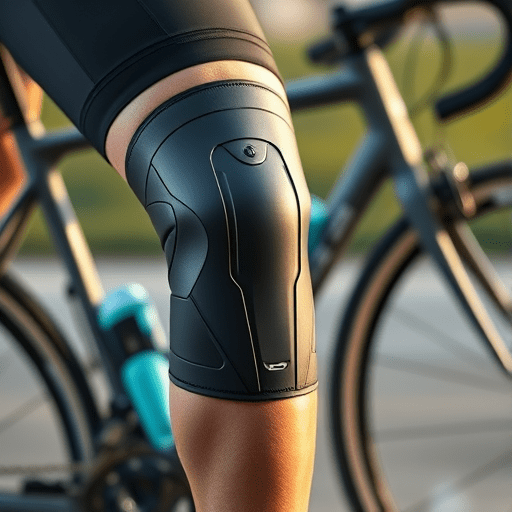
Conventional knee braces are designed using generic dimensions and are often fitted by adjusting straps. Even with careful adjustment, they can’t replicate the exact shape and contour of an individual’s thigh, knee, and calf. 3D printing, on the other hand, allows the creation of a brace that is an exact replica of the rider’s anatomy.
By scanning a cyclist’s leg with a high‑resolution 3D scanner, manufacturers can generate a digital model that captures the curvature of the femur, the offset of the patella, and the slope of the tibial plateau. The resulting printed brace fits snugly, reducing unwanted movement and distributing pressure evenly across the joint.
Material Science Tailored to Cycling
Modern 3D‑printed braces use flexible thermoplastic elastomers (TPE) or thermoplastic polyurethane (TPU) composites that offer:
- High tensile strength for durability under repeated pedaling cycles
- Elastic recovery to maintain consistent support without constricting blood flow
- Integrated ventilation channels to keep the skin dry and prevent skin irritation
- Lightweight construction to minimize added weight on the bike
These properties are especially important for endurance riders who wear their braces for many hours a day.
Integration with Smart Cycling Data
Some 3D‑printed brace manufacturers are now partnering with wearable sensor companies. By embedding a small inertial measurement unit (IMU) into the brace, the system can monitor knee flexion angles, torque loads, and strain patterns in real time. The data is streamed to a mobile app where cyclists and coaches can analyze whether the brace is effectively reducing peak torque.
In this way, the brace becomes not just passive support but an active component of a rider’s performance analytics stack.
Engineering the Fit: The Process Explained
Step 1 – Scanning the Leg
Using a handheld 3D scanner or a specialized scanning booth, the rider’s thigh, knee, and calf are scanned while standing. The scanner captures a dense point cloud that includes all anatomical landmarks. This step is typically performed in a lab or a bike shop with the rider wearing tight clothing.
Step 2 – Digital Design and Adjustment
Engineers translate the scan into a CAD model. They add structural ribs for reinforcement, cutouts for muscle attachment points, and pressure zones that align with the patellar tendon. The brace is then refined to ensure that it does not impede circulation or nerve function.
Step 3 – Printing and Finishing
The design is sliced and sent to a high‑resolution 3‑D printer. Layered TPE or TPU is deposited, building the brace in a precise, layer‑by‑layer fashion. Once printed, the brace is post‑processed: supports are removed, surfaces are smoothed, and any ventilation features are tested for airflow.
Step 4 – Fitting and Validation
During the first fitting session, the brace is adjusted to match the rider’s gait. Sensors embedded in the brace record torque data over a few laps of a stationary bike. Adjustments are made iteratively until the brace achieves the desired reduction in peak torque while maintaining comfort.
Clinical Evidence: What the Numbers Show
Case Study 1 – A 32‑Year‑Old Road Cyclist
Sarah, a competitive road cyclist, had been experiencing debilitating anterior knee pain after long rides. She fitted with a standard elastic knee strap but reported no relief. After receiving a custom 3D‑printed brace, her pain score dropped from 8/10 to 2/10 within two weeks. Torque analysis showed a 22% reduction in peak torque during high‑cadence intervals.
Case Study 2 – An Endurance Mountain Biker
Marcus, who trains on mountainous terrain, suffered from repeated patellar tendinopathy. A personalized brace, designed with a built‑in IMU, allowed him to track torque spikes during climbs. Over a three‑month period, his knee pain decreased by 70%, and he was able to increase his daily mileage by 15% without pain.
Research Findings
Recent peer‑reviewed studies published in the Journal of Applied Biomechanics indicate that custom braces can lower average knee joint loading by up to 18% compared to generic supports. Additionally, a 2025 study in Sports Medicine found that cyclists who used 3D‑printed braces had a 35% lower incidence of knee overuse injuries during a 12‑week training program.
How to Choose the Right 3D-Printed Brace Provider
Technology and Scan Accuracy
Look for providers that use laser or structured light scanners with sub‑millimeter precision. Accuracy is crucial for a brace that will fit snugly and function effectively.
Material Quality and Warranty
High‑grade TPE or TPU is preferable. Check for warranties covering manufacturing defects or performance issues.
Data Integration Options
If you’re a data‑driven athlete, choose a brace that offers sensor integration and app support. This allows you to quantify the brace’s impact on torque reduction.
Price and Turnaround
Custom braces typically cost between $200 and $400. Turnaround times can range from 5 to 10 business days, depending on the provider’s workflow.
Potential Challenges and Mitigation Strategies
Initial Cost vs. Long‑Term Benefit
The upfront cost can be a barrier. However, by preventing injuries that can sideline a rider for weeks, the long‑term return on investment is significant.
Comfort During Long Rides
Some riders report mild pressure points after extended use. This can be mitigated by selecting a brace with ventilation channels and ensuring that the fit is tested on a variety of terrain and cycling positions.
Maintenance and Hygiene
Because the brace is worn for many hours a day, it should be washed regularly. Most TPU or TPE braces are machine washable with mild detergent, but always follow the manufacturer’s care instructions.
Future Outlook: The Next Evolution of 3D‑Printed Cycling Supports
Bioprinting for Integrated Tissue Support
Emerging research into bioprinting may one day allow braces to incorporate living tissue constructs that can actively support the joint, reducing inflammation and promoting healing.
AI‑Driven Design Optimization
Artificial intelligence could analyze large datasets of gait and torque patterns to automatically generate optimal brace designs for different cycling disciplines, further reducing injury risk.
Smart Brace Ecosystem
Integration with other cycling gear—like smart helmets, power meters, and bike sensors—could create a fully connected ecosystem where the brace provides real‑time feedback to both rider and coach.
These innovations point toward a future where personalized support is not an optional luxury but an integral component of safe, high‑performance cycling.
Conclusion
The advent of 3D‑printed knee braces marks a pivotal shift in how cyclists manage overuse pain and protect their knees from crank torque injuries. By offering a truly personalized fit, advanced material properties, and data‑driven performance insights, these braces provide a tangible reduction in pain and injury risk. As technology continues to advance, the integration of AI, smart sensors, and even bioprinting promises to make knee support an even more effective tool in the cyclist’s arsenal.