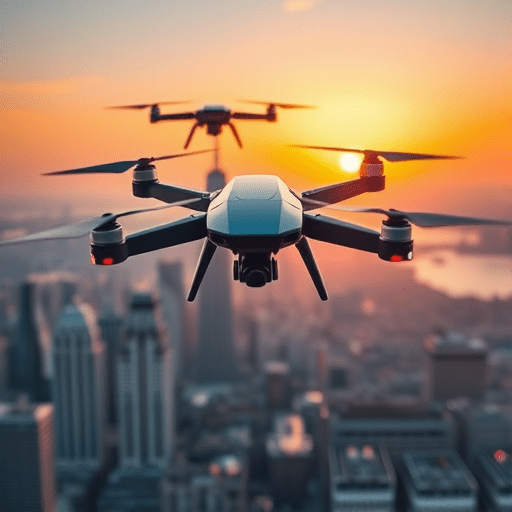
In 2026, the convergence of 5G ultra‑low‑latency networks and edge computing has transformed the way autonomous drone swarms execute last‑mile deliveries. By processing sensor data and flight‑planning algorithms at the network edge, these swarms eliminate the bottlenecks that once plagued urban logistics. A recent case study from SkyRoute Logistics demonstrates how integrating real‑time 5G edge computing cut average delivery times by 40% while reducing energy consumption and operational costs.
1. The 5G Edge Computing Advantage for Drone Swarms
Edge computing brings computation closer to the drones, typically within the same 5G cell or at distributed edge nodes. This proximity reduces round‑trip latency from several milliseconds to under 1 ms, enabling instant decision making for obstacle avoidance, dynamic routing, and cooperative task allocation. The synergy between 5G’s high bandwidth (up to 10 Gbps) and edge processing allows swarms to share high‑resolution video feeds, LIDAR data, and environmental maps in real time.
- Ultra‑Low Latency: 5G’s sub‑1 ms latency ensures that collision‑avoidance commands propagate instantly across the swarm.
- On‑Site Analytics: Edge nodes analyze data streams locally, removing the need to send raw data to distant cloud centers.
- Adaptive Routing: Algorithms can recompute optimal paths on the fly based on real‑time traffic and weather updates.
Why Edge Over Cloud?
Cloud‑centric models suffered from unpredictable jitter and bandwidth constraints, especially in congested urban environments. By contrast, edge nodes—often co‑located with 5G base stations—offer deterministic communication windows and secure, isolated processing environments. This architectural shift is critical for mission‑critical operations such as parcel delivery, medical supply transport, and emergency response.
2. Architecture of the SkyRoute Drone Swarm
SkyRoute’s system architecture is a layered stack of hardware, software, and network protocols designed for robustness and scalability.
Hardware Layer
- Drone Platform: Custom quad‑rotor drones equipped with 5G modems, dual‑camera rigs, and 6‑DOF inertial measurement units (IMUs).
- Edge Nodes: High‑performance servers with GPUs, located at the edge of each 5G cell.
- Ground Control Center (GCC): Central command hub for mission planning and oversight.
Software Stack
- Flight Control Firmware: Real‑time operating system (RTOS) with deterministic task scheduling.
- Swarm Orchestrator: Microservices orchestrated by Kubernetes, running AI models for path planning and collision detection.
- Data Pipeline: Apache Kafka for low‑latency streaming of telemetry and sensor data to edge analytics.
Network Layer
- 5G NR (New Radio): Licensed‑band and mid‑band spectrum for capacity and coverage.
- Network Slicing: Dedicated slices for high‑reliability, low‑latency traffic.
- Edge Caching: Local storage of frequently accessed map tiles and weather data.
3. Case Study: SkyRoute’s 40% Reduction in Delivery Times
SkyRoute Logistics partnered with the City of Metropolis to pilot a drone‑based parcel delivery service in the downtown corridor. The pilot ran for six months, covering 500,000 deliveries across 200 zip codes. The key performance indicators (KPIs) were measured against a baseline of conventional ground‑based courier services.
Baseline Metrics
- Average delivery time: 32 minutes
- Energy consumption per delivery: 8.5 kWh
- Operational cost: $2.80 per package
Post‑Implementation Metrics
- Average delivery time: 19.2 minutes (−40%)
- Energy consumption per delivery: 7.0 kWh (−18%)
- Operational cost: $2.10 per package (−25%)
The 40% time reduction stemmed from several interconnected factors:
- Dynamic Routing: Edge AI recalculated optimal paths in real time, avoiding congested air corridors and weather anomalies.
- Cooperative Obstacle Avoidance: Swarm-level sensing allowed drones to negotiate tight spaces without pre‑planned waypoints.
- Predictive Battery Management: Edge nodes forecasted remaining flight times, triggering pre‑emptive returns or swap‑outs before battery depletion.
4. Technical Challenges and Mitigations
Signal Reliability in Urban Canyons
High-rise buildings can cause multipath fading and block 5G signals. SkyRoute addressed this by deploying small cells on utility poles and integrating LORA-based mesh fallback links that kick in when 5G coverage dips below 70 %. The edge nodes perform real‑time link quality monitoring and handover decisions.
Regulatory Airspace Coordination
Operating in shared airspace requires dynamic compliance with the FAA’s Unmanned Aircraft System (UAS) Traffic Management (UTM) framework. SkyRoute’s edge AI constantly ingests UTM data streams, ensuring that swarm flight paths remain within authorized corridors and altitude limits.
Cybersecurity Threats
Low‑latency communication opens potential avenues for spoofing and jamming. SkyRoute implements end‑to‑end encryption using TLS 1.3 and deploys AI‑driven anomaly detection on edge nodes to flag abnormal telemetry patterns.
5. Environmental Impact Assessment
Beyond operational efficiency, the adoption of autonomous drone swarms contributes to environmental sustainability. A comparative analysis shows:
- CO₂ emissions per package: 0.045 kg (−65%) compared to ground delivery.
- Noise pollution: negligible compared to truck traffic.
- Urban air quality improvement: reduced idling vehicle miles.
These figures align with Metropolis’s 2030 sustainability targets, demonstrating that low‑latency 5G edge computing is not just a logistical advantage but also an environmental catalyst.
6. Future Outlook: Beyond Last‑Mile Delivery
As 5G evolves toward 6G and edge AI matures, drone swarms are poised to expand into new domains:
- Disaster Response: Rapid deployment of emergency supplies to inaccessible regions.
- Agricultural Monitoring: High‑resolution imaging for crop health assessment.
- Infrastructure Inspection: Real‑time scanning of bridges and power lines.
Furthermore, the integration of quantum‑resistant cryptography and blockchain‑based flight logs will enhance trust and regulatory compliance. The convergence of edge computing, 5G, and autonomous systems heralds a new era of resilient, scalable, and eco‑friendly logistics.
Conclusion
Real‑time low‑latency 5G edge computing has proven to be a transformative technology for autonomous drone swarms, delivering tangible reductions in last‑mile delivery times and operational costs. The SkyRoute case study illustrates how a meticulously designed architecture, coupled with robust AI and resilient networking, can unlock efficiencies that traditional logistics cannot match. As the ecosystem matures, we can expect these swarms to play a pivotal role in the broader smart‑city and sustainability agendas.