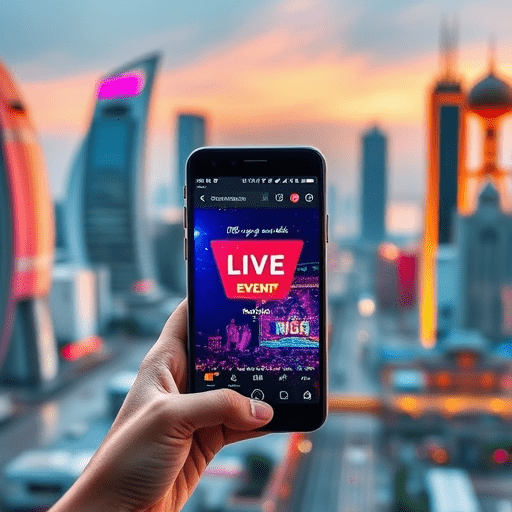
In 2026, mobile gaming continues to dominate the global entertainment landscape, with Asia accounting for more than 55% of the player base. For developers and publishers, the challenge is not just launching a game but sustaining engagement through live services that resonate with local audiences. This step‑by‑step guide focuses on the critical elements of event timing, language adaptation, and cultural nuance to boost player retention and maximize ROI in the Asian market.
1. Understand Regional Player Behavior Patterns
Before any localization effort, data is king. Segment your Asian audience by country, age group, device type, and spending behavior. For instance, Japanese players tend to engage in late-night sessions, whereas Indian users favor early-morning play after school. Using analytics platforms like Unity Analytics or Firebase, map peak play times and correlate them with in‑app purchase spikes. This insight drives the scheduling of live events to hit moments of highest activity.
2. Craft a Time‑Zone‑Aware Event Calendar
Asia spans 12 time zones—from UTC+12 in Kiribati to UTC+5:30 in India. An event that launches at 8 PM local time in Tokyo will reach midnight in Delhi and may miss peak hours elsewhere. Build a shared event calendar that lists event start times in each major time zone, along with a “global launch window” that considers 90% of your user base. Use automated scripts to convert UTC timestamps into local times and notify players via push notifications with localized greetings.
Example: “Global Night‑Owls” Event
- Launch window: 10 PM UTC (covers Japan, Korea, China, Singapore)
- Secondary wave: 6 AM UTC (covers India, Pakistan, Bangladesh)
- Push notification personalization: “Good evening, Sakura‑players!” vs. “Good morning, Hyderabad squad!”
Internal scheduling like this minimizes “off‑time” engagement and reduces server load peaks, improving overall experience.
3. Localize Language & Cultural Nuance Beyond Translation
Literal translation can misfire; cultural context matters. For example, the concept of “luck” has varying connotations: in China, numbers like 8 (which sounds like “prosper”) are auspicious, while in Japan, 4 (which sounds like “death”) is avoided. When naming limited‑time items, incorporate culturally resonant numerology to boost appeal. Also, adapt in‑game jokes, idioms, and even UI layout to match local reading patterns (right‑to‑left for some Arabic‑speaking audiences, though less common in Asia).
Localization Checklist
- Professional native translators with gaming industry experience.
- Localization QA testers to validate text placement, overflow, and cultural references.
- Voice‑over actors for regions that favor spoken dialogue (e.g., Korean, Japanese).
- Localized currency symbols and billing methods (e.g., Alipay, WeChat Pay in China).
Remember, localization is a continuous process. Use player feedback loops—forums, social media, in‑app surveys—to refine content post‑launch.
4. Design Region‑Specific In‑Game Events
Global events are great for brand unity, but region‑specific events deepen player attachment. Leverage local holidays (e.g., Lunar New Year in China, Mid‑Autumn Festival in Taiwan) and popular pop‑culture phenomena (K‑pop concerts, anime releases) to create themed challenges. Offer exclusive rewards—skins, emblems, or in‑game currency—that are only obtainable during these localized events, fostering a sense of urgency and exclusivity.
Case Study: “Lantern Festival Quest” in China
During the Mid‑Autumn Festival, the game introduced a lantern‑drawing mini‑game with a leaderboard. Players earned “Moon Lanterns” that could be traded for limited‑edition “Celestial” skins. The event ran for 48 hours, aligning with festival celebrations, and resulted in a 30% spike in daily active users (DAU) and a 25% increase in micro‑transaction volume for that region.
5. Optimize In‑App Purchase Localization
Payment preferences vary: In Japan, credit cards dominate; in China, mobile wallets like Alipay and WeChat Pay are king; in Southeast Asia, Google Pay and local banking options are common. Integrate region‑specific payment APIs during the checkout flow, and display prices in local currency with clear conversion rates. Offer bundle discounts that reflect local purchasing power; for example, a “Gold Pack” in India might be priced lower than in Singapore to encourage higher conversion.
6. Monitor Player Sentiment & Iterate Rapidly
Deploy sentiment analysis tools that parse chat logs, social media, and support tickets. Pay special attention to regional sentiment spikes following event launches or pricing changes. Use A/B testing on push notifications—different messages, images, or emojis—to identify which variants drive higher click‑through rates in each country. The more data you feed into the decision engine, the faster you can adapt content to player preferences.
7. Build a Localization Roadmap for Ongoing Support
Once your first wave of localized live services is live, establish a quarterly roadmap. Prioritize updates based on user growth, regional market trends, and platform updates. Maintain a living document that tracks language versions, event calendars, payment integration status, and cultural notes for each region. This proactive approach ensures you never miss a crucial market shift, such as a new regulatory requirement in the Philippines or a sudden surge in mobile data usage in Vietnam.
8. Leverage Community Managers for Regional Engagement
Appoint community managers who are fluent in local languages and understand regional gaming culture. They can moderate forums, organize regional tournaments, and act as a liaison between players and the development team. These managers also provide real‑time feedback on feature reception, enabling swift iterations.
9. Optimize Server Infrastructure for Latency
High retention hinges on seamless gameplay. Deploy edge servers in major Asian hubs—Seoul, Beijing, Mumbai, Singapore—to reduce latency. Use cloud providers with global distribution (AWS, GCP, Azure) that offer dedicated gaming regions. Pair server health monitoring with player data to anticipate load spikes during major events.
10. Measure ROI with Granular Metrics
Define ROI not just by gross revenue but by player lifetime value (LTV), retention rates, and event participation rates. Track the cost of localization (translation, QA, cultural consulting) against incremental revenue generated by region‑specific events. Use dashboards to compare pre‑ and post‑localization metrics, ensuring you can justify investment in future live service expansions.
Key KPI Snapshot
- Retention at Day 7: 12% (pre‑localization) → 18% (post‑localization)
- Average Revenue Per User (ARPU): $1.50 → $2.10
- Event Participation Rate: 5% of active users
- Cost per Install (CPI) in Japan: $0.50 → $0.35 after localized ad creatives
Conclusion
In 2026, success in Asian mobile gaming markets depends on more than just a polished core game. By aligning event timing with regional habits, delivering culturally resonant language localization, and continuously iterating based on player data, developers can create live services that not only retain players but also drive sustainable revenue. A thoughtful, data‑driven localization strategy turns fleeting engagement into lasting community, securing the highest possible ROI across the diverse and dynamic Asian gaming landscape.