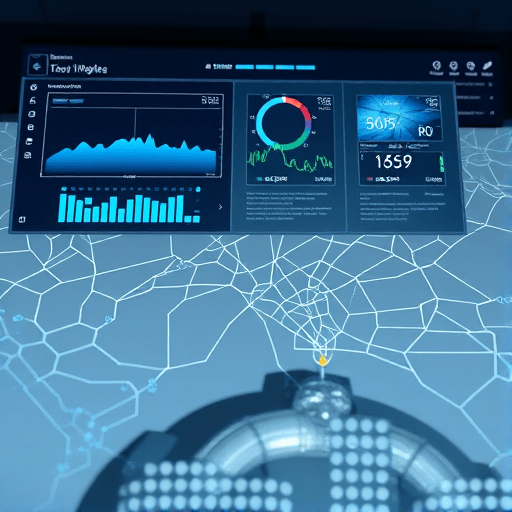
In 2026, water utilities face an escalating challenge: aging pipe networks that are increasingly prone to leaks, corrosion, and sudden failures. The Digital Twin Approach to Predictive Care for Aging Water Pipelines offers a powerful, data-driven solution that turns raw sensor streams into actionable insights, enabling proactive repairs and extending infrastructure life. By replicating the physical pipeline in a virtual environment, utilities can simulate stress scenarios, detect anomalies early, and schedule maintenance before costly outages occur.
Sensor Integration Strategies for Legacy Pipe Networks
Deploying a digital twin starts with robust sensor coverage. Legacy systems often lack the data backbone required for real-time monitoring, so utilities must choose sensors that can retrofit existing infrastructure without major disruptions.
- Acoustic Emission Sensors: Mounted on external pipe sections, they capture the subtle vibrations that precede leaks or ruptures. Their low power consumption and compatibility with buried pipes make them ideal for older networks.
- Pressure and Flow Transducers: Installed at strategic junctions, these provide continuous readings of pressure gradients and flow rates, revealing blockages or sudden pressure drops.
- Fiber-Optic Distributed Temperature Sensing (DTS): Coated onto existing pipelines, DTS tracks temperature changes along kilometers of pipe, a proxy for corrosion hotspots and thermal expansion issues.
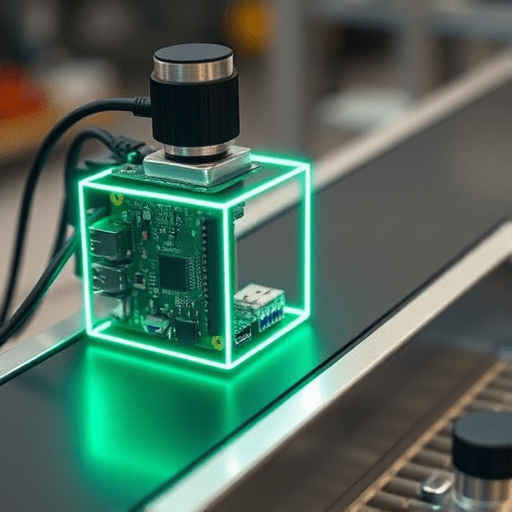
- IoT Gateway Hubs: Act as the bridge between field sensors and the digital twin platform, aggregating data, performing edge preprocessing, and ensuring secure transmission.
Choosing the right combination of sensors requires balancing coverage, cost, and maintenance overhead. The goal is to achieve dense, high-fidelity data that feeds the twin’s simulation engine while minimizing installation downtime.
Building a High-Fidelity Simulation Engine: From 3D Models to Real-Time Dynamics
Once sensor data streams in, the next step is to build a virtual replica that mirrors the physical pipeline’s geometry, material properties, and operational conditions. The simulation engine must support real-time dynamics to reflect current system states.
- 3D CAD and GIS Integration: Merge legacy GIS shapefiles with 3D CAD models of pipe segments, valves, and fittings. Open-source tools like Blender or Autodesk Fusion 360 can be used to refine the geometry before exporting to the twin platform.
- Material Characterization: Use historical inspection reports and material testing data to assign appropriate pipe material models—steel, ductile iron, or polymer—along with corrosion rate constants.
- Boundary Condition Modeling: Define inlet pressures, demand profiles, and external forces (ground movement, temperature fluctuations) to drive the hydraulic simulation.
- Numerical Solver Integration: Implement finite element or finite volume solvers that can process sensor inputs in near real time. The solver must handle non-linearities arising from pressure surges and pipe fatigue.
The fidelity of the simulation directly impacts the twin’s predictive capability. By continuously updating the model with live data, utilities can observe how the pipeline responds to transient events and forecast degradation trends.
Data Analytics and Predictive Algorithms: Turning Sensor Noise into Actionable Insights
Raw sensor data is often noisy and voluminous. Advanced analytics transform this noise into meaningful predictions about pipe health.
- Signal Processing Filters: Wavelet transforms and Kalman filters clean acoustic and pressure data, isolating leak signatures from ambient vibrations.
- Anomaly Detection Models: Unsupervised learning techniques, such as Isolation Forest or Autoencoders, flag abnormal patterns that may indicate early corrosion or mechanical failure.
- Predictive Maintenance Algorithms: Survival analysis and Weibull models estimate the remaining useful life of individual pipe sections, feeding into prioritized repair schedules.
- Root-Cause Attribution: Bayesian networks correlate sensor anomalies with specific failure mechanisms (e.g., internal corrosion vs. external mechanical damage), improving diagnostic accuracy.
These analytics are not static; they evolve with the twin’s knowledge base. Every repaired or replaced segment feeds back into the model, refining predictive accuracy over time.
Edge Computing and Cloud Orchestration: Keeping the Digital Twin Responsive
Balancing latency, bandwidth, and security is critical for real-time twin operations. A hybrid edge-cloud architecture addresses these challenges.
- Edge Node Preprocessing: Local gateways perform initial filtering, compression, and timestamping, reducing the data volume transmitted to the cloud.
- Secure MQTT Streams: Lightweight messaging protocols ensure low-latency delivery of sensor packets to the central platform.
- Cloud-Hosted Simulation Core: High-performance computing clusters run the heavy-duty simulation engine, leveraging GPU acceleration for rapid hydraulic analysis.
- Orchestration Platforms: Kubernetes or Docker Swarm manage containerized services, ensuring fault tolerance and scalability as the pipeline network expands.
By distributing processing across edge and cloud layers, utilities maintain real-time responsiveness even when network connectivity fluctuates.
Lifecycle Management: Extending Pipeline Life Through Iterative Twin Refinement
Predictive care is an iterative loop: detect, analyze, act, and learn. A disciplined lifecycle management strategy ensures that the digital twin remains aligned with the physical pipeline’s evolving state.
- Routine Validation Checks: Quarterly cross-validation between sensor data and simulation outputs identifies drift in the twin’s parameters.
- Field Inspection Feedback: Manual inspections of flagged segments provide ground truth that refines model assumptions and anomaly thresholds.
- Adaptive Maintenance Scheduling: The twin’s output feeds directly into the asset management system, automatically generating work orders for preventive repairs.
- Knowledge Base Evolution: Each maintenance cycle updates the twin’s historical database, improving predictive accuracy for future cycles.
When utilities adopt this closed-loop approach, they transform a reactive maintenance culture into a proactive, data-driven one, effectively extending the useful life of aging water pipelines.
Adopting a digital twin for predictive care is not a one-time project; it requires continuous investment in sensors, analytics, and human expertise. However, the payoff—reduced leak rates, lower emergency repair costs, and extended asset lifespan—makes it an indispensable strategy for modern water utilities navigating the challenges of an aging infrastructure.