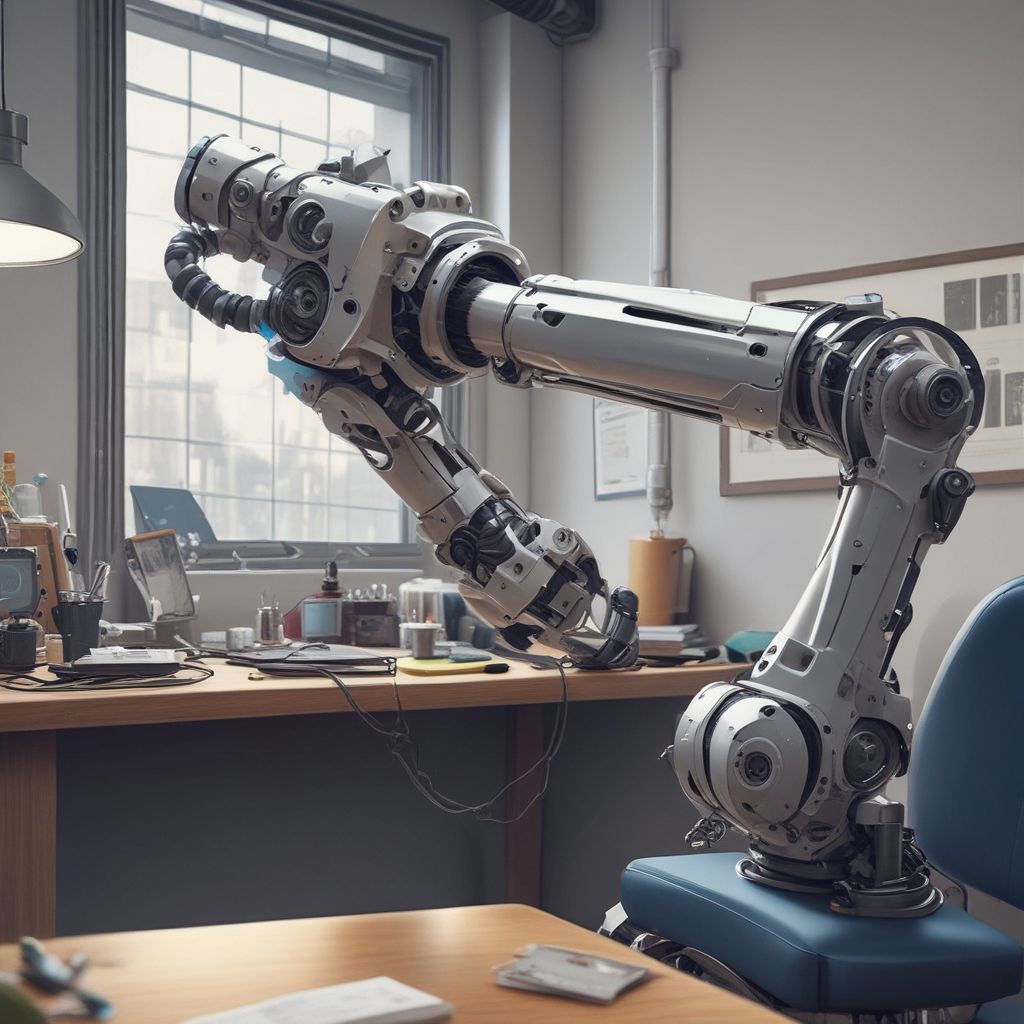
Morphing Soft Robots: On-the-Fly Shape-Shifting Automation for Dynamic Environments
In the evolving landscape of automation, morphing soft robots are emerging as a transformative force. These machines, powered by modular actuators and compliant materials, can reconfigure their shape in real time, adapting to changing tasks and environments without human intervention. By blending flexibility with functional precision, morphing soft robots unlock new possibilities across manufacturing, medicine, and robotics, pushing the boundaries of what automated systems can achieve.
1. Foundations of Morphing Soft Robots
Traditional robotics relies on rigid links, joints, and preprogrammed motion sequences. Morphing soft robots, however, are built from elastomeric materials, hydrogels, or shape-memory polymers that deform under stimuli such as pressure, temperature, or electrical signals. The key to their adaptability lies in modular actuators—small, interchangeable units that can be combined, removed, or reoriented on demand.
1.1 Material Innovations
- Silicone Elastomers: Offer high compliance and durability, ideal for actuators that require repeated bending.
- Electroactive Polymers (EAPs): Convert electrical energy into mechanical strain, enabling fast, fine-grained shape changes.
- Shape-Memory Alloys (SMAs): Respond to temperature variations by returning to a predefined shape, useful for snap-actuation.
- Hydrogels: Swell or contract with fluid uptake, perfect for bio-inspired soft grippers.
1.2 Control Strategies
Real-time shape-shifting demands sophisticated control algorithms. Two predominant approaches are:
- Feedforward Control: Uses precomputed trajectories based on the robot’s current configuration, offering speed but limited adaptability.
- Feedback Control with Sensing: Integrates force sensors, pressure transducers, or vision systems to adjust actuators dynamically, providing robustness in unpredictable settings.
2. Modular Actuators: The Building Blocks
Modularity is the heart of morphing soft robots. By designing actuators as discrete, interchangeable modules, designers can reconfigure robots on-the-fly to suit new tasks. Consider a chain of modules that can be extended, contracted, or reoriented to transform a simple gripper into a climbing arm.
2.1 Types of Modular Actuators
- Compliant Tubular Actuators: Flexibly bend when pressurized, enabling continuous curvature.
- Segmented Elastic Bars: Act as joint-like elements that can be locked or unlocked by a pneumatic or magnetic mechanism.
- Programmable Soft Grippers: Combine suction, gripping, and release in a single module.
2.2 Assembly and Reconfiguration
Reconfiguration can occur manually, via a robotic tool, or autonomously. Smart connectors—magnetic, snap-fit, or adhesive—allow modules to latch together or detach without tools, dramatically reducing downtime. Moreover, a network of microcontrollers embedded in each module ensures coordinated action, making the robot behave as a cohesive system.
3. Real-Time Shape Shifting in Dynamic Environments
When a morphing soft robot encounters a new environment, its shape adaptation process unfolds in three stages:
- Perception: Sensors gather data about the surroundings—obstacle positions, surface textures, and required task parameters.
- Decision: An onboard AI evaluates the situation, selecting a suitable configuration from a library or generating a new one on the fly.
- Actuation: Modular actuators adjust, allowing the robot to bend, extend, or wrap around objects seamlessly.
For example, in a cluttered warehouse, a soft robot can fold its arms to navigate narrow aisles, then unfold them to lift heavy pallets. In a surgical setting, the same robot could adapt its shape to fit the patient’s anatomy, delivering precise interventions while minimizing trauma.
4. Applications Across Industries
4.1 Manufacturing Automation
In assembly lines, morphing soft robots can replace multiple rigid machines. Their adaptability enables:
- Multi-tool Integration: One robot can perform drilling, sanding, and polishing by reshaping itself.
- Human-Robot Collaboration: Softness reduces collision risks, making co-robots safer for workers.
- Rapid Reconfiguration: Products with varying shapes can be handled without downtime.
4.2 Medical Robotics
Soft robots are revolutionizing healthcare by offering:
- Minimally Invasive Surgery: Flexible arms navigate through narrow vessels.
- Personalized Prosthetics: Shape-shifting prostheses adapt to user movement and pressure distribution.
- Rehabilitation Devices: Assistive exoskeletons adjust stiffness based on patient fatigue levels.
4.3 Search and Rescue
In disaster zones, morphing soft robots can:
- Traverse Irregular Terrain: By changing shape, they squeeze through rubble.
- Carry Sensors: Deploy cameras or chemical detectors as needed.
- Self-Repair: Modules can replace damaged parts autonomously.
4.4 Exploration Robots
For planetary missions, soft robots can adjust to uneven landscapes, reducing impact forces and enabling sampling from varied rock formations.
5. Challenges and Future Directions
While morphing soft robots show immense promise, several hurdles remain:
- Power Efficiency: Many actuators require significant energy; research into bio-inspired power sources could mitigate this.
- Material Durability: Repeated deformation can lead to fatigue; advanced polymers with self-healing properties are under investigation.
- Control Complexity: Managing a large network of modules demands scalable, low-latency algorithms.
- Standardization: Creating universal connectors and communication protocols will accelerate adoption.
Future research is focusing on integrating sensory feedback directly into actuators, enabling “soft sensing” that provides both force and positional data. Coupling this with machine learning will allow robots to learn optimal configurations from experience, further enhancing their adaptability.
Conclusion
Morphing soft robots, empowered by modular actuators and real-time control, are redefining automation across diverse sectors. Their ability to transform shape on demand brings unparalleled flexibility, safety, and efficiency to manufacturing, medicine, and beyond. As material science and AI continue to converge, the line between rigid and soft robotics will blur, ushering in an era where machines seamlessly adapt to the world around them.
Explore the possibilities of morphing soft robots in your next project.