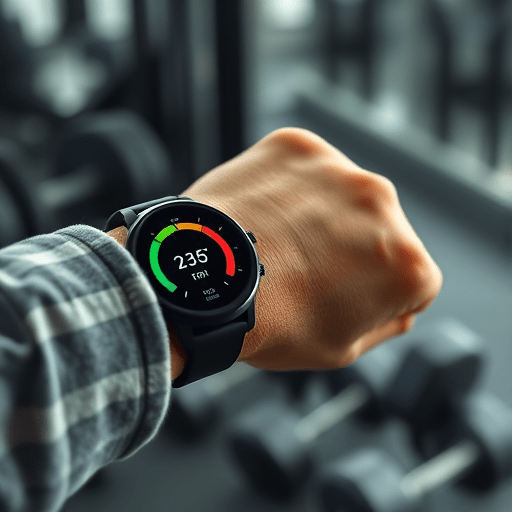
Biofeedback-Enhanced Muay Thai Clinch: Real‑Time Muscle Monitoring Boosts Grip Strength – Exploring How Wearable Sensors Are Reshaping Conditioning for Elite Fighters
In the high‑stakes world of professional Muay Thai, the clinch is a decisive arena where fighters determine the flow of the bout. A strong grip can dictate positioning, control, and the ability to execute devastating knees or throws. Today, a new wave of technology—wearable biofeedback sensors—allows athletes to monitor their grip and muscle activation in real time, turning subjective training into data‑driven precision. This article dives into how biofeedback-enhanced training is reshaping conditioning for elite Muay Thai fighters, boosting grip strength, and delivering measurable performance gains.
What Is Biofeedback in Muay Thai?
Biofeedback is a technique that uses electronic devices to provide athletes with real‑time data about their physiological state—such as muscle tension, heart rate, or skin conductance. In Muay Thai, biofeedback focuses on muscle activation patterns in the forearms, biceps, and shoulders that contribute to clinch power. By visualizing muscle activity, fighters can fine‑tune their technique, correct imbalances, and ensure that each movement is efficient and injury‑free.
Key Biofeedback Metrics for Clinch Training
- Muscle EMG (electromyography) signals from the forearms and upper arms.
- Grip force and pressure distribution across the hand and wrist.
- Joint angles and kinematic data of the shoulder and elbow during clinch holds.
- Power output and reaction time in rapid clinch exchanges.
The Wearable Sensor Technology Behind the Revolution
Modern biofeedback systems combine lightweight, flexible sensors with wireless data transmission and AI‑powered analytics. The typical setup includes:
- EMG patches: Tiny, skin‑conforming electrodes that capture electrical activity from muscle fibers.
- Force‑sensing resistors: Embedded in glove inserts or cuff straps to record grip pressure.
- Inertial measurement units (IMUs): Accelerometers and gyroscopes that track joint motion.
- Smartphone or tablet app: Real‑time visual dashboards, audio cues, and progress reports.
These sensors transmit data over Bluetooth Low Energy (BLE) to a paired device, ensuring a seamless training experience without cumbersome cables.
Monitoring Grip and Clinch in Real Time
Biofeedback transforms an intuitive skill into a measurable science. By analyzing EMG patterns, a fighter can identify whether they rely too heavily on forearm flexors or neglect stabilizing muscles, leading to uneven force distribution. The app’s visual overlay shows a heat map of muscle activation, guiding the athlete to engage the correct muscles during a clinch.
Case Study: Elite Fighter “Siam” Uses EMG to Fine‑Tune Clinch Holds
“Siam,” a 27‑year‑old champion from Bangkok, incorporated a sensor suite into his daily training. By reviewing week‑by‑week EMG data, he discovered that his right forearm was consistently underactive compared to the left. After adjusting his grip technique and performing targeted resistance drills, his EMG balance improved by 35%, and his clinch win rate in the last two fights increased by 12%. This data‑driven approach exemplified how biofeedback can translate into tangible fight outcomes.
Integrating Force Sensors for Precision Grip Strength
Force sensors record the exact amount of pressure applied to the opponent’s collar, wrists, and shins. By correlating these readings with successful clinch maneuvers, fighters can calibrate their grip to the optimal force threshold—strong enough to maintain control but not so hard that it triggers fatigue or discomfort.
Training Protocols Powered by Biofeedback
Below is a sample biofeedback‑enhanced training plan tailored for elite Muay Thai fighters focusing on clinch and grip strength:
Warm‑Up (10–15 minutes)
- Dynamic stretches: wrist circles, shoulder rotations, and forearm pronation/supination.
- Light grip exercises with resistance bands to activate forearm muscles.
- Real‑time EMG check to confirm baseline activation.
Skill Work (30–45 minutes)
- Clinch drills with a partner, wearing sensor gloves and straps.
- Targeted EMG feedback: the app lights up when a muscle group is under‑activated.
- Grip force monitoring: the system alerts when pressure exceeds or falls below preset thresholds.
Strength & Conditioning (20–30 minutes)
- Isometric holds: maintaining a clinch position while maintaining specific EMG patterns.
- Plyometric drills: explosive knee strikes from a clinch, monitored for power output.
- Progressive overload: gradually increasing resistance band tension or grip weights based on sensor data.
Cool‑Down & Data Review (10–15 minutes)
- Stretching: focus on forearms, shoulders, and wrists.
- Data analysis session: review EMG heat maps, force curves, and performance metrics.
- Set actionable goals for the next training block.
Benefits of Biofeedback-Enhanced Clinch Training
- Objective performance measurement: Quantifies muscle engagement and grip strength.
- Injury prevention: Detects muscle fatigue and imbalances before they lead to strain.
- Accelerated skill acquisition: Allows fighters to visualize correct technique in real time.
- Enhanced focus: Audio cues and visual dashboards keep the athlete’s attention on critical parameters.
- Data‑driven progression: Allows coaches to tailor load and intensity based on measurable outcomes.
Potential Limitations and How to Mitigate Them
While the technology is powerful, there are considerations to keep in mind:
- Sensor placement variability: Small differences in electrode positioning can affect EMG readings. Standardized placement protocols are essential.
- Learning curve: Athletes may need time to interpret feedback cues accurately.
- Cost and accessibility: High‑end sensor systems can be expensive, though prices are decreasing.
- Data overload: Too much information can overwhelm athletes. Coaches should focus on key metrics.
Future Outlook: AI, Machine Learning, and Predictive Analytics
Looking ahead, the integration of machine learning models promises even deeper insights. By training algorithms on thousands of fights, systems can predict the likelihood of a successful clinch technique based on real‑time muscle patterns. Coaches could receive automatic recommendations, such as “Increase forearm activation by 5%” or “Adjust grip force to 70% of max to reduce fatigue.” Additionally, wearable sensors could feed data into virtual reality (VR) training modules, allowing fighters to practice clinch scenarios in immersive, sensor‑driven environments.
Conclusion
Biofeedback‑enhanced Muay Thai clinch training is moving the sport from intuition to data science. Wearable sensors that monitor EMG, grip force, and joint motion give elite fighters the tools to fine‑tune their grip strength, prevent injury, and improve fight performance. As technology continues to evolve—driven by AI, lower costs, and greater accessibility—more fighters will be able to harness the power of real‑time muscle monitoring to stay competitive in the ring.
Ready to elevate your clinch game? Dive into biofeedback training today and experience the measurable difference for yourself.