Zero-Knowledge Proofs Empower Patient Data Control: A Revolutionary Framework for Secure Medical Data Sharing
Zero-Knowledge Proofs (ZKPs) have long been a buzzword in cryptography, but their newest application—empowering patients to confirm medical data usage without revealing any personal details—marks a pivotal shift in how healthcare data is managed. By leveraging ZKPs, a cutting‑edge framework now allows patients to verify that their health information is being used appropriately, all while keeping the underlying data hidden from third parties. This breakthrough not only enhances privacy but also builds trust between patients, providers, and researchers.
Understanding Zero-Knowledge Proofs
At its core, a Zero-Knowledge Proof is a cryptographic protocol that lets one party prove to another that a statement is true without disclosing any information beyond the validity of the statement itself. Think of it as a way to prove you have a valid ticket to a concert without showing the actual ticket. In the context of healthcare, a patient can prove that a specific piece of data—such as a diagnosis or medication history—has been shared with a researcher or insurer, without revealing the data itself.
Why ZKPs Matter in Healthcare
- Privacy Preservation – Sensitive health records remain encrypted, inaccessible to anyone but the patient.
- Auditability – Patients receive verifiable logs of who accessed their data and for what purpose.
- Compliance – Aligns with regulations like HIPAA and GDPR that demand strict data protection.
- Interoperability – Enables secure data exchange across disparate systems without compromising confidentiality.
The New Framework: How It Works
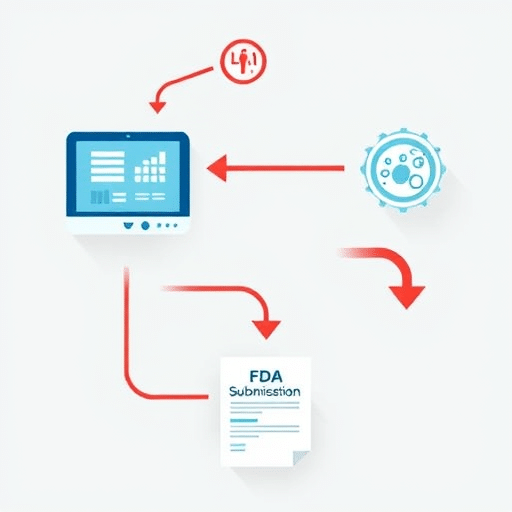
The newly released framework integrates ZKPs with blockchain technology to create a tamper‑proof ledger of data transactions. Here’s a simplified flow:
- Data Tokenization – Patient data is converted into cryptographic tokens that encode the information without exposing it.
- Proof Generation – When a data request is made, the system generates a ZKP that confirms the request’s legitimacy.
- Verification – The requester (e.g., a research institution) verifies the proof without accessing the actual data.
- Consent Confirmation – The patient receives a transparent record of the transaction, confirming that the data was used as agreed.
Because all proof operations occur on the blockchain, they are immutable and auditable by anyone with the appropriate permissions. This transparency is crucial for building patient confidence in data sharing processes.
Benefits for Patients
Patients stand to gain in several key areas:
- Control Over Personal Health Information – Only authorized entities can access specific data points.
- Reduced Risk of Data Breaches – Since raw data never leaves the patient’s encrypted vault, the attack surface shrinks dramatically.
- Informed Consent Management – Patients can see exactly how and when their data is used.
- Empowerment in Research Participation – Individuals can contribute to medical studies without compromising their privacy.
Benefits for Healthcare Providers and Researchers
While ZKPs safeguard patient privacy, they also streamline workflows for providers and researchers:
- Efficient Data Sharing – No need for cumbersome data de‑identification processes.
- Trust‑Based Collaboration – Secure proofs establish credibility, fostering partnerships across institutions.
- Regulatory Confidence – Demonstrable compliance with data protection laws reduces legal risk.
- Accelerated Innovation – Access to high‑quality, privacy‑preserving data fuels AI and predictive analytics.
Regulatory Alignment: HIPAA, GDPR, and Beyond
Regulators worldwide are increasingly focused on patient data protection. Zero-Knowledge Proofs align neatly with these mandates:
- HIPAA – The framework ensures that Protected Health Information (PHI) is only shared with explicit patient consent, satisfying the Privacy Rule.
- GDPR – By preventing the transfer of personal data in an identifiable form, the system supports the principle of data minimization.
- CCPA – California residents can verify that their data is not being misused, reinforcing consumer rights.
Legal Case Studies
Recent pilot programs in the United States and the European Union have demonstrated that ZKP‑based data sharing can pass rigorous audit tests. In one case, a university medical center used the framework to share anonymized cardiovascular data with a research consortium, achieving compliance with both HIPAA and GDPR without any data leakage.
Real‑World Applications
Zero-Knowledge Proofs are not just theoretical; they are already making an impact across various healthcare domains:
- Clinical Trials – Patients can confirm that their genomic data is used for a specific study, without exposing their entire genetic profile.
- Telemedicine Platforms – Securely verify that a patient’s diagnostic images are being accessed by a specialist.
- Insurance Claims – Proof that a claim was processed using the correct diagnosis code, preventing fraud.
- Public Health Surveillance – Aggregated data can be verified for accuracy without exposing individual cases.
Technical Overview: Key Components
For developers and tech enthusiasts, the framework comprises several critical components:
- zk-SNARKs (Zero-Knowledge Succinct Non-Interactive Argument of Knowledge) – The most efficient ZKP variant for healthcare data proofs.
- Ethereum Smart Contracts – Store proof metadata and enforce access rules.
- IPFS (InterPlanetary File System) – Decentralized storage for encrypted data tokens.
- API Gateway – Enables seamless integration with existing Electronic Health Record (EHR) systems.
By combining these elements, the framework offers low latency, high security, and scalability—key requirements for handling the vast amounts of data generated in modern healthcare settings.
Future Outlook: Toward a Privacy‑First Health Ecosystem
While the current framework is a significant leap forward, ongoing research and standardization efforts will further refine ZKP integration:
- Interoperability Standards – Developing open protocols so that any EHR system can participate.
- Zero-Knowledge Identity Solutions – Allowing patients to prove their identity and consent status without revealing personal details.
- Integration with AI Platforms – Enabling machine learning models to train on proof‑verified data, preserving privacy.
- Global Adoption Initiatives – Collaboration between governments, industry, and academia to promote widespread use.
As more healthcare stakeholders adopt ZKPs, we can expect a future where data privacy is built into the fabric of every transaction, not an afterthought.
Conclusion
Zero-Knowledge Proofs are reshaping the way patient data is shared, verified, and protected. By allowing individuals to confirm data usage without exposing sensitive information, the new framework bridges the gap between privacy and innovation. Whether you’re a patient seeking control, a researcher needing reliable data, or a provider navigating regulatory compliance, ZKPs offer a robust, future‑proof solution for secure medical data management.
Discover how to take control of your health data now.