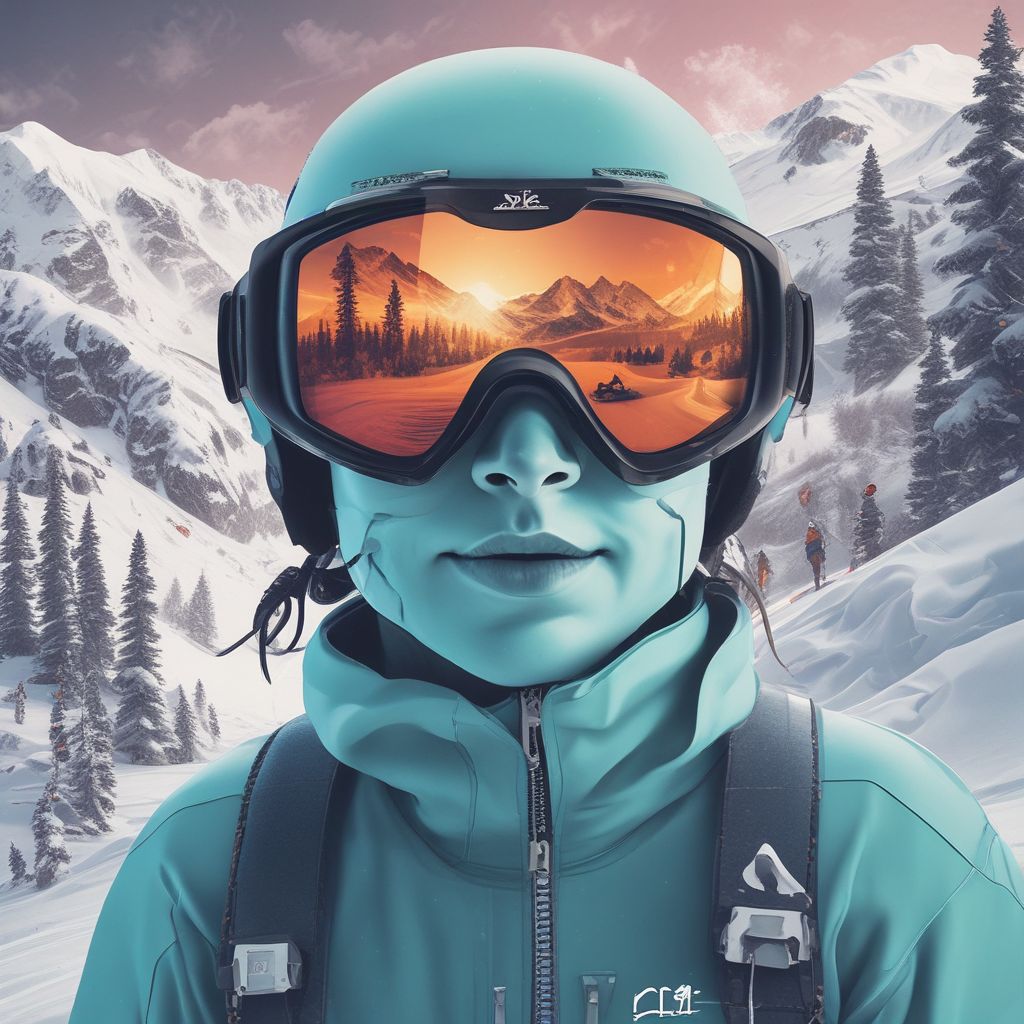
The rise of mixed reality in winter sports is changing how riders learn, navigate, and stay safe on the mountain. Mixed reality goggles overlay coaching cues, hazard lines and adaptive routes in real time, giving skiers and snowboarders instant feedback and smarter ways to explore terrain. Whether you’re a park shredder fine-tuning your grab or a backcountry enthusiast managing avalanche risk, these head-up displays are becoming essential tools that blend powder with pixels.
What mixed reality goggles actually do on the mountain
At their core, mixed reality (MR) goggles fuse real-world vision with contextual digital overlays. Cameras and sensors map the terrain, GPS and mapping data provide location awareness, and onboard processors render graphics that sit convincingly in the rider’s field of view. The result is a continuous stream of information—line suggestions, speed metrics, jump angles, and safety alerts—displayed without breaking focus from the run.
Key capabilities
- Real-time performance metrics: speed, airtime, turn radius and body position analytics.
- Coaching overlays: visual cues for stance, edge engagement, and ideal takeoff/landing vectors.
- Hazard detection: highlighted crevasses, thin snow, or avalanche-prone slopes using shared sensor and mapping data.
- Adaptive routing: dynamically suggested lines that adjust to skill level, weather, and slope conditions.
- Recording and replay: first-person capture with the ability to rewind and annotate a run for post-session coaching.
How real-time coaching changes learning curves
Traditional coaching relies on video review and delayed feedback; mixed reality short-circuits that loop. MR goggles can show the ideal line through a feature and project corrective cues—lean left, open shoulders, compress here—exactly when a rider needs them. This in-the-moment guidance accelerates motor learning, helping athletes build muscle memory faster and with fewer repetitions.
Coaching features typically include customizable difficulty levels, drill modes (e.g., carving, ollie timing, rail approach), and AI-personalized tips based on historical performance. Coaches can also connect remotely, watching a rider’s perspective and annotating the display during a run, creating a hybrid in-person/virtual coaching model that scales beyond the lift line.
Hazard lines and adaptive routes: a new layer of backcountry safety
One of the most consequential applications of MR is safety. In complex or remote terrain, the goggles’ overlays can mark hazard lines—areas where snowpack history, slope angle, or recent weather increase risk. These markers are derived from a mix of satellite imagery, crowd-sourced reports, local weather feeds, and onboard sensor fusion.
How adaptive routes work
- Terrain scanning: LIDAR-like depth mapping or stereoscopic cameras identify obstacles and slope gradient in real time.
- Risk modeling: algorithms weigh avalanche probability, obstacles, and rider skill to recommend safer lines.
- Dynamic updates: routes adapt as conditions change mid-run (e.g., wind loading, visibility loss).
For backcountry users, this means smarter decision-making without hand-held devices—route choices appear naturally in the user’s sightline, allowing continuous attention to the environment. When combined with beacon/party tracking, MR systems can also show teammate locations and suggest rendezvous routes if separation occurs.
Training applications: from park laps to elite performance
Mixed reality supports both recreational progression and elite training. For beginners, interactive guides teach basic edging and balance through gamified drills. Intermediate riders benefit from targeted coaching—visualizing a better takeoff arc or the precise timing for a butter trick. For elite athletes, MR provides fine-grained analytics: split-second timing, joint angles, and automated comparisons to idealized models or a coach’s demo run.
Common training modes include:
- Ghost line overlay: follow a translucent path laid over the snow showing the instructor’s or pro’s line.
- Skill drills: visual checkpoints appear along a run to practice timing and rhythm.
- Performance leaderboard: compare metrics with peers or past sessions to measure progress objectively.
Design, tech limitations, and ethical considerations
Mixed reality on the slopes is powerful but comes with trade-offs. Battery life, display brightness in high-reflectance snow, and latency are technical hurdles—rendering useful overlays without distracting lag is critical. Designers must prioritize unobtrusiveness: overlays should augment, not obscure, the real world.
Ethically, the technology raises questions about privacy, data sharing, and over-reliance on automation. Crowd-sourced hazard data can be invaluable, but it must be validated to avoid false confidence. Manufacturers and guide services need clear policies for data governance, and users should maintain traditional avalanche skills and situational awareness rather than outsourcing decisions entirely to a device.
Getting started: choosing and using MR goggles responsibly
When evaluating mixed reality goggles, consider these practical points:
- Visibility and optics: try displays in bright snow; check contrast and anti-glare performance.
- Battery and heat management: longer rides need swappable batteries or efficient power use.
- Data sources and offline mode: ensure maps and hazard models are available without cellular connectivity.
- Comfort and compatibility: helmet integration, fog management, and fit matter for long days.
- Safety-first features: emergency SOS, beacon interfacing, and manual override of routing suggestions.
Start with conservative settings—turn off nonessential overlays until comfortable—and practice in controlled terrain before relying on MR tools in higher-risk environments.
Conclusion: Mixed reality is turning skiing and snowboarding into a new kind of experience where coaching, navigation, and safety are visible in the moment. By combining sensor-rich hardware with smart software, MR goggles help riders learn faster, choose safer lines, and extend exploration into the backcountry with more confidence. Embrace the technology thoughtfully—use it to augment skills, not replace them.
Try a guided demo or demo-friendly rental to experience mixed reality on your next mountain day and see how powder and pixels can elevate every run.