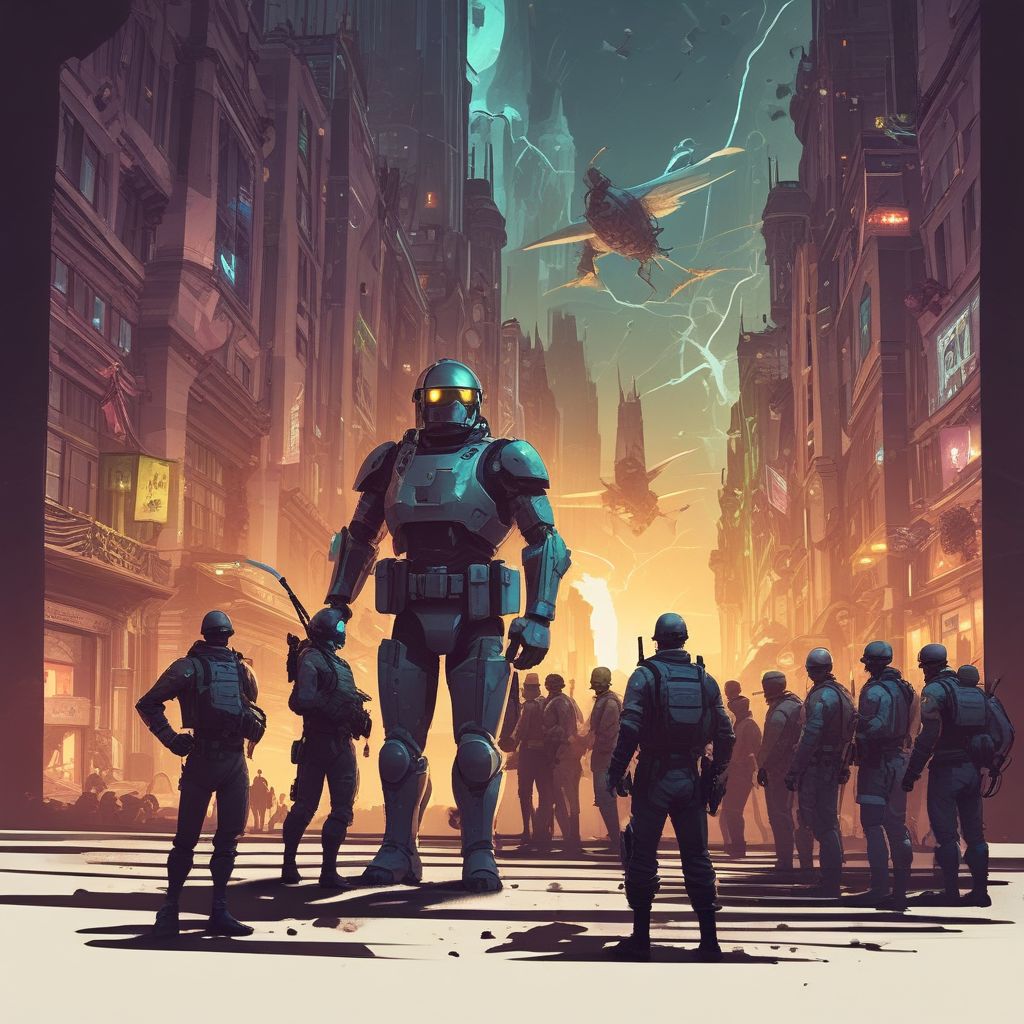
Player-run governments in FPS-MMOs can transform firefights into long-term stories, turning moment-to-moment combat into political plots, economic struggles, and territorial drama that persist across weeks or months. When players elect leaders, draft laws, tax resources, and fight over borders, the result is “battlefield bureaucracy”: emergent governance systems that reward civic strategy as much as marksmanship. This article outlines design principles, must-have systems, and practical tips for developers who want politics to matter on the frontlines.
Why governments matter in a shooter
Most FPS games emphasize short, tactical loops. Adding player-run governments introduces meta-level goals that extend engagement beyond each match. Governments provide social scaffolding—roles, incentives, and rituals—that turn individual wins into collective achievements. They also create narratives: coups, trade wars, and corruption scandals that give communities stories to tell and remember.
Core pillars of battlefield bureaucracy
1. Institutions and roles
Design clear, playable institutions: councils, executive positions, judicial panels, and bureaucratic roles such as treasurer or logistics officer. Each role should grant distinct mechanics (e.g., a treasurer controls taxation, a minister of defense manages militia recruitment) so players feel agency without requiring real-world expertise.
2. Meaningful economic systems
An in-game economy anchors political decisions. Implement resource production, trade routes, taxes, and market dynamics. Avoid overly complex simulations; focus on a few interdependent systems so that taxes fund upgrades, bribery matters, and shortages trigger political crises.
- Currency types: local credits (region-limited) and universal credits (server-wide)
- Production: player-operated facilities that generate materials or goods
- Trade: safe trade hubs and risky caravans connecting territories
3. Territorial control and combat
Territory must be meaningful but defendable. Combine frontline skirmishes with strategic objectives like resource nodes, supply depots, or governmental buildings. Capture mechanics should reward coordination—holding a watchtower alone is less valuable than controlling a supply chain.
Bureaucracy without boredom: making governance playable
Bureaucracy should be engaging. Replace spreadsheets with interactive interfaces: voting dashboards, law proposal wizards, and negotiation channels. Include incentives for participation—bonuses for active governance, political XP, and in-game recognition systems (titles, monuments, leaderboards).
Electoral and legislative design
- Electoral cadence: periodic elections create rhythms while avoiding fatigue (e.g., two-week terms).
- Voting systems: experiment with ranked-choice, party-list, or weighted votes tied to in-game achievements.
- Law proposals: simple templates for budgets, conscription laws, or trade tariffs that require signatures, debate windows, and enactment delays to allow counterplay.
Checks, balances, and anti-grief tools
Introduce institutional constraints: judicial review by independent players, impeachment mechanics, and limited executive veto power. Implement anti-grief safeguards such as minimum participation thresholds for radical laws, cooldowns on territorial razing, and decay of resources if territories sit unattended.
Encouraging emergent narratives
Emergence happens when systems interact unpredictably. Seed events and friction points—resource scarcity, migration waves, or external NPC threats—to force political choices. Allow player media (in-game newspapers, bulletin boards, radio channels) and monuments to memorialize contentious decisions, elevating social memory and storytelling.
Example emergent storyline
A coastal territory elects a coalition government that taxes trade to fund a navy. Pirates disrupt trade routes, prompting emergency powers for the admiral. The opposition accuses the government of using the navy to seize private ports, leading to an impeachment, a mutiny, and eventually a constitutional rewrite. Each stage produces player-driven missions, propaganda, and remembrance—exactly the long-term narratives designers want.
Technical and persistence considerations
Governments require persistent state and auditability. Store laws, elections, and ownership in a database with change logs for transparency. To avoid bloat, snapshot region states and allow decay: abandoned governments should dissolve after inactivity. Use reliable anti-cheat and moderation tools to preserve trust in political outcomes.
Scaling and server architecture
- Shard by region to reduce latency and make local politics feel distinct.
- Cross-shard diplomacy systems for trade and federations.
- Event queues for law proposals and election tallies to ensure consistency during peak activity.
Design checklist for implementation
- Define a limited set of government roles with unique, fun mechanics.
- Create a simple but consequential economy tight to territorial control.
- Build voting and law systems with safeguards against abuse.
- Design territorial capture that rewards coordination and strategy.
- Ensure persistence, transparency, and rollback tools for contested outcomes.
- Provide social tools for propaganda, record-keeping, and narrative creation.
- Instrument metrics: participation, bill proposals, turnover rates, and emergent incident frequency.
Measuring success and iterating
Track both quantitative and qualitative signals. High participation in votes, low rollback rates, and an ecosystem of player-run institutions indicate success. Complement metrics with community feedback and narrative audits—collect notable story arcs monthly and let designers tune incentives to nurture the healthiest political ecosystems.
Potential pitfalls and mitigations
Common issues include power consolidation, player burnout, and griefing. Mitigate by limiting consecutive terms, offering rotation bonuses, and making destructive actions costly or reversible. Provide official channels for dispute resolution and allow communities to create sub-governments or federations to decentralize power.
When done well, player-run governments in FPS-MMOs create a living backdrop for combat: every firefight gains context, every victory writes a line in a broader political saga. Designers who embrace institutions, economy, and territorial mechanics can catalyze compelling, emergent narratives that keep players invested long after the match ends.
Conclusion: Battlefield bureaucracy transforms shooters into social simulators where policies, trade, and border disputes generate long-term stories—prioritize clarity, incentives, and safeguards to make governance as thrilling as combat.
Ready to prototype a player-run government system for your FPS-MMO? Start sketching roles, a simple economy, and a territorial map—test with a small community and iterate.