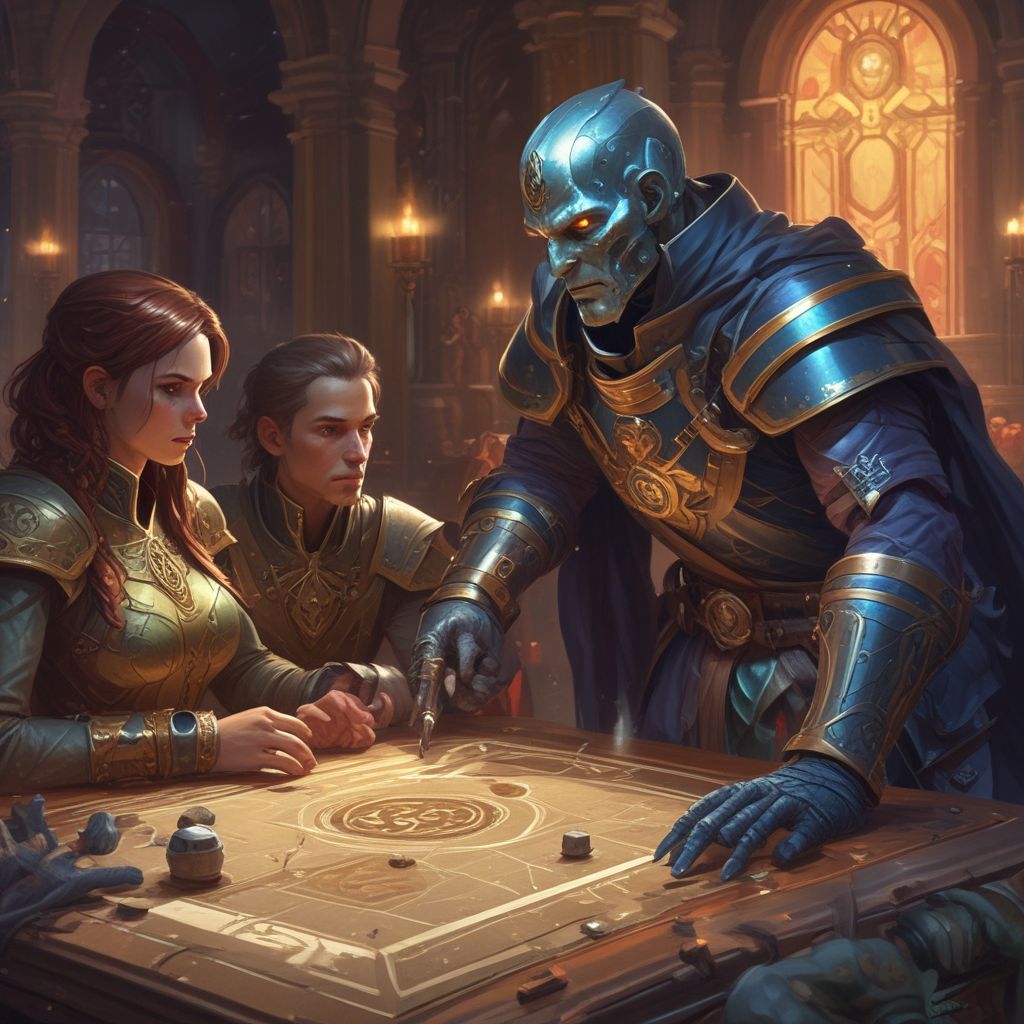
The rise of AI-driven NPC diplomacy is reshaping strategy RPGs by letting non-player factions adapt, negotiate, and betray in ways that feel genuinely alive. AI-driven NPC diplomacy gives designers tools to craft emergent political landscapes—alliances that shift overnight, bribes that reshape frontlines, and believable betrayals that sting—while challenging long-held assumptions about player control and story stability.
Why NPC diplomacy matters now
Traditional NPCs often follow scripted paths: they declare war, make preset offers, and react on rails. By contrast, AI-driven NPC diplomacy treats factions as decision-making agents with goals, perceptions, and learning loops. This makes the game world feel dynamic and consequential: players can cultivate long-term alliances, exploit diplomatic rifts, or face the consequences of a misread parley.
How AI-driven NPC diplomacy works
At its core, AI-driven NPC diplomacy combines several systems that interact in real time:
- Belief and knowledge models: NPCs hold internal representations of the world—who is strong, who is trustworthy, and what resources are scarce.
- Goal-driven agents: Each faction pursues objectives (survival, expansion, wealth, ideology) and chooses diplomatic actions that maximize progress toward those goals.
- Negotiation primitives: Offers, counteroffers, promises, threats, and covert actions (espionage, sabotage) form the vocabulary of diplomacy.
- Learning and reputation: Factions update opinions based on outcomes; trust decays or grows, informing future deals.
Emergent behaviors you’ll see
- Temporary coalitions that form to counter a rising power and dissolve when the threat fades.
- Strategic betrayals where a faction honors a treaty only until a better opportunity appears.
- Complex trade networks that shift as supply and demand change, forcing the player to renegotiate access to resources.
Design challenges: balancing surprise and sanity
Emergence is thrilling, but it can also undermine narrative coherence and player agency. A faction that unexpectedly backstabs in the final act—or an AI alliance that steamrolls the player without warning—can break the intended experience. Successful design requires predictable foundations under an unpredictable surface.
Key trade-offs to manage
- Agency vs. Authenticity: Highly authentic AI behavior may limit player options; too much player override can feel artificial.
- Emergence vs. Narrative: Emergent events must be filtered so they support, or at least don’t contradict, major story beats.
- Complexity vs. Explainability: Players need to understand why a faction made a move, otherwise outcomes feel arbitrary.
Practical design lessons to preserve player agency
Below are proven patterns for integrating AI-driven NPC diplomacy while keeping players informed and empowered.
- Visible incentives: Surface faction goals and incentives in UI tooltips or a diplomacy log so players can predict behavior and plan accordingly.
- Negotiation affordances: Give players tools—espionage, counteroffers, public promises, binding contracts—that let them influence AI decisions rather than react helplessly.
- Reputation systems with decay: Use reputation that grows or decays in meaningful increments; clear rules make trust manipulable and comprehensible.
- Scripted anchors: Combine emergent diplomacy with fixed narrative anchors so key story moments remain coherent even when sides shift.
- Explainable AI signals: Provide human-readable reasons for actions (e.g., “Faction X fears your army near their border” or “Faction Y prefers trade over war”).
- Graceful rollback or mitigations: If an emergent diplomatic turn would derail the game, apply constrained mitigations (delayed betrayals, partial failures) rather than heavy-handed rewrites.
Interface and pacing tips
- Keep a diplomatic timeline: show promises, betrayals, and trade history so players can trace cause and effect.
- Throttle major diplomatic events to moments where the player can respond—during interludes, not while micromanaging a battle.
- Offer negotiation rehearsal: let the player simulate likely outcomes of an offer before committing resources.
Case studies and patterns (high level)
Many modern games and prototypes illustrate useful tactics even if they don’t implement full AI diplomacy. For example, systems that model trust and punishment create believable cycles of cooperation and betrayal; dynamic trade economies produce realistic motivations for alliances; and learning agents that remember broken promises make betrayal meaningful rather than random.
One practical pattern is the “promise escrow”: when two factions negotiate, a temporary escrow (gold, hostages, or third-party guarantor) backs the agreement. Escrows both reduce cheating and create narrative tension when the escrow is attacked or disappears, prompting diplomatic fallout players can exploit or mend.
Testing and tuning emergent diplomacy
Because unpredictability is baked in, rigorous playtesting is essential. Use automated simulation runs to surface pathological behaviors (e.g., two AI factions repeatedly teaming up to eliminate the player) and add constraints or incentives to steer the system. Complement simulations with human playtests that focus on perceived fairness and narrative satisfaction.
Metrics to monitor
- Frequency of treaty-breaking and its correlation with player actions
- Player success rates against AI coalitions over time
- Player-reported clarity about why deals succeeded or failed
Conclusion
AI-driven NPC diplomacy can transform strategy RPGs into living political sandboxes where players negotiate, manipulate, and react to truly adaptive factions. By combining transparent systems, negotiation tools, and careful narrative anchors, designers can harness emergent diplomacy to deepen gameplay without surrendering player agency or story coherence.
Try adding one small diplomatic AI element—like reputation decay or a binding escrow—to your next design prototype and watch player strategies evolve in unexpected, rewarding ways.
Ready to prototype smarter diplomacy? Share your design idea and get a tailored feedback checklist.