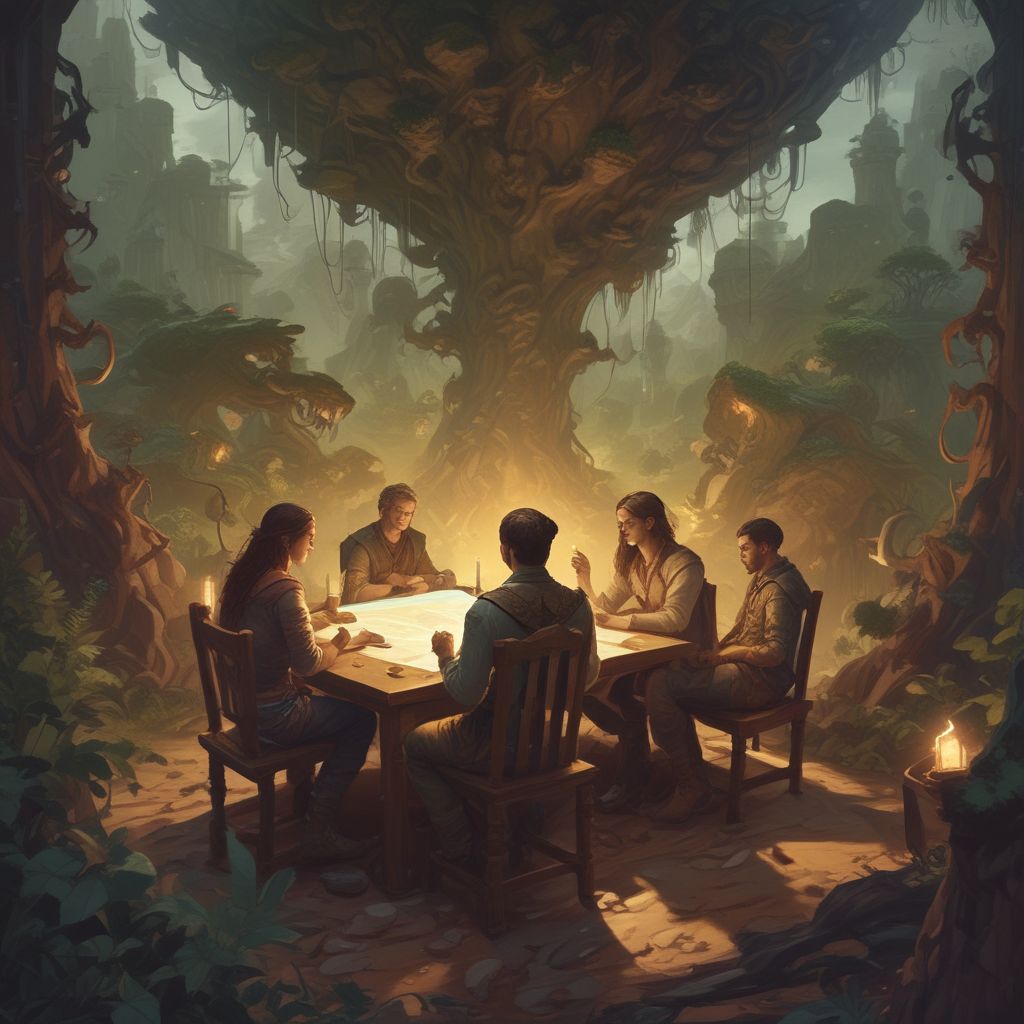
The concept of persistent world memory is reshaping how designers let players write their own saga: rather than presenting a fixed storyline, games record, interpret, and narrate player actions over time, producing emergent narratives that feel personal, consequential, and emotionally resonant. In this article we explore practical techniques and design patterns for building worlds that remember—systems that capture traces of player behavior, translate them into social and environmental responses, and offer retrospective narration that amplifies meaning.
Why memory matters for player-authored sagas
Memories turn isolated moments into arcs. A single gameplay decision—sparing an NPC, burning a bridge, or building a refuge—becomes meaningful when the world keeps a history and uses it to influence future interactions, conflicts, and the player’s own sense of self in the game. Persistent world memory fosters:
- Continuity: Actions have long-term consequences, making choices feel weightier.
- Identity: Repeated behaviors build a recognizable player persona within the world.
- Emergence: Complex, unscripted stories arise from simple rule interactions across time.
Core techniques for building persistent world memory
1. Event logging with semantic compression
Raw logs of every action are noisy; instead, store semantic events that capture intent and outcome. For example, convert “attack door with axe” into “destroyed_home_entry: player” and tag the event with context: location, NPCs affected, social repercussions. Compressing events into meaningful labels makes later interpretation tractable and narratively useful.
2. Weighted reputation and relationship graphs
Track social changes as a dynamic graph where nodes are characters, factions, and locations, and edges represent trust, fear, barter relationships, or alliances. Update weights from events (a rescue +10 trust; an ambush −30 trust). These weights drive NPC behavior, quests, and gossip nodes that reference player history in natural ways.
3. Environmental memory baked into world state
Let maps carry scars: abandoned camps, rebuilt bridges, banners raised for factions, or crops abandoned after raids. Make these visible and persistent so players can physically trace their past decisions. Use lightweight persistence—metadata on tiles or objects—so the world changes without needing huge storage overhead.
4. Narrative summarizers and in-world narrators
Transform memory into story by deploying summarizers: short textual or voiced recaps that frame a sequence of events as a “tale of the player.” These can be delivered via bards, town criers, or museum plaques. Narrative summarizers should: pick salient events, consider causal chains, and highlight emotional beats—turning logs into a coherent saga rather than a laundry list.
Design patterns that produce emergent, emotionally resonant outcomes
Pattern: Echoes and Reminders
Use small, recurring callbacks—an NPC mentions a past favor, a song references a burned bridge—to reinforce memory. Echoes make the world feel attentive; reminders convert forgotten events into emotional currency.
Pattern: Consequence Cascades
Link seemingly small actions to larger systemic shifts through cascading rules. Example: a farmer spared by the player starts a trade route that strengthens a settlement, which later repels a marauder raid—rewarding the player’s earlier mercy with a meaningful, emergent payoff.
Pattern: Narrative Reinterpretation
Allow the world to reinterpret past events differently over time. Early rumors may label the player “hero” or “thief”; as more facts emerge, NPCs update their narratives, and even previous judgments can be reversed. This fluid reinterpretation mimics real-world memory revision and offers rich dramatic tension.
Technical considerations and scalability
Memory systems must be performant and maintainable. Key implementation notes:
- Tiered persistence: Keep granular logs temporarily and compress them into long-term semantic events to save space.
- Locality of relevance: Only load memories relevant to the player’s current context—nearby NPCs, active factions, or unlocked lore hubs.
- Deterministic summarization: Use deterministic rules for creating summaries so different play sessions produce coherent narratives without unpredictable noise.
Balancing player agency and authored meaning
To let players write their saga while preserving curated dramatic moments, designers should blend authored beats with emergent threads:
- Use authored anchors—set-piece events that remain available but can be reached in multiple ways shaped by player memory.
- Let emergent systems fill the connective tissue—how communities respond, how reputations ripple, and what stories are told afterward.
- Provide gentle guidance through memory-driven quests or rumors that nudge players toward narrative closure without stripping authorship.
Examples and quick prototypes
Several practical prototypes illustrate these ideas:
- Memory board: A town hall ledger that records notable player deeds and can be read by NPCs to influence dialogue options.
- Memory tokens: Items or trinkets that crystallize an event (a charred banner, a child’s toy), used by NPCs to recall specific scenes in conversations.
- Rumor webs: A dynamic rumor engine that seeds and mutates stories about the player, with fidelity that increases as more witnesses are encountered.
Measuring emotional resonance
Track indicators beyond standard analytics to evaluate whether the memory system creates emotional impact:
- Revisit frequency: how often do players return to places tied to past events?
- Conversation branching: does the memory system unlock meaningful new dialogue or quests?
- Player storytelling: are players sharing their sagas externally (screenshots, forum posts)?
Qualitative playtests are essential—watch players narrate their own decisions and notice whether the world’s memories alter their playstyle or attachment to the game.
Pitfalls to avoid
- Noise overload: Too many memory cues dilute meaning. Prioritize the most narratively rich events.
- Contradictory lore: Ensure reinterpretations reconcile with existing facts to preserve believability.
- Player invisibility: If players don’t see the consequences, memory systems fail—expose effects through dialogue, environment, and gameplay.
Persistent world memory is not a silver bullet, but when thoughtfully implemented it transforms moments into sagas, and players into co-authors of living, breathing epics.
Conclusion: Designing for memory shifts the game’s role from storyteller to witness; with semantic logging, environmental scars, social graphs, and narrators that reinterpret the past, games can let players write their own saga in meaningful, surprising ways. Embrace selective memory, clear feedback, and emergent consequence to create worlds that feel alive and personally relevant.
Ready to turn player moments into unforgettable sagas? Start designing a lightweight memory prototype for your next build and watch the stories emerge.