The rise of sandboxed plugins with server-side WebAssembly unlocks a modern, secure architecture for extending backend systems—letting teams write plugins in Node.js, PHP, Go or Python while running them safely with WASI, enabling hot-reloadable, capability-restricted extensions. This approach blends language choice and developer velocity with the isolation and portability of WebAssembly, giving operations predictable resource control and rapid iteration without sacrificing security.
Why server-side WebAssembly and WASI for backend plugins?
Server-side WebAssembly (Wasm) plus the WebAssembly System Interface (WASI) provides a lightweight, deterministic runtime for executing compiled modules across languages. For plugin systems this matters because:
- Strong sandboxing: Wasm enforces memory and execution boundaries so plugins cannot access host resources unless explicitly granted.
- Language interoperability: Languages that compile to Wasm — or that can be wrapped into Wasm-compatible modules — let teams write extensions in the language they prefer.
- Portability: Wasm binaries run consistently across different hosts and OSes, simplifying deployment.
- Hot-reload friendly: Small, isolated units can be swapped at runtime with minimal disruption to the host process.
Architecture overview: Host + WASI-enabled plugin runtime
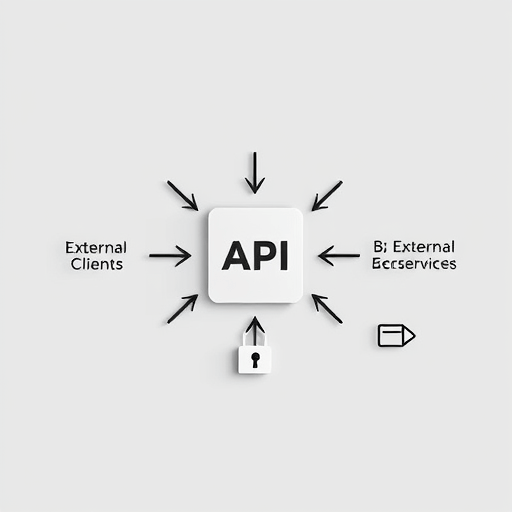
A typical architecture separates the host application (written in Go, Rust, or even Node.js) from plugins compiled to Wasm. The host provides a minimal surface area — the WASI environment and a small plugin API — used to expose services like logging, network access, or database proxies under capability-based controls.
Core components
- Plugin binaries: Wasm modules compiled from Node.js (via AssemblyScript or wasm-bindgen bridges), PHP (via Wasm-compiled runtimes like wasm-php), Go (using tinygo or wazero-friendly toolchains), or Python (via Pyodide or micro-python builds).
- WASI host runtime: The runtime provides syscalls, capability grants, and resource limits (CPU, memory, wall time).
- Plugin API: A thin, versioned JSON/CBOR RPC, HTTP binding, or function-call API that the host and plugin use to interact.
- Hot-reload manager: Watches plugin artifacts and swaps Wasm modules with graceful handoff to preserve in-flight requests or migrate state via checkpointing.
Uniting Node.js, PHP, Go and Python—practical considerations
Each language has tradeoffs when targeting Wasm. Here are practical strategies for bringing them into a unified plugin ecosystem:
Node.js
- Use AssemblyScript for straightforward TypeScript-to-Wasm cases or use wasm-bindgen approaches for faster native code paths.
- Avoid heavy Node.js built-ins; instead, make host APIs available for filesystem or network interactions to preserve sandboxing.
PHP
- Leverage Wasm-compiled PHP runtimes or small PHP interpreters built for Wasm; favor stateless handlers and rely on host-provided DB connectors to avoid bundling native drivers.
Go
- Use TinyGo or other Wasm-friendly toolchains to produce compact, fast modules. Go is a strong choice for CPU-bound logic or worker-style plugins.
Python
- Employ lightweight builds like Pyodide or micro-Python ports where feasible; prefer pure-Python logic that avoids extensive C-extension dependencies.
Design patterns for hot-reloadable plugins
Hot-reload requires careful state and lifecycle management. Recommended patterns:
- Stateless handlers: Design plugins to be idempotent and stateless where possible; store long-lived state in host-managed stores.
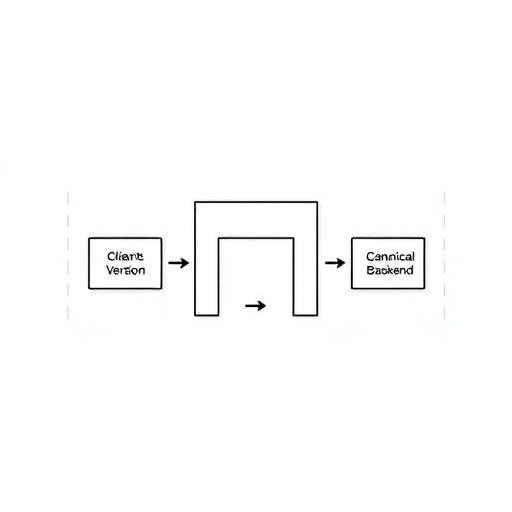
- Graceful swap: Use versioned APIs and a drain period: load new module, route new requests to it, let old module finish in-flight work, then unload.
- Migration hooks: Provide optional export functions for plugins to checkpoint/restore transient state through the host (e.g., exportCheckpoint(), importCheckpoint()).
Security: capability-based controls and resource limits
WASI encourages capability-based security: the host grants exactly the resources a module needs. Apply these hardening steps:
- Grant minimal capabilities (no filesystem or network unless required).
- Enforce CPU timeouts and memory ceilings per-module to prevent noisy neighbors.
- Audit host APIs and sanitize RPC inputs; treat plugin boundaries as untrusted by default.
- Use reproducible builds and artifact signing to ensure integrity before hot-swapping modules in production.
Performance and observability
Measure and optimize the plugin lifecycle:
- Cold-start cost: Wasm modules are typically fast to instantiate compared to heavyweight processes, but minimize heavy initialization paths in plugins.
- Profiling: Expose lightweight telemetry (execution time, memory usage, errors) through the host so operators can trace resource usage per-plugin.
- Caching: Keep frequently used modules warm or use snapshotting to reduce reload latency.
Developer ergonomics: packaging, testing, and CI
Encourage a simple developer experience:
- Provide templates and toolchains for each language targeting the Wasm ABI (npm/AssemblyScript, TinyGo, wasm-php starters, Pyodide templates).
- Include local emulation of the host APIs so authors can run and debug plugins without deploying to staging.
- Automate artifact signing, compatibility testing, and smoke tests in CI to ensure plugin updates are safe to hot-deploy.
Example plugin lifecycle (high level)
- Developer compiles plugin -> produces plugin-1.2.0.wasm (signed).
- CI verifies API compatibility and runs tests, then pushes artifact to registry.
- Operator triggers hot-reload: host downloads signed Wasm, instantiates it in WASI sandbox with limited capabilities, routes new requests to plugin-1.2.0, drains plugin-1.1.9, then unloads old module.
When not to use Wasm plugins
Server-side Wasm is powerful but not universal. Avoid it for:
- Plugins requiring native OS integrations or heavy use of platform C extensions that cannot be compiled to Wasm.
- Workloads where ultra-low-latency native syscalls are indispensable (unless a well-optimized host API is provided).
Sandboxed plugins with server-side WebAssembly democratize backend extension development, enabling organizations to unite Node.js, PHP, Go and Python ecosystems under a single, secure, hot-reloadable platform. By embracing WASI, capability-based security, and careful lifecycle patterns, teams can iterate quickly while preserving production safety and performance.
Conclusion: Start small—build a single Wasm plugin, expose only the APIs it needs, measure resource use, then expand the system; this incremental approach yields big gains in safety, flexibility, and developer happiness. Ready to prototype your first WASI plugin?
Call to action: Try compiling a tiny handler in your favorite language to Wasm today and hot-reload it into a test host to see sandboxed plugins in action.