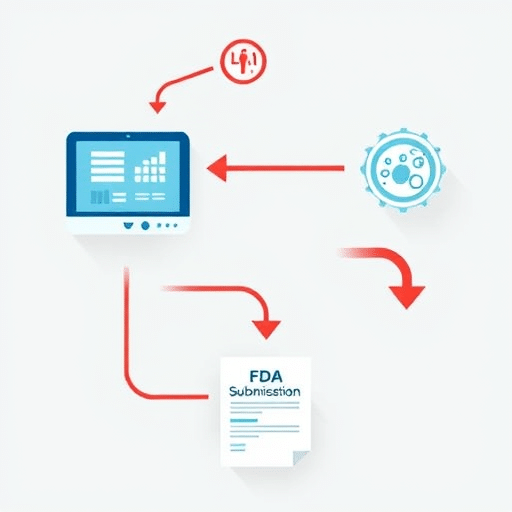
The Passive Multimodal Digital Endpoint to Predict Early Cognitive Decline blends “invisible signals” from everyday life — sleep microstructure, smartphone keystrokes, and voice prosody — to create a sensitive, privacy-first approach for early detection. By passively capturing and fusing these behavioral and physiological biomarkers, researchers and clinicians can construct a continuous, low-burden signal that flags subtle cognitive change long before clinical thresholds are crossed.
Why a Passive Multimodal Endpoint?
Traditional cognitive screening is episodic and clinic-centered, missing gradual changes in day-to-day functioning. A passive multimodal digital endpoint uses unobtrusive sensors and phone-based signals to detect patterns in behavior and physiology that correlate with neural decline. This approach increases frequency of measurement, ecological validity, and the chance of early intervention.
Core Biomarkers
Sleep Microstructure
Sleep is a window into brain health. Beyond total sleep time, sleep microstructure—spindle density, slow-wave activity, REM fragmentation, and micro-arousals—correlates with synaptic plasticity and memory consolidation. Wearables and bedside sensors can estimate these features reliably; changes in spindle-slow wave coupling or increased micro-arousals over months may indicate early neurodegenerative processes.
Smartphone Keystrokes
Keystroke dynamics capture fine-grained motor and cognitive performance during everyday typing. Metrics such as typing speed variability, inter-key latency, error correction patterns, and hold-time jitter form a behavioral signature sensitive to slowed processing, attentional lapses, and motor slowing—early signals of cognitive impairment. Importantly, keystroke features can be collected passively during normal smartphone use with consent.
Voice Prosody
Speech carries cognitive and affective markers: prosody, pause distribution, articulation rate, and spectral features reflect executive function, language fluency, and mood. Short prompted or conversational voice samples captured via the phone can be analyzed locally for prosodic shifts—monotonic pitch, longer pauses, or flattened affect—that often precede measurable decline on standardized tests.
Biomarker Fusion: From Signals to Endpoint
Individually, each modality offers partial sensitivity; fused, they create a resilient endpoint. Fusion strategies include:
- Feature-level fusion: concatenating normalized features (e.g., spindle power + typing variance + mean pause length) into a single model input.
- Model-level fusion: combining modality-specific models via ensemble methods (stacking, weighted averaging) to leverage complementary strengths.
- Temporal fusion: modeling longitudinal trajectories using mixed-effects or sequential models (e.g., LSTM, transformer-based time-series) to detect slope changes rather than absolute thresholds.
Key design goals are interpretability (which features drive risk), robustness to missing data (people may stop using a modality temporarily), and adaptability across devices and languages.
Privacy-First Collection and Ethics
Trust is essential. A privacy-first architecture should include:
- Local preprocessing: raw audio, raw keystrokes, and high-fidelity sleep traces are processed on-device to extract non-identifying features; raw data never leaves the device unless explicitly authorized.
- Differential privacy and encryption: aggregated features transmitted for analysis incorporate noise mechanisms and end-to-end encryption to prevent re-identification.
- Transparent consent and control: granular user controls for modality opt-in/opt-out, clear retention policies, and easy data withdrawal.
- Data minimization: only features necessary for endpoint computation are stored centrally, and retention periods comply with regulations.
Longitudinal Validation Strategy
Establishing clinical validity requires prospective, longitudinal cohorts with diverse populations. Recommended validation steps:
- Baseline characterization: obtain clinical exams, neuropsychological tests, and relevant biomarkers (e.g., MRI, CSF/PET where feasible) in a representative subsample.
- Continuous passive monitoring: collect multimodal signals for 12–36 months with periodic clinical follow-up every 6–12 months.
- Endpoint calibration: derive change-based metrics and define thresholds predicting conversion or measurable decline using survival analysis and mixed-effects modeling.
- External replication: validate models on independent cohorts and across device manufacturers, languages, and cultural contexts.
Regulatory Roadmap
Translating an invisible-signals endpoint into clinical tools involves layered regulation and stakeholder engagement:
- Early engagement with regulators (FDA, EMA) to define the intended use — screening, enrichment, or therapeutic monitoring — and to agree on performance metrics like sensitivity, specificity, and positive predictive value.
- Define a Software as a Medical Device (SaMD) strategy: modular validation of signal acquisition, feature extraction, model performance, and update pathways.
- Post-market surveillance and real-world performance monitoring to detect drift and ensure equitable performance across subgroups.
- Ethics and IRB alignment: ensure privacy safeguards and informed consent meet jurisdictional norms and community expectations.
Implementation Considerations
Practical deployment requires attention to equity, accessibility, and clinician workflow integration:
- Make the endpoint device-agnostic and language-agnostic where possible, and provide low-bandwidth options for feature upload.
- Design clinician-facing dashboards that present trajectories, driver features, and confidence intervals—not black-box scores—to support shared decision-making.
- Plan for maintenance: model re-calibration, update pipelines, and user support channels to manage technical or privacy concerns.
Conclusion
Invisible signals from sleep microstructure, smartphone keystrokes, and voice prosody hold promise as a passive multimodal digital endpoint to predict early cognitive decline. A privacy-first data architecture, rigorous longitudinal validation, and an early regulatory strategy are essential to move this concept from research to responsible clinical deployment.
Ready to explore building a pilot for your population? Contact a digital health partner to design a privacy-preserving longitudinal study and regulatory plan.