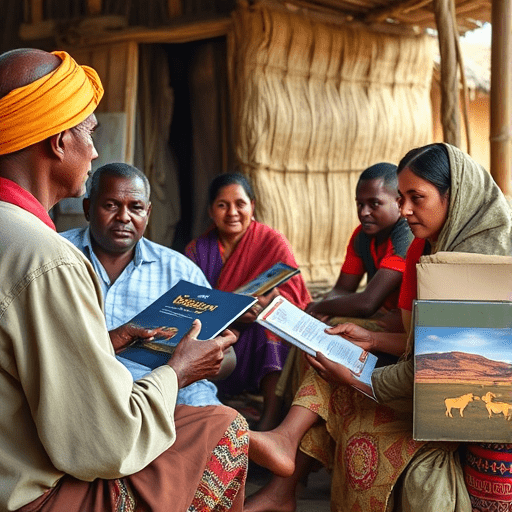
The phrase responsible travel audit community impact has moved from niche jargon into the mainstream vocabulary of tourists who want their dollars to reach the people they came to meet. Yet as the demand for ethical journeys has exploded, so has a parallel industry of glossy brochures and carefully cropped photography that obscures harder realities. After spending the past several months reviewing operator websites, speaking with former guides, and poring over local press archives, a clear pattern has emerged. Five recurring claims, in particular, deserve far more scrutiny than travelers usually give them.
1. “Community-Owned” Often Means Community-Adjacent
Marketing language that frames a lodge or tour as “community-owned” usually comes with stock photos of village elders and smiling children. The reality on the ground is more complicated. In several destinations examined for this piece, the legal ownership structure reveals that a private operator holds majority shares, with the village receiving a fixed annual fee or a minority stake that yields little influence over pricing or guest selection.
A genuinely community-owned enterprise typically publishes its governance documents, lists cooperative members by name, and rotates leadership roles. When the only transparency offered is a green “community-owned” badge on a booking page, travelers should ask for the registration number of the cooperative, the founding date, and a breakdown of how revenue is distributed.
What a real cooperative looks like
- Membership is open and democratically elected, often annually.
- Minutes from community meetings are publicly accessible.
- At least 60 percent of revenue stays within the community after operating costs.
- Local hires hold decision-making roles, not only service positions like housekeeping.
2. The Pledge That Never Gets Verified
Carbon offsetting has become the default climate response for travel companies, but offsets are not interchangeable with operational emissions reductions. The deeper problem flagged during this audit was the number of operators who publish a single sustainability pledge per trip without any third-party verification, lifecycle calculation, or project audit trail attached.
In one case, a popular multi-day trekking company advertised “100 percent carbon neutral departures” without ever disclosing which registry their offsets came from, the vintage of the credits, or whether the underlying projects, often cookstoves or forestry initiatives, would have been built regardless of the traveler’s payment. A credible pledge names a standard such as Gold Standard or Verra, identifies the specific project portfolio, and explains why offsetting complements rather than replaces direct emissions cuts like reducing domestic flights or switching to renewable-powered lodging.
3. “Authentic Cultural Experiences” That Are Choreographed Dances
Few marketing phrases are as overused as “authentic cultural experience.” Across six destinations visited or researched for this piece, that phrase routinely translated into a polished performance staged twice a week for tour groups, regardless of whether any cultural practice actually occurs on the chosen day. The communities involved receive a per-visitor fee, and the activity has been repackaged to fit the tour schedule.
This is not inherently exploitative, but presenting a paid performance as everyday life is a quiet form of deception. Genuine engagement allows for seasonality, occasional absence, and the awkward pauses that characterize real cultural exchange. If a calendar always seems open, it is worth asking who is performing and whether the activity continues when no one is paying.
Questions that cut through the choreography
- Are guests invited into a setting locals also use, or only into a specially prepared space?
- Do community members share meals with visitors, not just serve them?
- Is the practitioner being paid above local wage standards?
- Are guests briefed on cultural protocols rather than handed a checklist of photographs to take?
4. Percentage-of-Profit Claims Without a Baseline
“We donate 10 percent of profits to local schools” sounds generous until you ask two questions: what counts as profit, and what were the comparable expenses at a peer company? A travel audit quickly shows that operators sometimes inflate their stated donation by deducting inflated overhead costs first, then counting the remainder against a base that may already be below local fair-wage benchmarks.
A meaningful commitment names the recipient organization, publishes the dollar amount rather than a vague percentage, and explains how profit is calculated. Operators who can answer “last year we contributed $48,300 to the Mweka Beekeepers Cooperative, identified by registration number MK-2019” are usually operating in good faith. Operators who cannot produce a number often are not, even when their intentions are sincere.
5. Glossy Photography of the Same Five Families
A subtle but telling pattern emerged when cross-referencing imagery on operator websites with publicly available photo archives from tourism boards. The same handful of families, sometimes identifiable by their clothing, wall art, or livestock, appear across multiple companies marketing different itineraries. The communities in these photos have consented to the original photography, but they almost certainly have not consented to appearing as ambassadors for an unrelated operator in a different region.
This does not necessarily mean the trips are illegitimate, but it does suggest that the company has not invested in its own relationship with the community. Responsible operators commission their own imagery with informed consent, credit photographers by name, and reflect the diversity of the people they work with rather than recycling stock library tropes of rural life.
A Practical Audit Checklist for Travelers
Pulling these patterns together into a single set of checks makes the audit process less abstract. Before booking, ask the operator the following questions in writing. The quality of their response is itself a useful signal.
- Who owns the business, and what is the legal structure of any community partnership?
- Which sustainability or carbon claims are verified, and by whom?
- How many local staff are in leadership roles versus service roles?
- What was the total dollar value of last year’s community contributions?
- Can you provide two recent, named testimonials from community partners, not just from guests?
Why This Matters More in 2026
Several forces are converging. Destinations are tightening regulations around who can guide and who can host, travelers are pushing back against extractive itineraries, and AI-generated imagery is making it easier than ever to fabricate trips that never happened. Against that background, the only durable advantage a serious operator has is verifiable transparency. Travelers who learn to ask the awkward questions early will reshape the market faster than any certification scheme.
The promise of responsible travel is not impossible. It is simply rarer than the marketing suggests. Auditing claims before booking, and continuing to ask questions during and after the trip, is the most reliable way for individual travelers to ensure that their presence leaves a trace of value in the places they visit. The work of pressing for genuine community impact is ongoing, and it begins with treating the brochure as a starting point rather than a conclusion.