When a patient agrees to share medical data with a researcher, a new hospital, or a digital health app, the conversation usually goes one way: hand over the records, then hope the permission is honored. But in an era of increasing cyber threats and strict privacy regulations, patients need more control. This is where zero-knowledge proofs for health data consent come in. They let a patient prove that a specific permission exists — without revealing the underlying records, the full consent document, or any extra health information. It’s a cryptographic shift from “show everything” to “prove what’s needed.”
The Consent Verification Problem
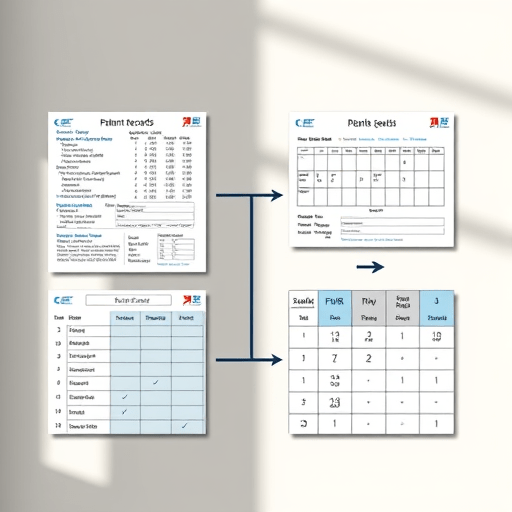
Consent in healthcare has always been a paper trail. A signed form, a checkbox in a patient portal, or a recorded verbal agreement. But when that consent is used later — say, to authorize access to lab results or to include a patient in a clinical study — the verifier often demands the original record or a copy of the consent form. That creates privacy leakage. A researcher might see details about the patient’s diagnosis, medications, or history, when the only thing they actually need to verify is “this patient consented to participate.”
Traditional digital systems try to solve this with passwords or tokens, but those can be stolen, shared, or used beyond their scope. Zero-knowledge proofs (ZKPs) offer a different approach: a mathematical method where one party can prove to another that a statement is true, without revealing why it’s true or any additional information beyond that single claim.
How Zero-Knowledge Proofs Work in Health Data
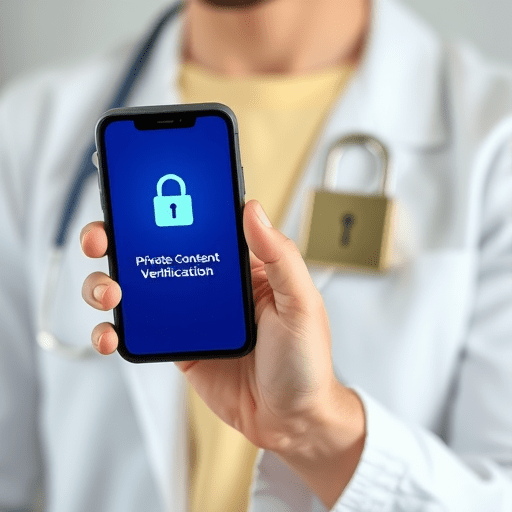
To understand ZKPs in this context, imagine a patient named Maya who needs to prove to a clinical trial coordinator that she is eligible and has given consent. She does not want to share her full medical record, because it contains sensitive details about mental health treatments and past surgeries. With a zero-knowledge proof, Maya’s digital wallet generates a cryptographic token — the proof — that says: “I am the patient who consented to this trial, and my consent is valid as of this date.” The coordinator can verify this proof using a public key, without ever seeing Maya’s records or the consent document itself.
This works because ZKPs rest on three core principles:
- Completeness: If the claim is true, the verifier will always accept the proof.
- Soundness: If the claim is false, the verifier cannot be tricked into accepting it.
- Zero-knowledge: The verifier learns nothing about the health data, the consent text, or any other personal information — just that the statement is true.
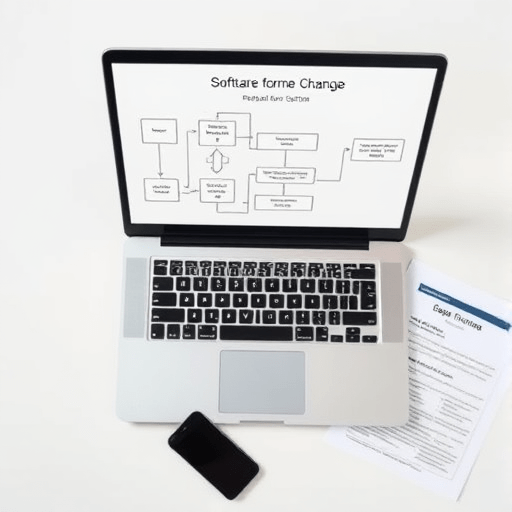
In practice, the patient’s device or health app constructs a proof from a set of credentials (like a signed consent record from their doctor or hospital). The proof is then sent to the requesting party. The verifier checks it against the issuing authority’s public key. The patient’s sensitive data never leaves their wallet.
A Practical Example: Proving Consent for a Research Study
Let’s walk through a realistic scenario from 2026. A university medical center wants to analyze anonymized patient data for a study on diabetes progression. They ask for consent from patients who have verifiable digital consent records. Instead of sending their entire electronic health record (EHR), a patient uses their health app to select only the relevant consent claim. The app creates a zero-knowledge proof with three statements:
- “I have an active consent agreement with University Medical Center, ID #46219.”
- “My consent covers participation in the diabetes progression study.”
- “My consent has not been revoked as of today’s date.”
The university’s system verifies the proof using the hospital’s public registry. It doesn’t need access to the original consent PDF, nor does it pull in the patient’s glucose data, medication list, or even their age. The researcher receives a simple “yes” with a cryptographic signature. If the patient later revokes consent, the proof becomes invalid because the revocation status is embedded in the credential system.
This is a major improvement over today’s data-sharing agreements, where checking consent often means copying entire records or calling a doctor’s office to confirm.
Why 2026 Is the Turning Point for Verifiable Consent
Several trends are converging to make zero-knowledge proofs practical for health data consent. First, more hospitals and health systems are issuing verifiable credentials — essentially signed digital documents that patients hold in their own digital wallets. Second, interoperability standards like HL7 FHIR and the growing use of decentralized identifiers (DIDs) allow these credentials to be issued, shared, and revoked across different organizations. Third, regulators in many regions are pushing for patients to have greater control over their health data. The EU’s European Health Data Space and similar initiatives in other countries have created a clear demand for consent mechanisms that are both auditable and privacy-preserving.
In that shifting landscape, ZKPs are no longer theoretical. Modern cryptographic libraries are fast enough to run on smartphones, and health-focused platforms are implementing selective disclosure. A patient can choose to reveal only “I am over 18” or “I have consented to data sharing for approved research” without revealing their birth date or the full text of a consent form.
Current Limitations and Open Challenges
Despite the promise, zero-knowledge proofs for health data consent are not a silver bullet. One major challenge is key management. If a patient loses their digital wallet or the device holding their private key, they could lose the ability to generate proofs. Recovery systems must be designed carefully so that they don’t introduce new vulnerabilities. Another issue is revocation. Ensuring that a proof is instantly invalidated when consent is withdrawn requires a reliable, low-latency revocation mechanism. If a patient revokes consent but the verifier checks an outdated proof, the system fails.
There are also usability concerns. ZKP systems often require patients to understand new concepts like credentials, key pairs, and proof requests. For those who aren’t tech-savvy, the process might be confusing. Designers need to build interfaces that hide the cryptography and make the experience as simple as tapping a button.
Finally, standards are still evolving. Not all hospitals use the same credential formats, and not all verification systems recognize proofs from other issuers. The health sector needs to agree on shared trust frameworks, otherwise ZKPs will remain isolated pilots.
The Patient Experience: What Changes?
For the average patient, the most visible change will be in how they manage consent. Instead of filling out forms for every new provider or research project, they’ll have a digital wallet containing all their consent records. When a request comes in, they’ll see a clear message: “This organization wants to verify that you agree to share your data for asthma research.” They tap “allow,” and the proof is sent — nothing more.
That simplicity is the power of zero-knowledge proofs. The patient stays in control, the verifier gets exactly what they need, and sensitive medical details remain private. This doesn’t just benefit patients; it also helps healthcare organizations reduce liability, minimize data breaches, and build trust with the communities they serve.
In the coming years, as digital health becomes more interconnected, the ability to verify permission without handing over sensitive records will become a standard expectation. Zero-knowledge proofs may not be the only tool we need, but they are the key that makes that expectation a reality.