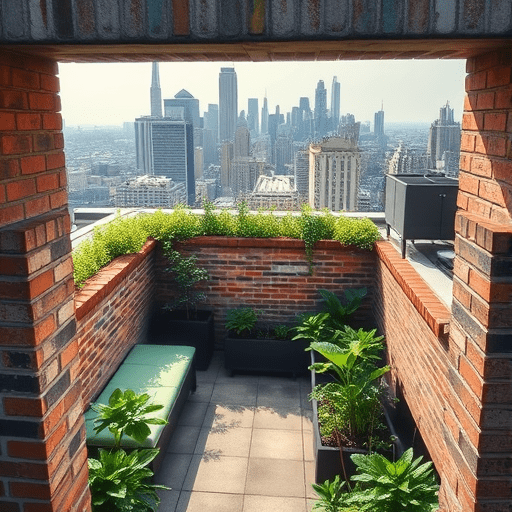
# How to Find Secret Rooftop Gardens Without Knowing a Doorman
Secret rooftop gardens are the last true urban frontier. While influencers hunt for speakeasy bars and hidden courtyards, a quieter revolution grows above the skyline—lush green oases tucked behind mechanical penthouses and parapet walls. You can find these hidden green roofs without a single insider tip, if you know where to look. The trick isn’t charm. It’s public records, building codes, and the surprisingly transparent paper trail that every rooftop garden leaves behind.
This isn’t about sneaking into private residences. It’s about using civic data to identify publicly accessible green roofs, semipublic corporate terraces, and even forgotten amenity decks that appear on official documents but vanish from digital maps. By understanding local regulations and historic permits, you can spot where a secret garden exists before you ever step into the elevator.
## Why Rooftop Gardens Are So Hard to Find
Most hidden rooftop gardens are not confidential by design. They’re simply unadvertised. Building owners install green roofs for stormwater credits, energy savings, or employee amenity purposes, not for tourist traffic. Some are hidden because the entrance is unmarked. Others sit above commercial properties that lock their stairwells after 6 PM. And a few are technically open to the public but have no signage—because the city or building owner never got around to promoting them.
In many cities, the only people who know these gardens exist are tenants, maintenance staff, and the fire department. But the paper trail is public.
## Use Building Permits and Green Roof Legislation to Shortlist Candidates
The most direct route to finding secret rooftop gardens is to search for the legal approvals that created them. Cities with green roof mandates—such as New York, San Francisco, Toronto, and Chicago—maintain searchable databases of permit applications for vegetated roofs. These permits list the property address, owner, architect, and often the exact square footage of the green area.
### How to Search for Green Roof Permits
Start with your city’s Department of Buildings, or its equivalent. Look for permit types with keywords like “green roof,” “vegetative layer,” “landscaped rooftop,” or “roof terrace.” Many building departments now offer open data portals with CSV exports. For example:
– Search your city’s building permit portal for “green roof” or “roof garden” in the work description field.
– Filter by year—many older permits will reveal rooftop gardens that have been quietly thriving for decades.
– Note the applicant’s name and consult professional directories for landscape architects; their portfolios often confirm the garden’s existence and design.
Building codes are another goldmine. Many cities require rooftop gardens to meet structural load standards, fire setbacks, and railing heights. Check municipal codes for “roof garden,” “roof assembly,” or “accessible roof.” Even if the code doesn’t tell you where gardens are, it tells you which buildings are *allowed* to have them—and which older buildings likely had to retrofit.
## Look for Zoning Variances and Air Rights
Some rooftop gardens are legal because the building owner purchased a zoning variance. These variances are public records. If a building was allowed to exceed height limits or add an extra story with a setback terrace, that decision often appears in city council minutes or the zoning board of appeals.
### Air Rights Are a Hint
In dense cities, rooftop gardens often appear as part of “air rights” transfers or in “floor area ratio” (FAR) arrangements. When a developer builds a penthouse with a private garden, the plans are filed with the city. You can often find a rendering of the rooftop garden in the architect’s design documents, which are publicly available in the planning department’s archives.
You can also consult Historical American Buildings Surveys for older structures. But more practically, use geographic information system (GIS) data from your city’s open data portal. Many cities now include a “green infrastructure” layer that marks vegetated rooftops. That layer is your treasure map.
## FOIA and Public Records Requests: Your Power Move
If you live in a city with weak online databases, don’t assume the information is inaccessible. A Freedom of Information Act (FOIA) request—or your state’s equivalent—can compel local agencies to release records of green roof inspections, stormwater rebate payments, or environmental certifications.
– Ask for “all records related to green roof installation, maintenance, or inspection at [list of addresses].”
– Request “certificates of occupancy for buildings with rooftop garden amenities.”
– In many cities, green roof owners receive tax abatements or stormwater fee credits. Those records are often public.
The response may take weeks, but the payoff is huge: you’ll receive exact addresses and sometimes even floor plans.
## Use Certifications and Awards to Confirm Hidden Gems
LEED certification reports, Living Building Challenge documentation, and local “green building” award lists often reveal rooftop gardens. Read the project descriptions carefully. Developers love bragging about “expansive sky terraces” or “healing rooftop gardens” in press releases, but they rarely mention the entrance location. However, the address is always there.
Also check Sustainable SITES Initiative registration data and the Green Roofs for Healthy Cities directory. Many green roofs are installed for stormwater management rather than public access, but the directory often distinguishes between “intensive” and “extensive” green roofs. Intensive ones—with deep soil and larger plants—are more likely to be accessible gardens, while extensive ones are usually not.
## Combine Public Records with Satellite Imagery and 3D Maps
Public records tell you that a garden exists, but you still need to find the view. This is where modern mapping tools come in. Use Google Earth’s historical imagery or the “bird’s eye” view in local mapping services to see which rooftop corners show vegetation patterns. Check multiple seasons—a green roof may look brown in winter but alive in summer.
Many mapping services also show roof access structures. If you see a stair bulkhead or a walkway surrounded by vegetation, you’ve just identified your target. Cross-reference that visual evidence with the permit address you already have.
## How to Access Hidden Rooftop Gardens Legally
Finding the garden is one thing; getting to it is another. But you’d be surprised how often a little documented confidence works.
– If the building has a public café or restaurant, the rooftop garden may be accessible from the dining area or an adjacent terrace.
– The roof may be part of the building’s amenity deck, which is sometimes open to the public during business hours.
– Many commercial buildings with green roofs offer “Lunch and Learn” environmental tours or architectural open house days.
– Check if the building participates in your city’s “Open House” or “Doors Open” weekend event.
You can also write to the property management company. Mention that you know the building has a green roof and ask if it’s ever open for public viewing. Sound neat and persistent. It often works.
## The Unspoken Rules of Rooftop Exploration
When you do step into a secret rooftop garden, you inherit the responsibility of keeping it secret. Keep your voice low, respect the plants, and never share the exact address on social media. The public records you used are good for finding new places, but they shouldn’t become a flood kit. The best secret rooftop gardens are the ones that remain peaceful.
## Conclusion
Secret rooftop gardens aren’t locked behind doormen with attitude. They’re hiding in plain sight, encoded in permits, zoning variances, FOIA documents, and open data maps. The biggest skill isn’t charm—it’s knowing which municipal department to ask. Start with a simple permit search, follow the paper trail to a greened roof, then use that knowledge to step through an ordinary door into an extraordinary garden above the city. The skyline looks entirely different when you’re standing on top of its hidden greenery.