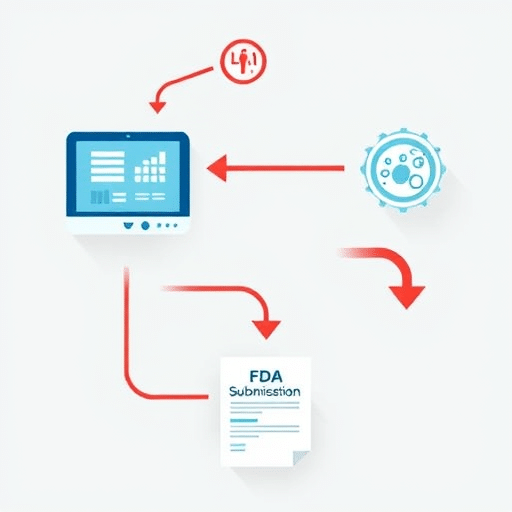
When clinical AI systems stall in pilot purgatory, it rarely happens because the algorithm underperforms. The usual culprit is a validation framework that cannot survive contact with clinical reality. A validation framework for clinical AI must do more than check model accuracy on a historical dataset; it must generate the specific evidence that regulators cite in approval decisions and that clinicians recognize as meaningful for patient care. In 2026, that means moving beyond static test sets and building a system of continuous, layered validation that works from day one in a live hospital workflow.
The Hidden Cause of Pilot Purgatory
Most clinical AI pilots fail to advance because their validation plan is divorced from both sides of the adoption equation. On one hand, regulators expect rigorous documentation — traceability from requirements to test cases, risk management files, and post-market surveillance. On the other hand, clinicians are naturally skeptical of models that make perfect sense in a lab but create charting chaos when deployed on a busy ward. The result is a stalemate: a model is technically validated but clinically unacceptable, or clinically attractive but lacking the evidence needed for reimbursement or approval. The missing piece is a framework that treats validation as a shared language rather than a box-checking exercise.
Layered Validation for Dual Accountability
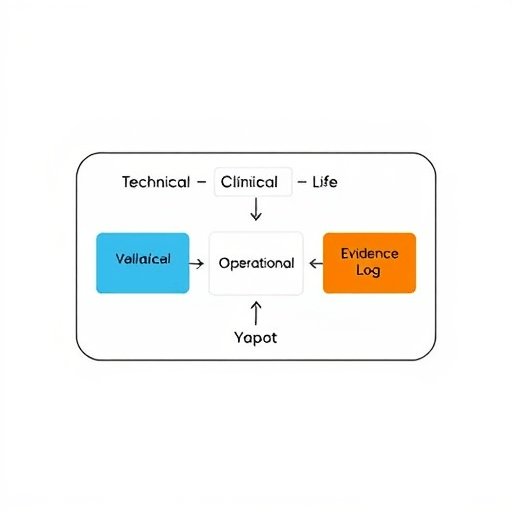
We recommend a three-layer validation framework that produces evidence for both audiences without duplicating work. Each layer answers a different question, and together they form a defensible chain of reasoning.
Layer 1: Technical Validation for Algorithmic Integrity
This is the traditional model performance layer, but for 2026 it must go beyond simple accuracy, sensitivity, and specificity. High-impact clinical AI should be validated against clinically weighted metrics like calibration, subgroup performance, and expected utility under different base rates. Regulators increasingly ask for the worst-case performance, not just the average. For example, a sepsis prediction model may have high overall AUC but perform poorly in patients with chronic kidney disease. A technical validation layer that documents these edges with confidence intervals and subgroup bootstrapping gives regulators the granularity they require while also surfacing issues likely to be raised by front-line clinicians.
Layer 2: Clinical Validation for Real-World Relevance
This layer focuses on workflow integration, usability, and decision quality. The aim is to prove that the AI produces a net clinical benefit when placed in the hands of its intended users. Unlike a randomized controlled trial for a drug, clinical validation for AI needs to be pragmatic and adaptive. Use simulated patient cases with clinician review panels, then move to silent mode monitoring where the model runs but is not yet displayed to clinicians. Capture true positives, false alarms, and missed cases — and, crucially, measure whether the AI’s recommendation changes clinician behavior in a way that improves outcomes. A validation framework for clinical AI that ignores this layer will always run into pilot purgatory because no one can honestly say the model works in this context.
Layer 3: Operational Validation for Lifecycle Trust
The third layer addresses what happens after deployment. Clinical AI models degrade due to data drift, protocol changes, or shifts in patient populations. An operational validation layer includes automated monitoring, trigger-based retraining, and clear governance for deautomation. In 2026, regulators are moving toward total product lifecycle requirements, so your framework must show how the model remains valid over time. This layer also includes the human oversight loop: who reviews alerts, how feedback is documented, and what threshold triggers a formal revisit of the original validation plan.
Making Validation Evidence Speak Both Languages
The insight that ends pilot purgatory is that regulators and clinicians are not in opposition. Both want the same thing: a model that performs consistently in real patients without causing unintentional harm. The trick is to design validation reports that speak to each group’s priorities. For regulators, include strong traceability: every requirement maps to a test case, every risk control has evidence of effectiveness, and every adverse event from monitoring has a documented response. For clinicians, present concise visual dashboards that show what happens in their specific unit — not just “the AI flagged 80% of sepsis cases,” but “the AI would have caught 4 of the 6 cases your team missed last month.”
One practical way to bridge the language gap is to adopt a shared evidence log. This is a single repository where validation results are stored with dual annotations: a technical field (e.g., “F1 score for hypoxemia”) and a clinical field (e.g., “14% reduction in time-to-intervention”). Regulators can audit the log for completeness and rigor; clinicians can review it for relevance and trust. Using this log as the backbone of your validation framework for clinical AI also prevents the all-too-common situation where a research team publishes a model, but the deployment team has no idea how to verify it works on their population.
Operationalizing Validation as a Living Process
Static validation ends at go-live; a modern framework begins there. In 2026, leading health systems are treating validation as a continuous process with automated guardrails. Instead of annual recalibration reports, they use real-time monitoring dashboards that flag when key performance indicators fall outside pre-approved tolerances. These dashboards feed directly into a validation control board that meets monthly to triage signals. If a model experiences a subtle drop in performance among older patients, the board can issue a rapid evaluation request, pull evidence from the shared log, and decide whether to update the algorithm or advise the clinical team to interpret alerts with increased caution.
This living process is also what regulators want to see. The FDA’s digital health guidance and emergent EU AI Act requirements reward organizations that can demonstrate real-world evidence collection and proactive risk management. By turning validation into a routine operational discipline, you convert your framework from a one-time burden into a strategic advantage.
Escaping Purgatory: A Roadmap for the Next 90 Days
If your AI system is stuck at the pilot stage, follow this three-phase approach to redesign your validation framework.
- Phase 1 (Days 1–30): Audit and align. Review all existing validation evidence and map it to the three layers described above. Identify gaps in clinical relevance or regulatory documentation. Form a small working group with one regulator-trained quality lead, one clinical champion, and one operational data scientist.
- Phase 2 (Days 31–60): Build the shared evidence log. Define your primary endpoints, measurement windows, and alerting thresholds. Encode them in a structured template that both clinicians and regulators can query. Start using it on new validation runs, even if the model is still offline.
- Phase 3 (Days 61–90): Run a hybrid pilot. Instead of a binary on/off deployment, run the model in shadow mode with a clinician-in-the-loop review. Have the shared evidence log record every decision the clinician makes with the AI’s recommendation visible. At the end of the period, present your findings in a joint session with quality, IT, and clinical staff — and use that evidence to make a formal go/no-go decision.
The simplicity of this roadmap is its strength. It creates an explicit decision gate that replaces the vague hope that “we’ll figure it out after the pilot.”
What Success Looks Like in This Validation Era
Success is not just getting through a regulatory submission. It is a system where a nurse receiving an alert for a patient can trust that the alert is grounded in data that was validated in a way that accounts for their unit’s patient mix. It is a hospital board that sees transparent evidence of the AI’s impact on outcomes without needing a PhD in machine learning. It is also an engineering team that can sleep at night because the monitoring layer will notify them if the model starts to drift, and the governance process already knows what to do about it.
Pilot purgatory is not caused by lazy developers or skeptical clinicians; it is caused by a validation framework that fails to give both groups what they need. By adopting a layered, lifecycle-oriented validation framework for clinical AI, you can turn the last mile into a supported landing strip.
Conclusion – The model that was only evaluated on retrospective data is no longer enough. Clinical AI validation for 2026 must be technically rigorous, clinically observable, and operationally alive. Only then will promising algorithms escape the pilot workshop and earn their place as trusted members of the care team.