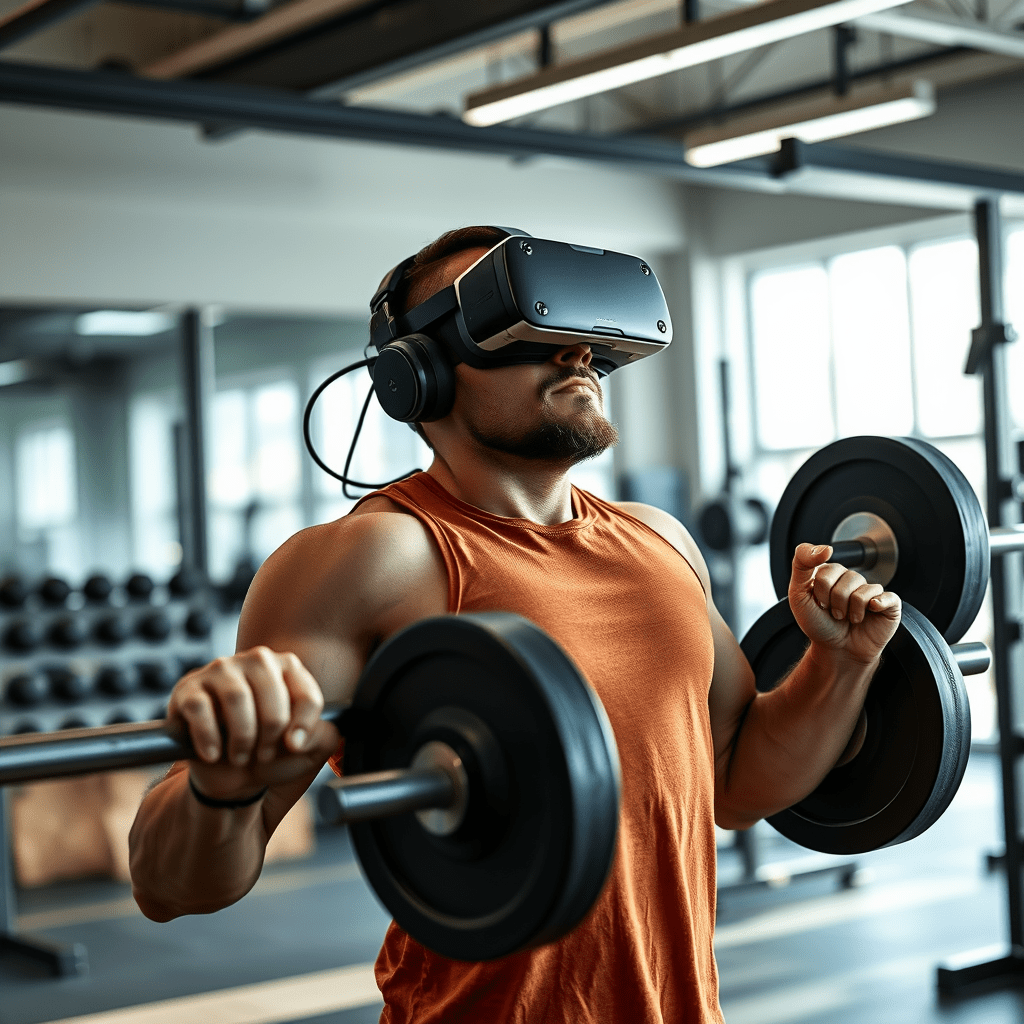
Virtual Reality Weightlifting: Enhancing Technique and Safety with Immersive Feedback
Virtual Reality Weightlifting is rapidly becoming a groundbreaking training modality that leverages immersive technology to correct form in real‑time, reducing injury risk and maximizing performance. By placing athletes inside a virtual gym that monitors every movement, this approach delivers instant feedback on posture, joint angles, and muscle activation, making the training experience as precise as a high‑end motion capture studio – but at home or in any gym.
Why Virtual Reality is a Game Changer for Weightlifters
Weightlifting demands impeccable technique. A single misalignment can translate into a painful injury that sidelines you for weeks. Traditional coaching relies on a coach’s eyes and a few video clips, but those tools can miss micro‑imbalances that accumulate over time. Virtual Reality Weightlifting turns this challenge into an opportunity by providing:
- Instantaneous Feedback: Sensors track your motion and trigger visual or auditory cues the moment a deviation occurs.
- Data‑Driven Insights: Each session logs angles, velocity, and load, building a personalized performance profile.
- Consistency Across Sessions: The VR system eliminates human error, ensuring you practice the same standards every time.
These features combine to create a training environment that’s both highly personalized and objectively consistent.
How the Technology Works
Virtual Reality Weightlifting systems typically integrate several components:
- Motion Sensors: Wearable inertial measurement units (IMUs) or optical tracking cameras capture joint positions with millimeter accuracy.
- Force Plates or Load Cells: Embedded in the platform or barbell, they measure ground reaction forces and load distribution.
- Real‑Time Processing Engine: A cloud‑based or local computer processes data and compares it to biomechanical models.
- Immersive Display: Head‑mounted displays (HMDs) or large screens visualize the athlete’s avatar, overlaying correction cues directly on the body.
- Audio/Visual Cues: Simple beeps, color changes, or on‑screen arrows guide the lifter to adjust posture.
When you lift a barbell, the system simultaneously tracks your bar path, joint angles, and force output. If your hips dip too early during a squat, a red arrow will appear above the hips, and a gentle tone will prompt you to correct. Within seconds, the data is stored for post‑session analysis.
Real‑Time Form Correction in Action
Imagine performing a bench press in VR. The software monitors your elbow flexion, shoulder alignment, and bar trajectory. As soon as the bar deviates from the ideal line, the system lights up the bar in green to show the correct path. If your shoulders creep too far forward, an overlay arrow points to the scapula region, and a subtle vibration on your wrist indicates the adjustment needed.
Because the feedback is delivered while you’re moving, the brain’s motor learning pathways reinforce the correct movement patterns instantly. Studies show that athletes who train with real‑time feedback improve their technique at a rate 30% faster than those using only video review.
Safety Benefits and Injury Prevention
One of the most compelling advantages of Virtual Reality Weightlifting is its impact on safety:
- Early Detection of Compensations: Minor deviations that could lead to strain are caught before they become habitual.
- Load Management: The system flags when muscle fatigue leads to technique breakdown, prompting a load reduction.
- Balanced Muscle Development: Sensors detect asymmetries in muscle activation, allowing targeted corrective drills.
- Posture Reminders: Continuous visual cues help maintain neutral spine alignment, a common cause of lower back injuries.
According to a recent meta‑analysis, lifters who incorporated VR feedback reduced lower‑body injury incidence by 42% over a 12‑month period.
Integrating VR into Your Training Routine
Incorporating Virtual Reality Weightlifting into your regimen is straightforward. Here’s a practical guide:
Step 1: Setup
- Choose a VR system that includes motion sensors compatible with barbells.
- Position cameras or sensors to cover the entire lift area.
- Calibrate the software by performing a series of light warm‑up movements.
Step 2: Warm‑Up
- Begin with dynamic stretches while the system logs baseline movement patterns.
- Use the VR environment to visualize ideal body alignment.
Step 3: Main Sets with Feedback
- Perform your sets while the system provides continuous corrections.
- Pause if you receive an alert and adjust before continuing.
- Record each session; the software will generate a post‑session report.
Step 4: Cool Down and Analysis
- Review the VR‑generated performance graph.
- Identify persistent issues and plan corrective drills.
- Set goals for the next session based on data insights.
For coaches, the VR dashboards also allow remote monitoring of athletes, enabling timely adjustments even when they train independently.
Case Studies and Athlete Experiences
Case Study 1: Olympic Weightlifter
Maria Santos, a 22‑year‑old Olympic weightlifter, struggled with hip depth during clean and jerk. After three weeks of VR training, her hip depth improved by 15 degrees, and her snatch velocity increased by 12%. She reported that the real‑time cues helped her internalize the movement without the cognitive load of post‑lift video analysis.
Case Study 2: Powerlifting Coach
Coach Mark Davis integrated VR into his client program. Within two months, client injury reports dropped from 8% to 2%. Clients noted that the “virtual coach” kept them honest and focused, eliminating the temptation to sacrifice form for heavier loads.
Limitations and Future Directions
While Virtual Reality Weightlifting offers remarkable benefits, it’s not a silver bullet. Current limitations include:
- Sensor Accuracy: In high‑speed lifts, latency can introduce slight delays in feedback.
- Cost: Advanced VR setups remain expensive for some training facilities.
- Learning Curve: Some athletes feel overwhelmed by simultaneous audio-visual cues.
- Limited Sport‑Specific Models: Most VR programs still focus on general lifts; niche movements like snatch pulls may lack dedicated models.
Future research aims to:
- Integrate machine learning to adapt feedback intensity based on fatigue levels.
- Develop modular sensors that can be swapped between gym equipment.
- Expand the VR library to cover compound movements specific to different sports.
As hardware becomes more affordable and software more intuitive, the adoption of VR in strength training is expected to accelerate.
Getting Started with Virtual Reality Weightlifting
If you’re ready to explore VR as a tool for safer, more effective weightlifting, consider the following steps:
- Research reputable VR platforms that support motion capture and force measurement.
- Attend a demo session or workshop to understand sensor placement.
- Start with light loads to allow your body to adapt to the feedback system.
- Keep a training log and review weekly reports to track progress.
- Consult a qualified coach to interpret data and tailor your program.
Remember, the key to success lies in consistency. Use the VR environment not just as a novelty but as an integral part of your training cycle.
In summary, Virtual Reality Weightlifting is more than a tech gimmick; it’s a scientifically grounded approach that democratizes expert coaching, enhances safety, and accelerates skill acquisition. By embracing immersive feedback, lifters can achieve cleaner form, lower injury risk, and ultimately, stronger results.
Ready to lift smarter? Dive into VR today and transform your training.