Skateboard AR: Virtual Obstacles in Real Parks Revolutionize Skill Training – The Future of Extreme Sports
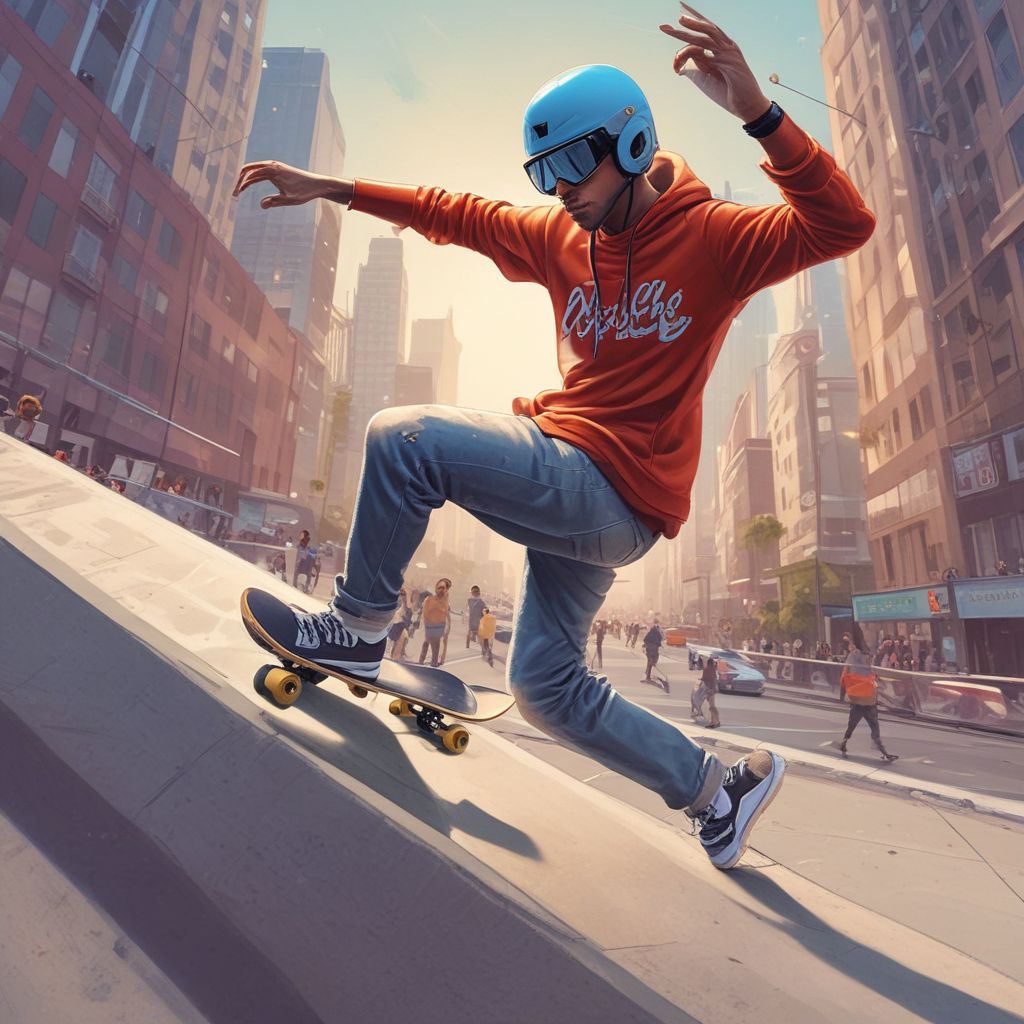
In the last decade, augmented reality (AR) has moved beyond gaming and into the realms of sports training, medicine, and education. Among the most exciting innovations is Skateboard AR, a technology that overlays virtual ramps, rails, and grinds onto existing skate parks, allowing skateboarders to practice new tricks in a safe, controlled environment. By combining real-world terrain with digital enhancements, this approach is revolutionizing how riders learn, refine, and push the boundaries of their craft.
How Skateboard AR Works
At its core, Skateboard AR relies on a blend of smartphone cameras, motion sensors, and cloud-based rendering engines. When a rider wears a lightweight AR headset or holds up a tablet, the device captures the real-time geometry of the skate park. Overlaid onto this live feed are virtual obstacles—precise replicas of half-pipes, ledges, or even entirely new elements that don’t yet exist physically.
- Real-Time Tracking: The device uses computer vision algorithms to map the park’s layout, detecting edges, surfaces, and existing obstacles.
- Dynamic Rendering: Virtual components are rendered in 3D and anchored to the physical environment, maintaining correct scale and perspective as the rider moves.
- Gesture & Motion Input: The rider’s movements are tracked via inertial measurement units (IMUs), allowing the system to simulate realistic physics responses to tricks.
- Feedback & Analytics: On-screen overlays provide instant feedback on speed, rotation, landing accuracy, and even biomechanical data for advanced training.
The Training Revolution: From Novice to Pro
Lowering Barriers to Entry
Traditional skate parks require significant time, skill, and sometimes expensive equipment to master a new trick. With Skateboard AR, beginners can experiment with more complex maneuvers without the risk of injury. By gradually layering virtual obstacles—starting with simple rails and progressing to multi-level half-pipes—learners can build confidence at their own pace.
Safe, Simulated Failure
One of the biggest challenges in extreme sports training is the high cost of failure. A misjudged landing can result in costly equipment damage or serious injury. AR eliminates that risk by providing a sandbox environment where mistakes are non‑lethal. Coaches can run thousands of simulated repetitions in a single session, allowing athletes to fine-tune their timing and body position.
Data-Driven Coaching
Beyond visual overlays, Skateboard AR systems now integrate machine learning models trained on thousands of professional skateboarding videos. These models analyze a rider’s technique and recommend specific adjustments—such as altering board angle or foot placement—to maximize performance. Coaches can also monitor progress across sessions, comparing metrics like jump height, rotation speed, and landing stability.
Cross-Training & Multi-Disciplinary Skill Development
AR’s flexibility means that riders can practice different styles—street, vert, park—within the same session. A virtual rail can appear at the end of a real half-pipe, prompting a seamless transition between tricks. Moreover, the same platform can be adapted for related sports such as BMX or parkour, fostering interdisciplinary skill growth.
Community Impact: Inclusive, Accessible, and Sustainable
Democratizing Extreme Sports
Access to high-quality skate parks is uneven across regions, often limited by geographic or economic factors. With a modest AR kit—an affordable headset and a tablet—riders anywhere can experience a world-class training environment. This democratization opens doors for underrepresented communities, encouraging broader participation and diversity in extreme sports.
Environmental Benefits
Constructing physical skate park expansions is costly and resource-intensive. Virtual obstacles circumvent the need for additional concrete, metal, or paint. Parks can re‑imagine their layout seasonally without permanent alterations, reducing material waste and maintenance costs.
Community Engagement & Events
Local skate shops and park managers can host AR challenges, where participants compete to master a sequence of virtual obstacles. These events create buzz, attract media coverage, and foster a sense of community around shared experiences that blend the physical and digital worlds.
Challenges & Future Directions
Hardware Constraints
While AR headsets have improved in weight and battery life, many skateboarders still prefer minimal gear to preserve their freedom of movement. Lightweight glasses or AR overlays on smartphones are emerging solutions, but performance trade-offs remain.
Accurate Physics Modeling
For real impact, virtual obstacles must mimic the feel of real ones. Developers are working on more sophisticated physics engines that account for board flex, tire grip, and wind resistance. The closer the simulation, the better the transfer of skills to real-world execution.
Content Creation & Standardization
Skatepark operators and content creators are collaborating to build libraries of certified virtual obstacles. Standardization ensures consistency across different devices and platforms, reducing variability that could confuse riders.
Legal & Liability Issues
As AR expands, questions arise about liability for injuries caused by misaligned virtual obstacles or software glitches. Clear guidelines and safety protocols will be essential to protect both users and developers.
The Road Ahead: A Glimpse Into Tomorrow
Looking forward, Skateboard AR may integrate with other emerging technologies such as haptic suits, brain‑computer interfaces, and AI-driven personal coaches. Imagine a headset that vibrates to indicate the optimal landing point or a neural interface that translates intention into board motion, allowing the rider to practice tricks in a fully immersive virtual reality that still references the real world.
In 2035, it’s plausible that skate parks will feature hybrid spaces—areas where physical and virtual obstacles coexist seamlessly. Skaters could hop from a real half‑pipe into a digital overpass, experiencing a continuous flow of challenges that would be impossible to build physically.
Conclusion
Skateboard AR is more than a gimmick; it is a powerful tool that reshapes training, safety, and inclusivity in extreme sports. By marrying real park infrastructure with virtual obstacles, it empowers riders of all levels to explore, learn, and innovate. As hardware improves and communities embrace this technology, we can expect a new era where skill development is faster, safer, and more accessible than ever before.
Embrace the future of skateboarding—where your next big trick starts with a glance through an AR lens.