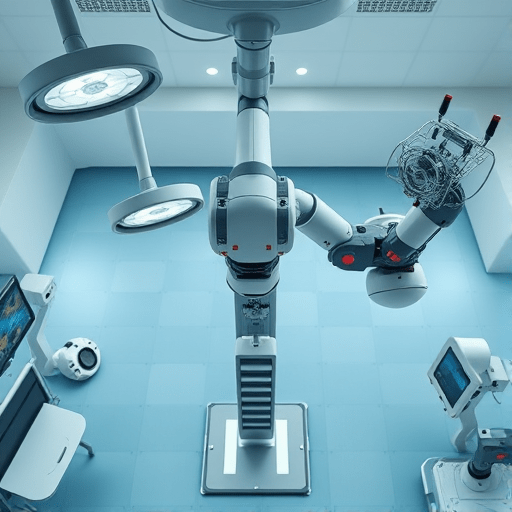
The rise of Self-Evolving Digital Twins is transforming how operators manage complex infrastructure by using autonomous simulation agents, continuous online learning, and generative models to auto-update twins from streaming sensors — dramatically reducing manual recalibration while enabling adaptive control.
What makes a digital twin “self-evolving”?
A traditional digital twin is a static or periodically updated physics or data-driven model that mirrors a physical asset. A self-evolving digital twin augments that concept with an automated feedback loop: agents ingest live sensor streams, detect drift between simulation and reality, propose or apply model corrections (often using generative or hybrid models), and then validate updates through simulation and closed-loop testing.
Core components
- Streaming sensor layer: High-frequency telemetry from sensors, IoT gateways, and edge preprocessors.
- Data ingestion & quality pipeline: Real-time cleaning, alignment, timestamping, and labeling.
- Autonomous simulation agents: Services that run experiments, tune parameters, and generate synthetic scenarios to explain observed discrepancies.
- Continuous learning engine: Online learning algorithms and generative models that update parameters or structure incrementally.
- Validation sandbox: Safe simulation environment for A/B testing new twin versions before deployment.
- Control interface: APIs or controllers that enable adaptive control policies to be deployed back to the physical asset with safety checks.
How autonomous simulation agents reduce manual recalibration
Manual recalibration is expensive and slow: field engineers must diagnose drift, collect additional data, tune models, and re-deploy. Autonomous simulation agents shorten this loop by continuously testing hypotheses against live data. When a performance gap is detected, agents can run targeted experiments in simulation, use generative models to synthesize missing conditions, and propose minimal parameter adjustments that bring the twin into alignment.
Example workflow
- Detect: Monitor model residuals and uncertainty; flag anomalies and sustained bias.
- Explain: Run agent-driven sensitivity analyses to determine likely causes (sensor bias, changed physical conditions, wear).
- Generate: Use generative models to synthesize missing data or augment rare-event samples.
- Update: Apply incremental updates to parameters or sub-models using online learning methods.
- Validate: Execute validation scenarios in the sandbox; measure improvement in fidelity and safety metrics.
- Deploy: Safely roll the updated twin into production with rollback controls and human oversight as needed.
Benefits for complex infrastructures
Self-evolving digital twins unlock several advantages across sectors:
- Reduced downtime: Faster detection and automated correction of model drift reduces false alarms and prevents cascading failures.
- Adaptive control: Controllers can use up-to-date twins for model-predictive control (MPC) that adapts to changing conditions.
- Lower operational cost: Less manual field calibration and fewer on-site interventions.
- Improved resilience: Generative agents can simulate extreme scenarios for stress-testing and contingency planning.
- Continuous reliability improvement: Learning from streaming data leads to progressively better predictive maintenance and asset life estimates.
Real-world use cases
Smart grids
Power networks experience topology changes, distributed generation, and variable load patterns. Self-evolving twins continuously adapt grid models, enabling more accurate load forecasting, fault localization, and adaptive protection schemes.
Industrial plants and manufacturing lines
Wear and process drift degrade model fidelity. Online agents detect subtle shifts in vibration or temperature signatures, auto-tune remaining useful life models, and optimize maintenance schedules without full production stoppages.
Water distribution and civil infrastructure
Sensors reveal leaks, pressure changes, and new usage patterns. Generative twins can simulate rare burst scenarios and guide adaptive pressure control to reduce water loss while maintaining service.
Challenges and practical considerations
Bringing self-evolving twins into production is not trivial. Key challenges include:
- Data quality and observability: Garbage-in, garbage-out applies — noisy or missing telemetry can mislead online learning agents.
- Compute and latency: Continuous retraining and high-fidelity simulations demand scalable compute and careful latency management, especially for control loops.
- Model governance and explainability: Autonomous updates must be auditable; operators need clear rationale for changes and safe rollbacks.
- Security and trust: A compromised agent could inject harmful model changes; strong authentication and integrity checks are essential.
- Human-in-the-loop balance: Too much automation risks unsafe actions; too little undermines the value of self-evolution.
Best practices for adoption
Successful deployments follow pragmatic patterns:
- Start hybrid: Use offline model updates with periodic supervised deployments before enabling fully autonomous updates.
- Use multi-fidelity models: Combine coarse-grain fast models for control with slower high-fidelity sims for validation.
- Policy sandboxing: Always validate new control policies in a safe simulation sandbox with realistic noise and edge cases.
- Incremental trust-building: Roll out autonomous updates gradually, with checkpoints and human approvals until confidence grows.
- Observability-first design: Build rich telemetry, health metrics, and provenance logs from day one.
Looking ahead: trends shaping self-evolving twins
Several technical trends will accelerate maturity:
- Federated and privacy-preserving learning: Cross-site model improvements without sharing raw data.
- Causal and physics-informed generative models: Better generalization across unseen regimes and more robust extrapolation.
- Edge-native agents: Lightweight agents that perform local updates to reduce latency and bandwidth.
- Regulatory frameworks: Standards for model governance and certification of autonomous updates in safety-critical domains.
Self-evolving digital twins represent a pragmatic next step in closing the reality gap: by combining streaming sensors, autonomous simulation agents, and modern learning methods, organizations can maintain higher-fidelity models with far less manual effort, and use them to drive safer, more efficient adaptive control.
Conclusion: As infrastructure becomes more interconnected and dynamic, adopting self-evolving digital twins gives organizations the ability to continuously learn from reality, reduce operational friction, and respond nimbly to change.
Ready to start evolving your twins? Explore a pilot project to prove value on a single asset and expand systematically.