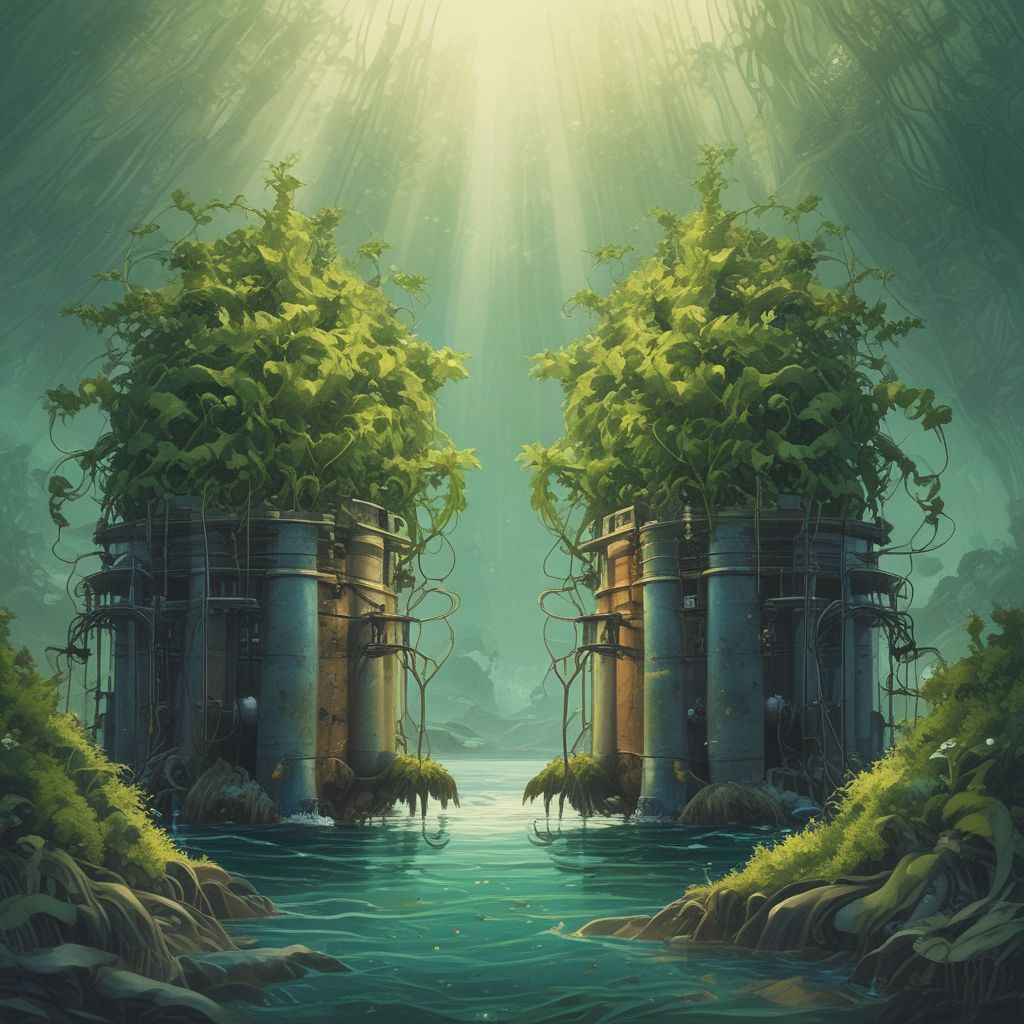
Seaweed Batteries — the idea of using seasonal kelp growth to store energy and lock up carbon — is emerging as a creative hybrid solution that pairs offshore kelp farms with kelp-to-biochar and green-hydrogen pathways to absorb surplus renewables while restoring marine ecosystems. This article maps how integrated kelp systems can act like seasonal batteries, the science and engineering behind the pathways, potential co-benefits, and pragmatic next steps for piloting this promising approach.
Why kelp as a seasonal storage medium?
Kelp grows rapidly — often several meters per month — and can be cultivated at scale on relatively low-cost infrastructure. Unlike electrochemical batteries that store electricity directly, kelp-based systems capture renewable energy indirectly by converting excess electricity and coastal biomass into storable, transportable products: biochar and green hydrogen. Together, these pathways create a seasonally timable storage mechanism that aligns peak renewable generation with off-season demand.
Natural advantages
- Fast growth rates: Many kelp species achieve high annual productivity, yielding large biomass per unit area.
- Coastal scale: Offshore farms can be deployed in marginal sea areas, reducing land-use conflicts.
- Multiple value streams: Biomass supports carbon sequestration, hydrogen feedstock, biochar production, and coastal habitat restoration.
Two complementary pathways: kelp-to-biochar and kelp-to-hydrogen
Kelp-to-biochar: seasonal carbon storage and soil benefits
Drying and pyrolyzing kelp produces biochar — a stable, carbon-rich solid that can store carbon for centuries when applied to soils. The pyrolysis process can be powered by surplus renewables or by the biomass itself in efficient systems, and generates syngas that can be combusted or used onsite. Key benefits include:
- Long-term carbon sequestration: Biochar’s recalcitrant carbon resists rapid decomposition.
- Soil enhancement: Biochar improves water retention, nutrient holding capacity, and reduces fertilizer runoff when applied to agricultural soils.
- Energy recovery: Pyrolysis yields heat and energy-rich gases that can offset processing energy needs.
Kelp-to-green-hydrogen: storing electrons as molecules
Kelp biomass can be converted to green hydrogen through a couple of routes: direct electrolysis powered by surplus renewables (using kelp-derived feedstocks as a buffer), or biomass gasification followed by methanation and steam methane reforming with CO2 capture or advanced biochemical conversion to hydrogen. Hydrogen is a flexible energy carrier — usable in industry, transport, and long-duration storage — and can be stored seasonally in tanks, geological formations, or converted to ammonia for shipping.
Integrating with offshore renewables: how the “battery” works in practice
Think of a coastal energy hub where offshore wind and solar generate variable electricity. During high generation periods, surplus power can be used to:
- Power drying and pyrolysis of harvested kelp to produce biochar and heat.
- Drive electrolyzers to produce hydrogen, using kelp processing as a buffer for feedstock and logistic coordination.
- Support on-site processing microgrids that minimize curtailment and maximize value capture.
Harvested kelp acts as the seasonal carrier of captured energy: when growth is high, biomass is harvested and processed; when demand rises or renewables underproduce, stored hydrogen and biochar-derived energy/credits help balance the system.
Mass and energy accounting (high-level)
Practical design begins with biomass yield and conversion efficiencies. For example, a high-productivity kelp farm producing 100 wet tonnes/ha/year can translate to tens of tonnes of dry biomass and several tonnes of biochar plus several hundred MWh-equivalent of chemical energy as hydrogen, depending on process choices and efficiencies. Detailed LCA and energy balance studies are essential to validate net carbon removal and storage claims.
Co-benefits for ecosystems and communities
- Habitat restoration: Kelp farms provide nursery habitat for fish, invertebrates, and increase local biodiversity.
- Fisheries support: Carefully sited farms can enhance local commercial and recreational fisheries.
- Blue carbon accounting: Properly monitored kelp-to-biochar pathways can generate verified carbon removals for the voluntary carbon market or regulated programs.
- Local jobs: Construction, harvest, processing, and value-chain services create employment opportunities for coastal communities.
Key challenges and solutions
The idea is promising but not plug-and-play. Main challenges include supply chain logistics, permitting and marine-use conflicts, ecological risk management, and robust carbon accounting.
Logistics and processing
- Wet biomass transport is costly — decentralizing drying or employing wet-processing gasification reduces transport penalties.
- Seasonality requires storage infrastructure (e.g., drying facilities, silage-like approaches) to hold feedstock between harvest and conversion.
Environmental safeguards
- Monitor nutrient cycling to avoid eutrophication or unintended local impacts.
- Design harvest intensity and farm spacing to preserve ecosystem services and avoid shading or benthic impacts.
Carbon accounting and policy
Accurate life-cycle assessment and monitoring, reporting and verification (MRV) frameworks are essential to ensure that biochar production and hydrogen pathways deliver true removals and avoid double-counting. Policy incentives such as carbon credits, renewable hydrogen procurement, and coastal restoration grants can tip commercial viability.
Piloting and scaling: a practical roadmap
- Site assessment: identify coastal locations with suitable currents, depth, and community support.
- Pilot kelp farm (1–10 ha): test species selection, yields, and harvest scheduling.
- Process demo: small-scale pyrolysis unit and electrolyzer operated during surplus generation windows to test integration and MRV procedures.
- Data-driven optimization: refine logistics, maximize conversion efficiencies, and quantify carbon accounting results.
- Scale sustainably: expand area, process capacity, and commercial partnerships once net-positive climate and ecological outcomes are validated.
Economic models and revenue streams
Integrated kelp hubs can rely on diversified revenue: sale of green hydrogen, carbon removal credits from biochar, soil amendment sales, renewable energy arbitrage, and ecosystem service payments. Combining markets reduces risk and improves resilience in early-stage deployments.
Final considerations
Seaweed Batteries are not a single technology but a systems approach that couples marine farming with chemical conversion and energy systems engineering. Bringing kelp-to-biochar and green-hydrogen pathways together unlocks seasonal storage capacity while delivering meaningful ecological restoration and economic opportunities for coastal regions.
Conclusion: With careful design, robust monitoring, and supportive policy, seaweed batteries can become a practical tool for storing surplus renewables and sequestering carbon while restoring marine ecosystems.
Ready to explore a pilot? Contact local marine researchers, coastal communities, and renewable developers to scope a feasibility study for a kelp-based seasonal storage hub.