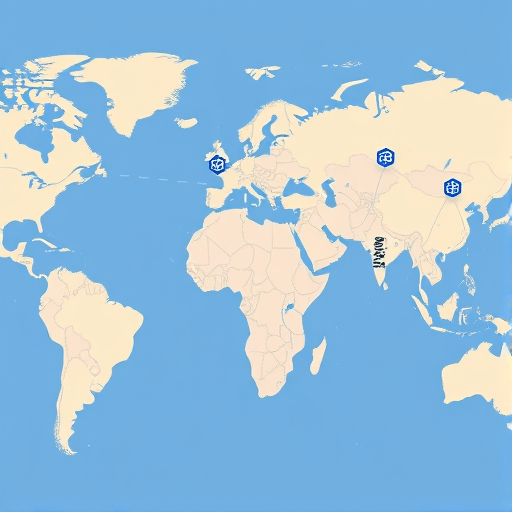
The fastest, least risky path to global scale is often paved by Local MVPs — small, autonomous market pilots built to test core assumptions in three diverse markets simultaneously. This tactical guide explains how to design, run, and learn from three parallel Local MVPs so product teams can validate demand signals, optimize acquisition spend, and shape a product roadmap that actually scales.
Why Local MVPs beat one-size-fits-all pilots
Running a single pilot in one market creates blind spots: cultural differences, channel effectiveness, and operational edge cases remain invisible. Local MVPs purposefully embrace variance — legal frameworks, payment methods, and customer touchpoints — giving teams faster, higher-resolution insights about where the product resonates and where it needs adaptation.
- Faster discrimination: If a core assumption fails in all three markets, it’s a product problem. If it holds in one or two, localization or go-to-market (GTM) fixes may suffice.
- Lower cost per insight: Small budgets across three markets uncover differentiated conversion funnels and acquisition ROI faster than a single expensive global launch.
- De-risked scaling: Operational, legal, and UX risks are surfaced early, reducing costly rework during roll-out.
Picking the three markets: strategic diversity, not random sampling
Choose three markets that intentionally maximize signal diversity while remaining manageable to operate in parallel.
Selection criteria
- Customer archetype overlap: One market with a high concentration of your ideal early adopter, one with moderate overlap, and one adjacent market that tests boundary conditions.
- Channel variety: Ensure markets prioritize different acquisition channels (e.g., organic search, paid social, local partnerships) so you can compare channel effectiveness.
- Operational difference: Pick markets with different regulatory, payment, and logistics profiles to surface integration risks early.
Designing the Local MVP: scope, autonomy, and hypothesis framing
Each Local MVP should be a constrained experiment built around 3–5 clear hypotheses: customer value, acquisition efficiency, and operational viability.
Hypothesis examples
- “Early adopters will pay X price for feature Y within 30 days.”
- “Paid social will convert at Z% CAC under $A for this market.”
- “Local payments and onboarding can be implemented within two sprints without impacting churn.”
Keep the MVP small but real
Ship the minimal product that can capture a conversion or meaningful engagement. Use feature flags, market-specific copy, and simplified fulfillment. Avoid building global infrastructure — run the pilot with composable services, manual-for-now operations (“concierge” flows), and flexible data collection hooks.
Operating three pilots in parallel: team, budget, and cadence
Parallelism is powerful but requires discipline. Structure teams and cadence to ensure clarity and rapid learning.
- Core product squad: Central team that owns the product hypothesis, core metrics, and shared analytics.
- Local GTM pods: Small autonomous pods (PM, growth, ops) per market empowered to adapt messaging and channels within defined guardrails.
- Shared analytics & rituals: Weekly cross-market syncs, shared dashboards, and common event schema so results are comparable.
- Budget allocation: Allocate equal, limited budgets to each market to force prioritization and comparability; reallocate from underperforming experiments quickly.
Key metrics and decision rules
Choose metrics that map to the three core hypotheses: demand, acquisition efficiency, and operational feasibility.
- Demand signal: activation rate, time-to-first-value, and paid conversion rate.
- Acquisition efficiency: CAC, conversion by channel, and LTV:CAC ratio (or proxy such as trial-to-paid conversion).
- Operational health: average time to fulfill, error rates, and support volume per 100 users.
Decision rules should be binary and timeboxed. Example: “If CAC < $40 and 7-day activation > 20% after 30 days, promote market to scaling experiments; else iterate once on messaging or onboarding, then re-evaluate for 30 days.”
Optimizing acquisition spend across markets
Early acquisition experiments are about signal, not scale. Run narrow, high-intent campaigns and A/B test creative and landing pages in-market.
- Channel triangulation: Test a minimum of two channels per market to identify primary and backup channels.
- Micro-budgets, rapid loops: Use small, daily budgets, and kill non-performing campaigns after pre-agreed thresholds.
- Local creatives and offers: Tailor value propositions and hooks to cultural context — same product, different frames.
Turning pilot learnings into a scalable roadmap
Use a clear mapping from market-level findings to product decisions so pilots directly influence the core roadmap.
How to translate evidence
- Feature prioritization: If a localized flow consistently improves activation in two markets, elevate it to product backlog for core implementation with feature flags for other markets.
- Platform hardening: If ops tooling is the bottleneck in multiple pilots, schedule a platform sprint before scaling further.
- Go/no-go thresholds: Define minimum viable success criteria that must be met before investing in global infra or marketing scale.
Common pitfalls and how to avoid them
- Overbuilding: Resist turning proven local hacks into permanent global code until validated across markets.
- Comparing apples to oranges: Standardize measurement and channels as much as possible to keep comparisons meaningful.
- Decision paralysis: Timebox experiments and codify decision rules up front to force forward motion.
30/60/90-day tactical checklist
- Days 0–30: Launch three Local MVPs with core tracking, one growth test per market, and baseline operational playbook (manual processes where needed).
- Days 31–60: Iterate on onboarding and highest ROI channel; run three A/B creative tests per market; surface legal/payment blockers.
- Days 61–90: Apply decision rules: promote markets that meet thresholds to scale experiments, freeze or pivot failing markets, and prioritize roadmap items based on cross-market signals.
Short example: marketplace startup
A two-sided marketplace tested Local MVPs in a tech-savvy city (high demand, quick payments), a mid-size market (different payment rails), and a neighboring country with stricter KYC. Within 60 days the team discovered demand in two markets, that a simplified escrow flow improved trust in both, and that paid search outperformed partnerships in the tech-savvy city — all actionable insights that informed a single product change (escrow microflow) and a reallocation of acquisition budget.
Local MVPs don’t promise immediate virality. They promise clarity: clear evidence about what to scale, what to fix, and what to stop.
Conclusion: Running three focused Local MVPs in parallel gives product teams high-fidelity signals about demand, acquisition channels, and operational risk — enabling faster, cheaper, and less risky decisions about global scaling. Start small, standardize measurement, and let market variance be your healthiest source of truth.
Ready to de-risk your next global push? Launch three Local MVPs with the checklist above and validate before you scale.