The rise of pay as you go LEO services is rewriting how businesses access Earth observation: instead of buying satellites, companies can lease cameras, radars, and in-orbit AI processing by the minute, tapping an “Orbital Edge” that behaves like a cloud platform above Earth.
What is the Orbital Edge?
Orbital Edge describes a new marketplace and technical layer of low-Earth orbit (LEO) assets—micro-satellites, sensor payloads and edge compute nodes—that are discoverable, taskable, and billable on demand. Think of it as a cloud provider’s catalog, but for space: sensors (optical cameras, synthetic aperture radar, hyperspectral imagers), compute (FPGA/GPUs running AI models), and delivery (downlinks, APIs) are exposed as rentable services rather than capital assets.
How pay as you go LEO services work
These systems combine three elements:
- Marketplace and APIs: A catalog where customers choose sensor type, quality, revisit window and processing options.
- Tasking and scheduling: Dynamic flight-planning and antenna scheduling that aim a satellite or reserve a compute slot for the requested time window.
- Edge processing: AI and analytics run on-board or in proximate ground nodes to deliver insights instead of raw data—reducing latency and bandwidth costs.
Minute-by-minute billing
Rather than long-term contracts or time-consuming procurement, customers are billed for discrete uses—tasking a camera for a ten-minute acquisition, running a radar scan for fifteen, or invoking an AI model to detect vessels in near real-time. This usage-based model aligns cost to value and enables rapid experimentation.
Why businesses should care
Pay as you go LEO services democratize access to space-derived intelligence. Key advantages include:
- Cost efficiency: No up-front capital for satellites; predictable operational spend tied to outcomes.
- Speed: Rapid procurement and near-immediate tasking let teams iterate quickly—ideal for time-sensitive events like natural disasters.
- Scalability: On-demand bursts for projects with seasonal or episodic needs (e.g., harvest monitoring, wildfire mapping).
- Edge AI: Processing in orbit reduces data egress, preserves privacy, and returns actionable insights faster.
High-impact use cases
Agriculture and forestry
Farmers and agritech companies can lease hyperspectral imaging by the hour to monitor crop stress, nutrient deficiency, or pest outbreaks across large tracts—then apply in-orbit analytics to flag zones that need immediate attention.
Disaster response and emergency services
During floods, earthquakes, or wildfires, on-demand optical and radar tasking provides responders with near-real-time situational awareness. Fast, minute-based leases mean imagery and assessments arrive when they matter most.
Maritime domain awareness
Operators can call up radar or optical captures on specific ocean regions to detect dark ships, track incursions, or monitor port activity—paired with in-orbit AI that identifies vessel types and behaviors before any human review.
Infrastructure and energy
Utilities and telcos can schedule periodic, high-resolution inspections of pipelines, transmission lines, and remote sites, using automated anomaly detection run as part of the service to reduce inspection costs and speed maintenance cycles.
Technical and commercial considerations
Integration with existing clouds and workflows
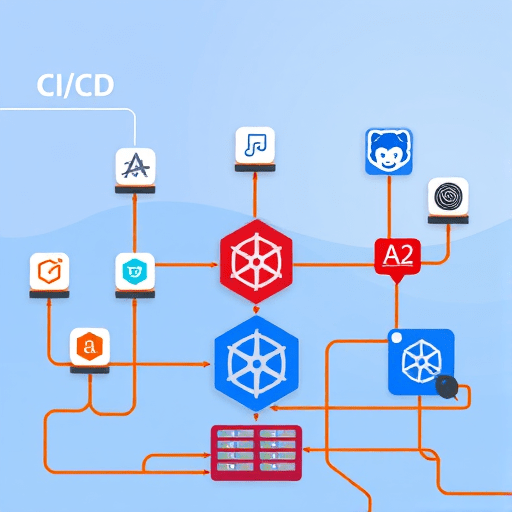
Successful Orbital Edge services offer APIs compatible with modern cloud stacks: RESTful tasking, Webhooks for delivery, and SDKs for common languages. Users should expect data formats that plug into GIS platforms and MLOps pipelines.
Latency, bandwidth and on-orbit compute
Edge compute radically changes trade-offs—by returning processed outputs (e.g., object lists, change masks) instead of multi-gigabyte imagery, providers cut down latency and reduce downstream storage and egress costs.
Security and compliance
Because imagery can be sensitive, vendors must provide robust encryption, role-based access, and data residency options. Customers in regulated sectors should verify compliance with applicable export controls and privacy rules.
Challenges and how providers are addressing them
- Scheduling conflicts: Advanced optimization and federation across constellations prioritize high-value requests while offering fallback captures.
- Quality assurance: Providers publish sensor performance metrics—MTBF, SNR, revisit probability—to help buyers select the right product for a mission.
- Interoperability: Industry-standard formats and common APIs are emerging, enabling multi-vendor stitching of imagery and analytics.
How product teams and buyers should approach Orbital Edge
Start small: run proof-of-concept projects with clearly defined success metrics (e.g., detection accuracy, time-to-insight, cost per incident). Evaluate vendors on three axes—sensor fidelity, processing capability, and operational reliability—and prefer platforms that provide transparent SLAs and easy integration points.
Checklist for procurement
- Define the business problem and metric for success
- Choose sensor type and resolution required
- Confirm latency and data delivery guarantees
- Test the API and sample data delivery
- Validate billing model aligns with expected usage
The near-term future of the orbital cloud
As LEO constellations grow and in-orbit processing matures, expect richer service tiers—subscription bundles that combine frequent low-res monitoring with occasional high-res tasking, marketplace-driven spot pricing, and deeper integration with terrestrial cloud providers so workflows can move between ground and orbital layers seamlessly.
Pay as you go LEO services and the Orbital Edge model aren’t just a new procurement option; they create a new abstraction layer for Earth intelligence—flexible, elastic, and aligned with modern cloud economics.
Conclusion: The Orbital Edge enables organizations to treat space like another programmable layer of their infrastructure, renting sensors and compute by the minute to solve fast-moving problems with precision and cost-efficiency.
Ready to test the orbital cloud? Explore an on-demand LEO tasking pilot to see minute-based imagery and in-orbit AI deliver real business outcomes.