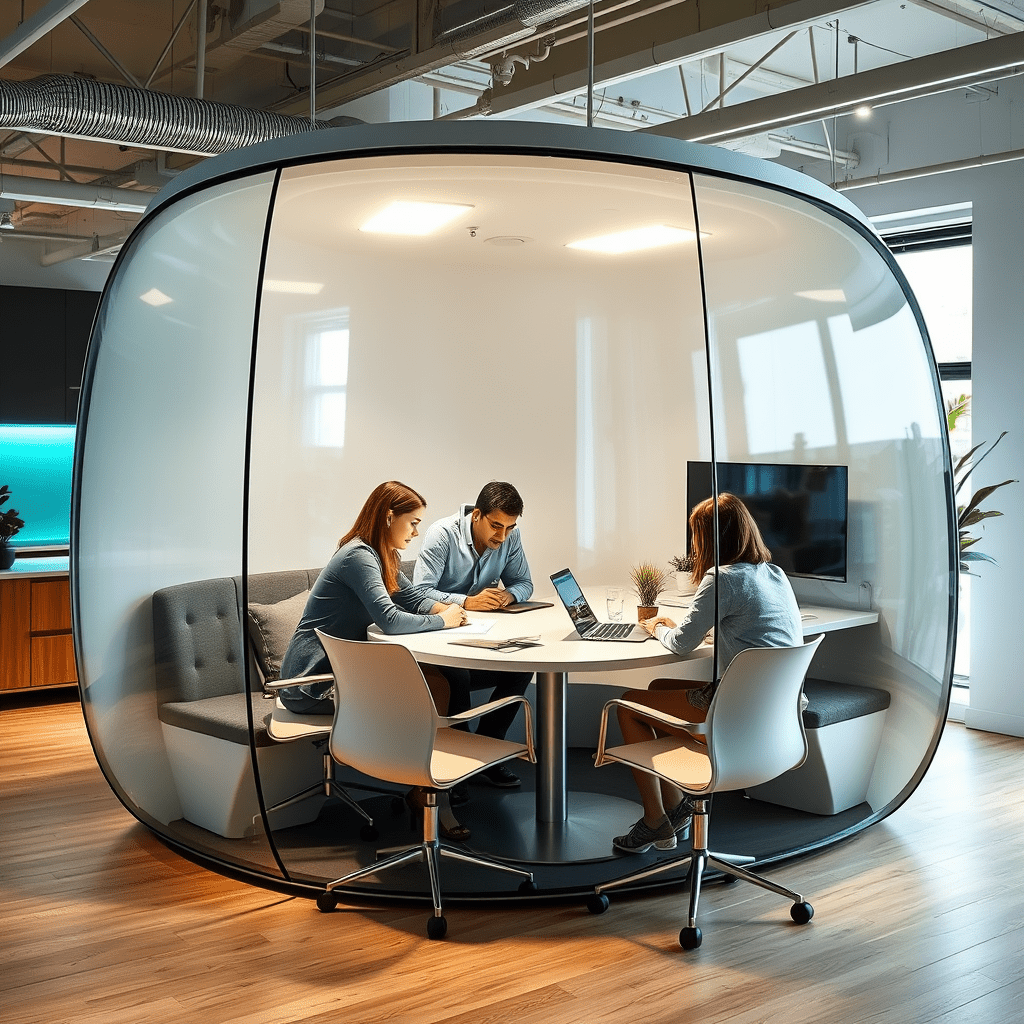
Micro‑Office: The Co‑Working Pod Revolution Fueling Startup Innovation
In the fast‑moving world of entrepreneurship, space is as precious as capital. Micro‑Office environments—compact, purpose‑built co‑working pods—have emerged as the next frontier for startups seeking agility, community, and a splash of inspiration without the overhead of traditional office leases. By packing a full suite of collaborative tools into a space that fits one or two teams, these pods deliver a startup‑friendly ecosystem that nurtures creativity, reduces friction, and keeps costs predictable.
What Is a Micro‑Office?
At its core, a micro‑office is a small, modular workspace, typically ranging from 150 to 300 square feet, designed for a single startup or a duo of closely aligned teams. Unlike open‑plan shared spaces, each pod is a self‑contained unit with its own high‑speed internet, ergonomic furniture, smart lighting, and a small meeting area that can double as a quick video‑call space or a brainstorming station. The concept borrows from “micro‑flats” in urban real estate: compact, efficient, and designed for maximum utility.
Key Features That Set Micro‑Offices Apart
- Privacy & Focus: Physical separation from other pods ensures reduced distractions while maintaining a community feel.
- Collaboration Hub: Integrated whiteboards, shared white‑board tablets, and movable tech carts make spontaneous teamwork effortless.
- Scalable Membership: Start with a single pod and scale horizontally—adding new pods as your team grows—without negotiating new leases.
- Smart Amenities: Climate control, task lighting, and ergonomic furniture are managed via a single app, giving teams instant control over their environment.
- Community Events: Regular hackathons, mentorship breakfasts, and informal meet‑ups foster networking across pods.
Why Startups Love Micro‑Offices
Startups thrive on speed, flexibility, and community. Micro‑offices deliver each of these in a single package:
- Cost‑Effectiveness: Leasing a micro‑office averages 30–40% less than a comparable traditional office, with utilities bundled into a flat monthly fee.
- Speed to Market: Move in within a week—no long lease terms or extensive renovation required.
- Culture Building: Intimate settings promote stronger bonds among team members and with neighboring startups.
- Access to Talent: Being part of a co‑working ecosystem increases visibility to freelancers, interns, and potential hires.
- Risk Mitigation: Flexible lease agreements mean less exposure if pivoting or scaling down becomes necessary.
Success Stories: Micro‑Offices in Action
From fintech to health tech, companies are using micro‑offices to accelerate product development and secure funding.
FinTech Startup “PayPulse” moved from a cramped home office to a 200‑sq‑ft pod. Within six months, they secured Series A funding, citing “the collaborative environment helped us prototype faster and communicate more effectively.”
Health‑Tech Innovator “PulseGuard” adopted a pod strategy across three locations, enabling their distributed R&D teams to sync in real time. The result was a 25% reduction in product development time.
Creative Agency “IdeaForge” leveraged micro‑office pods to host weekly cross‑disciplinary hackathons, attracting top design talent and generating a steady pipeline of client projects.
Challenges & How to Overcome Them
While the benefits are compelling, startups may face a few hurdles when adopting micro‑offices. Below are common concerns and practical solutions.
Noise & Distractions
Soundproofing varies across pods. Opt for spaces that use acoustic panels or double‑pane windows. If noise persists, schedule “quiet hours” and use headphones for individual work sessions.
Limited Physical Space
Work‑station density can become a constraint. Prioritize modular furniture that can be reconfigured, and invest in vertical storage solutions to maximize floor space.
Technology Reliability
Internet outages can halt progress. Choose a provider with redundancy options, and ensure each pod has an emergency backup power source.
Community Integration
Feeling isolated in a pod can be a risk. Encourage inter‑pod collaboration by attending community events and forming joint project teams.
How to Launch Your Own Micro‑Office Space
For real estate developers or entrepreneurs interested in creating a micro‑office hub, consider these steps:
- Market Research: Identify neighborhoods with high startup density and limited traditional office space.
- Design Flexibility: Use modular walls that can be reconfigured to accommodate varying pod sizes.
- Technology Infrastructure: Partner with a managed IT provider to offer high‑speed Wi‑Fi, cloud‑based collaboration tools, and security.
- Community Building: Create a shared lounge, an event space, and a digital platform for pod members to connect.
- Membership Models: Offer daily, weekly, and monthly rates with add‑ons such as meeting rooms, printing, and storage.
- Compliance & Safety: Ensure fire codes, accessibility standards, and data security protocols are met.
Future Outlook: The Micro‑Office Ecosystem in 2030
As remote work becomes normalized, the demand for flexible, well‑equipped workspaces will surge. By 2030, experts predict that micro‑offices will evolve into “intelligent pods” powered by AI‑driven ergonomics, automated scheduling, and real‑time sentiment analytics. These pods will become the backbone of distributed teams, enabling startups to operate from anywhere while retaining a cohesive culture.
Meanwhile, venture capitalists are increasingly looking at micro‑office occupancy rates as a proxy for startup activity, using space utilization data to gauge market sentiment. Startups that align their growth with micro‑office adoption will find themselves well positioned for both talent attraction and investor interest.
Conclusion
Micro‑offices represent more than just a clever use of space—they embody a shift toward lean, community‑centric startup culture. By offering cost savings, flexibility, and a collaborative atmosphere, they enable founders to focus on what matters most: building products, securing customers, and scaling impact. Whether you’re a founder looking for your first office or a developer wanting to launch the next coworking trend, the micro‑office movement offers a compelling, future‑proof solution.
Ready to elevate your startup? Explore our curated list of micro‑office spaces today!