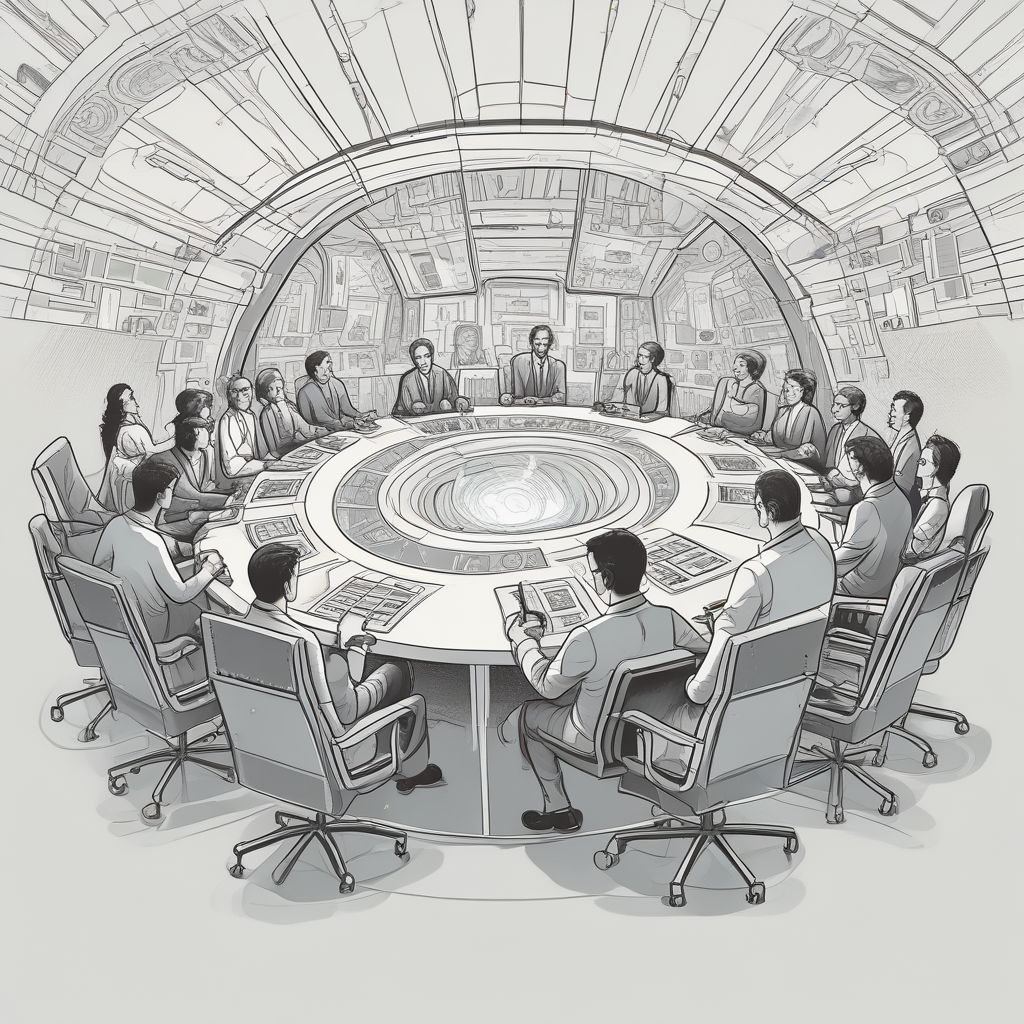
The shift to Leading Without Titles is reshaping how organizations get work done: autonomous pods — small, cross-functional teams empowered by outcome contracts, rotating stewardship, and micro-governance rituals — routinely outperform traditional manager-led groups on speed, innovation, and engagement. This article is a practical roadmap for building self-governing teams, with clear patterns, rituals, and metrics you can adopt in weeks, not years.
Why autonomous pods beat traditional managers
Autonomous pods replace command-and-control with distributed decision-making, allowing teams closest to the problem to decide and iterate fast. Key advantages include:
- Faster decisions: Pods eliminate managerial bottlenecks by establishing decision rights at the team level.
- Higher ownership: Outcome-focused teams take responsibility for results, not just tasks.
- Greater adaptability: Micro-governance rituals make continuous adjustments low cost and high frequency.
- Better retention: People who feel trusted and influential stay longer and contribute more creativity.
Core building blocks of a self-governing pod
Three simple, repeatable practices create the structure pods need to succeed: outcome contracts, rotating stewardship, and micro-governance rituals.
1. Outcome contracts (the team’s north star)
Outcome contracts are short, living agreements that define what success looks like and how the pod will be held accountable. They focus on outcomes, not activity.
Simple outcome contract template:
- Timeframe: 6–12 weeks
- Outcome statement: One sentence describing the measurable end-state (e.g., “Increase checkout conversion from 2.6% to 4.0% for returning users”).
- Success metrics: 1–3 KPIs with baseline and target.
- Constraints: Budget, dependencies, compliance boundaries.
- Working norms: Communication channels, meeting cadence, decision-making rule (e.g., consent or modified consensus).
- Escalation path: How unresolved trade-offs are surfaced and who mediates.
Outcome contracts live in a shared document accessible to stakeholders and are reviewed at every cadence checkpoint.
2. Rotating stewardship (leadership as a role, not a title)
Rotating stewardship gives one person stewardship responsibilities for a short period (e.g., two weeks) and then rotates the role. Stewardship is about holding the pod to its outcome contract and maintaining the micro-governance rituals, not issuing orders.
- Why rotate: Rotations spread leadership skills, prevent single-point reliance, and keep perspectives fresh.
- What a steward does: Facilitate ceremonies, keep the contract visible, unblock impediments, coordinate with other pods, and record decisions.
- Guardrails: Stewards make facilitative decisions within pre-agreed boundaries; structural changes require consent of the pod or cross-pod forum.
3. Micro-governance rituals (fast, lightweight governance)
Micro-governance rituals are short, consistent practices that enable coordination without heavy process. They are designed to be less than 30 minutes and focused on immediate alignment.
- Daily 10/10 standup: Ten minutes, two questions: “What moves the outcome today?” and “Any blockers that need steward attention?”
- Weekly outcome checkpoint: 30 minutes to review metrics, recent experiments, and realign priorities.
- Monthly retrospective spotlight: 45–60 minutes focused on one practice the pod wants to improve (handoffs, experimentation loops, or decision clarity).
- Cross-pod sync (biweekly): 30 minutes with adjacent pods to resolve dependencies and update shared contracts.
Roadmap: how to implement pods in 6 steps
Follow this incremental plan to turn a manager-led function into a network of autonomous pods without chaos.
- Pilot a single pod: Choose a bounded problem with measurable outcomes and form a cross-functional team of 4–7 people.
- Create the first outcome contract: Draft the contract collaboratively and publish it to stakeholders for alignment.
- Introduce rotating stewardship: Define steward responsibilities and run the first rotation for 2–4 weeks.
- Start micro-governance rituals: Run daily 10/10 standups and weekly outcome checkpoints; collect feedback at the end of the first month.
- Measure and iterate: Track KPIs from the contract and inspect & adapt at each cadence; quantify time-to-decision and cycle time improvements.
- Scale with guardrails: When the pilot succeeds, replicate using a replication checklist: contract template, steward checklist, ritual agenda templates, and an escalation policy.
Common pitfalls and how to avoid them
Transitioning from managers to pods is cultural as well as structural. Watch for these pitfalls:
- Vague outcomes: If contracts are fuzzy, pods will drift. Use measurable KPIs and a clear timeframe.
- Hidden dependencies: Map cross-pod dependencies early and use biweekly cross-pod syncs to keep them visible.
- Manager parachuting: Managers who intervene regularly undermine autonomy. Convert managers into coaches and guardians of organizational priorities instead.
- Decision hoarding: Rotate stewardship and publish decision logs to normalize shared responsibility.
How to measure success
Focus on outcome-led metrics and system health indicators rather than activity counts.
- Outcome KPIs: The specific success metrics in each contract (conversion lift, delivery lead time, error rate reduction).
- Decision velocity: Median time from identified issue to a resolved decision.
- Cycle time: Average time to complete experiments or features.
- Team health: Engagement scores, voluntary exit rate, and qualitative feedback from retrospectives.
Sample micro-governance checklist for the steward
- Open the daily 10/10 standup and keep it to 10 minutes.
- Ensure the outcome contract is visible in the shared workspace.
- Capture decisions in a one-line decision log and share with stakeholders.
- Flag unresolved trade-offs to the cross-pod forum before the weekly checkpoint.
- Rotate stewardship at the end of the agreed term and run a short handover (10 minutes).
Real-world examples
Companies from startups to enterprise R&D groups use variations of autonomous pods. A payments team might adopt a pod to improve fraud detection where the pod owns an outcome contract focusing on false-positive reduction; a marketing pod could own an acquisition outcome measured by cost-per-acquisition. In both cases, rotating stewardship and daily micro-rituals accelerate learning and reduce managerial friction.
Final checklist before you go live
- One clear outcome contract stored in a shared space
- Steward role described and first steward selected
- Ritual agendas ready (daily standup, weekly checkpoint, monthly retro)
- Metrics defined and dashboard available
- Cross-pod dependency map and escalation path
Transitioning to Leading Without Titles and autonomous pods takes intentional design and disciplined habits, but the payoff is faster learning, higher engagement, and better outcomes. Start small, measure what matters, and iterate your governance like you would product features.
Ready to pilot a pod? Start by drafting one outcome contract this week and schedule your first rotating steward handover.