In the evolving landscape of digital health, 2026 marks a pivotal year where wearable devices are no longer peripheral tools but integral sources for clinical decision making. To unlock their full potential, researchers and regulators alike require a systematic approach to harmonize heterogeneous sensor data into reliable digital biomarkers. This article outlines a practical, four‑phase workflow designed to meet emerging regulatory standards, ensuring that wearable data can be validated, audited, and ultimately adopted in real‑world clinical settings.
Understanding Digital Biomarkers in 2026
Digital biomarkers are objective, quantifiable physiological signals captured through digital devices. Unlike traditional biomarkers measured in a lab, they are recorded continuously in real life, offering unprecedented insights into disease progression and treatment response. By 2026, the regulatory community has embraced a more granular definition: a digital biomarker is a data-derived metric that can be used to inform clinical decisions, subject to rigorous validation and transparency in data handling. This shift places an unprecedented emphasis on the quality, provenance, and harmonization of raw sensor data.
The Need for Harmonization Across Wearables
Wearables today span a spectrum of form factors—smartwatches, patch sensors, embedded implants—and each platform follows distinct sampling rates, calibration protocols, and data compression methods. As a result, a single biomarker (e.g., heart rate variability) derived from a 1 Hz smartwatch can differ dramatically from the same metric extracted from a 0.5 Hz patch. Without harmonization, cross‑study comparisons become unreliable, hindering regulatory approval and clinical adoption.
Regulatory agencies such as the FDA and EMA now require evidence that data harmonization procedures are reproducible, traceable, and documented in a way that satisfies both technical and legal scrutiny. The harmonization workflow presented here aligns with these expectations by integrating data capture standards, preprocessing protocols, and audit trails.
Data Capture Standards: ISO 15197 and New Wearable Protocols
ISO 15197:2021 originally targeted glucose meters but is evolving to encompass broader health metrics, setting tolerances for measurement accuracy. Complementing ISO, the IEEE 2413-2024 “Standard for Wearable Device Data” introduces a schema for metadata tagging, including device ID, firmware version, sensor calibration date, and environmental context. Adhering to these standards from the point of collection ensures that data are inherently compatible for downstream harmonization.
When designing a study, the first step is to confirm that every participating wearable device is compliant with ISO 15197‑derived tolerances and IEEE 2413 metadata tags. This requirement eliminates a large class of errors before they propagate into the analytics pipeline.
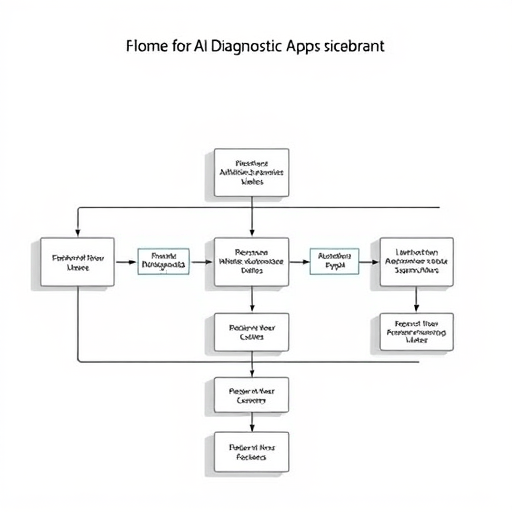
The 4‑Phase Harmonization Workflow
Phase 1: Data Acquisition Alignment
- Standardize device pairing procedures across sites to ensure consistent time stamping (e.g., using NTP or GPS‑derived timestamps).
- Implement a centralized data ingestion gateway that accepts raw files in a uniform format (e.g., JSON‑LD with IEEE 2413 schema).
- Verify that each device’s firmware and calibration are logged and stored in a version control system.
Phase 2: Preprocessing & Quality Control
Raw signals often contain artifacts—motion blur in accelerometry or electrode drift in ECG. A robust preprocessing stage applies model‑based artifact detection (e.g., Kalman filtering for heart rate) and flags data points exceeding the ISO 15197 tolerance. Quality control metrics such as signal‑to‑noise ratio (SNR) and missingness percentage are calculated for each participant. Data that fail QC thresholds are routed to a review workflow, ensuring only high‑quality data enter the harmonization stage.
Phase 3: Cross‑Device Normalization
Normalization reconciles differences in sensor characteristics. Techniques include:
- Unit conversion to a common scale (e.g., beats per minute for heart rate).
- Statistical calibration using reference datasets from clinical-grade equipment.
- Machine learning models that learn device‑specific bias and correct it in real time.
After normalization, the data are stored in a standardized time‑series database that supports efficient querying and downstream analysis.
Phase 4: Regulatory Documentation & Audit Trail
Regulatory bodies require an immutable record of every transformation step. The workflow incorporates a blockchain‑enabled audit trail that logs:
- Timestamp of each preprocessing action.
- Version of the algorithm used.
- Operator or automated system that executed the step.
This trail is packaged into a Device Data Handling Protocol (DDHP) document, which can be submitted alongside clinical study data to satisfy FDA 21 CFR Part 11 or EMA’s Digital Health Technical Validation Guide.
Toolkits and Platforms: Open Source and Commercial Solutions
Implementing the workflow is facilitated by a growing ecosystem of tools:
- Open‑Source: The Wearable Harmonization Toolkit (WHT) offers Python libraries for data ingestion, preprocessing, and normalization. Its modular design allows teams to plug in custom models.
- Commercial: HealthSync Pro provides a turnkey platform that handles device pairing, real‑time QC, and audit logging, with built‑in compliance modules for ISO 15197 and IEEE 2413.
- Hybrid solutions combine WHT’s flexibility with HealthSync Pro’s user interface, enabling regulatory teams to validate each step through a dashboard.
Case Study: A Multi‑Center Cardiac Monitoring Trial
In a 2026 Phase III trial evaluating a new heart failure therapy, 1,200 patients were equipped with three types of wearables: a smartwatch, a chest patch, and an implantable loop recorder. The harmonization workflow was applied as follows:
- Phase 1 ensured that all devices synchronized to a central NTP server and transmitted data via a secure MQTT broker.
- During Phase 2, automated artifact detection flagged 4.3% of data for review. A manual inspection resolved 90% of the flagged instances.
- In Phase 3, machine learning models corrected device‑specific biases, reducing inter‑device variance from 15.2% to 3.8%.
- Finally, Phase 4 produced a DDHP that was accepted by the FDA without additional queries.
The study’s primary endpoint—a reduction in arrhythmic events—was supported by harmonized data, demonstrating the workflow’s effectiveness in a regulatory context.
Overcoming Common Pitfalls
- Incomplete Metadata: Ensure that every device upload includes IEEE 2413 metadata; missing tags can derail downstream harmonization.
- Firmware Drift: Regularly verify firmware versions; untracked updates can introduce bias.
- Data Governance: Implement role‑based access controls early; auditors will scrutinize who can modify data.
- Scalability: Design ingestion pipelines to handle peak data loads (e.g., during an event‑driven study). Cloud‑based autoscaling can mitigate bottlenecks.
Future Outlook: AI‑Driven Adaptive Harmonization
By 2028, we anticipate that deep learning models will perform real‑time harmonization on the device itself, reducing central server load. Edge AI will enable devices to calibrate against local reference sensors, dynamically adjusting for temperature, motion, and user physiology. Such capabilities will further tighten data quality and simplify regulatory compliance by embedding validation logic at the source.
Conclusion
Harmonizing wearable data is no longer an optional step; it is a regulatory imperative that ensures digital biomarkers are accurate, reproducible, and trustworthy. The four‑phase workflow outlined here provides a clear path from raw sensor capture to regulatory‑ready evidence, combining standards compliance, robust preprocessing, cross‑device normalization, and immutable audit trails. As the wearable ecosystem matures, adopting such structured approaches will be key to unlocking the full therapeutic potential of continuous health monitoring.