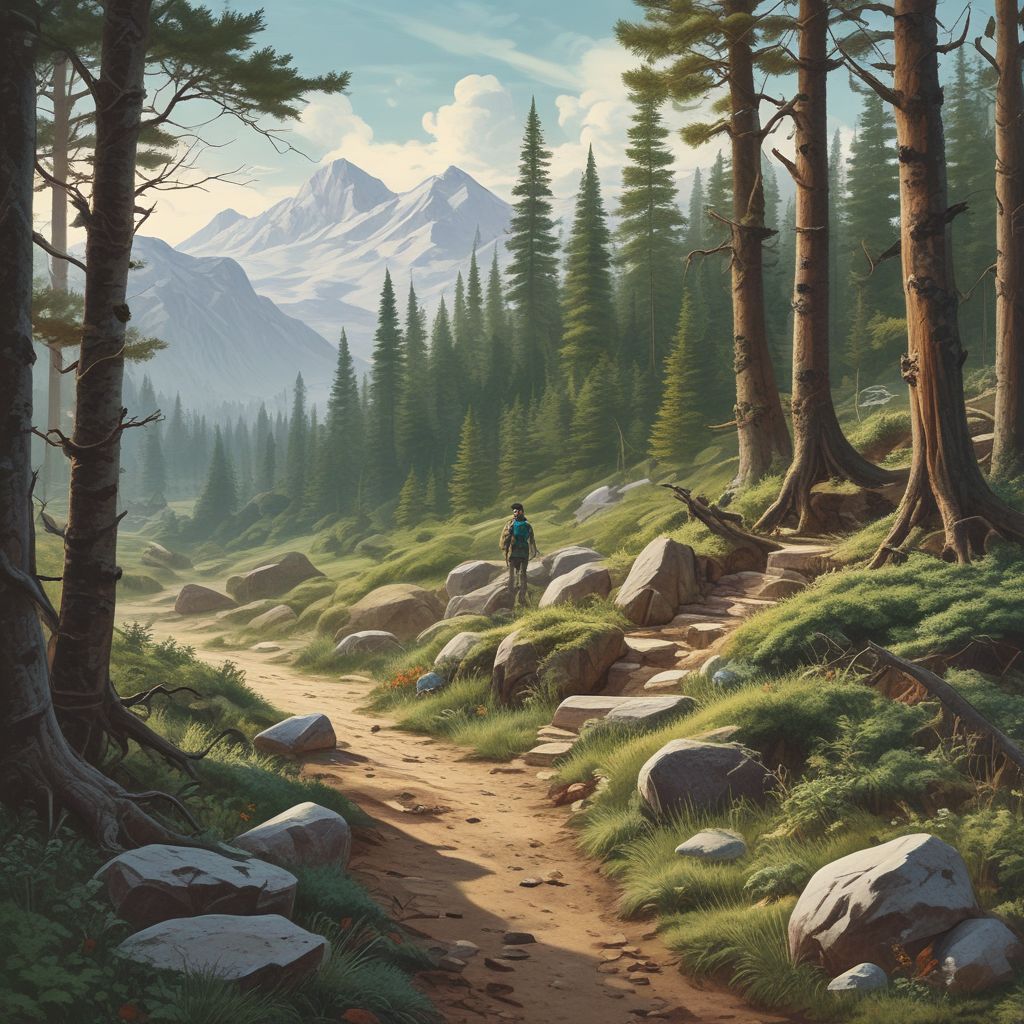
Ghost Trails—the forgotten footpaths threaded through forests, meadows, and abandoned farmlands—are powerful, low-cost points of observation for grassroots climate science. This guide explains how hikers can locate, safely traverse, and document abandoned trails as meaningful climate-monitoring sites, turning curiosity into repeatable data that helps scientists, land managers, and communities understand local environmental change.
Why Ghost Trails Matter for Climate Monitoring
Unlike established recreational trails, ghost trails often traverse marginal landscapes—riparian edges, degraded slopes, or early-successional stands—where climate-driven changes like increased erosion, shifting phenology, or invasive species first become visible. Because these paths are less maintained, they reveal natural processes with fewer human disturbances and can serve as sentinel transects when monitored consistently.
Locating Forgotten Footpaths
Start with maps and aerial imagery
- Compare historical topo maps, U.S. Geological Survey maps, and current satellite imagery to spot linear features that have vanished from modern trail maps.
- Use LiDAR and aerial orthophotos (many regional GIS portals provide these) to detect old tread lines and vegetation patterns invisible from the ground.
- OpenStreetMap, old guidebooks, and library archives often preserve trail names and alignments—cross-reference those sources before heading out.
Tap local knowledge
- Ask long-time hikers, landowners, or local historical societies; oral histories frequently reveal lost connector paths and seasonal routes.
- Community social media groups, outdoor forums, and local hiking clubs can point to lesser-known access points and recent changes like bridge removals or closures.
Permission, Ethics, and Risk Assessment
Before stepping onto any ghost trail, verify land ownership and permissions. Many forgotten paths cross private land, protected habitat, or recovery zones—always seek consent from landowners and check with land managers for restrictions. Respect wildlife, cultural resources, and restoration areas; avoid creating new disturbances or marking routes with permanent alterations.
Assess hazards and prepare
- Check recent weather and avalanche/flood advisories; unmaintained routes may be more dangerous after storms.
- Tell a contact your plan: expected route, start/end times, and emergency procedures.
- Carry navigation backups (paper map & compass), first aid, adequate water, and clothing layers; expect downed trees, washed-out sections, and overgrown brush.
Safely Traversing Ghost Trails
Move deliberately and conservatively: go slow in uncertain terrain and avoid single-person exploration in high-risk areas. Use a GPS-enabled app to follow a planned line, and mark decision points with non-invasive, temporary cues (photographic landmarks rather than blazes). If a route is impassable, turn back—data collection is not worth personal harm.
Documenting Ghost Trails for Climate Science
Good monitoring focuses on repeatability and simple, consistent measurements. Design a protocol you can follow each visit and encourage others to replicate it.
Core data to collect
- GPS track and waypoint for trail start, end, and key observation points.
- Photo series from fixed points: take landscape-scale photos and close-ups with a scale object (ruler, hiking pole) visible in the frame.
- Timestamps and weather notes: temperature, recent precipitation, and snow depth if applicable.
- Phenology observations: flowering, leaf-out, fruiting, and insect emergence for focal species.
- Geomorphology indicators: exposed roots, new gullies, slumping, or sediment deposits.
- Species presence/absence lists, noting invasives and newly arrived species compared with past visits.
Tools and apps that streamline data
- Navigation: Gaia GPS, OsmAnd, or Maps.me for reliable offline maps and GPX export.
- Photologging: Mapillary or OpenTopography-compatible photos for geotagged image sequences; standardize orientation and distance.
- Species IDs: iNaturalist or Seek for community-verified observations and phenology records.
- Structured forms: Survey123 or OpenDataKit for repeatable checklists and easy CSV exports.
Photo and Metadata Best Practices
Photos are your strongest evidence—ensure they’re geotagged and include scale. Establish fixed photo-point protocols: mark a durable landmark or use GPS coordinates, take photos facing the same compass bearing, and include one wide shot plus two detail shots (soil/vegetation/erosion). Keep filenames and notes consistent, and upload raw data with metadata (date, time, device, observer, weather, and method) to preserve scientific value.
Quality, Repeatability, and Community Science
To maximize usefulness, aim for consistent timing (same season each year), regular intervals (quarterly or seasonal), and clear methods documented publicly. Share protocols and datasets through platforms like iNaturalist projects, local open-data portals, or collaborations with university research labs. Citizen-collected data often gains value when paired with expert validation—invite a researcher to audit early records or co-design data fields.
Case Example: From Overgrown Lane to Climate Transect
In one community, volunteers resurrected a half-mile ghost trail along a stream corridor, establishing three fixed photo points and a monthly phenology log. Within two years they documented earlier spring leaf-out and increased bank erosion after storm events; those records were cited by a county planner when prioritizing riparian stabilization funding.
Final Safety and Stewardship Reminders
- Never mark new permanent signs or disturb cultural sites; use GPS and photographs for documentation.
- Follow Leave No Trace principles: pack out what you pack in, avoid widening paths, and minimize trampling in sensitive areas.
- When observing rare plants or archaeological materials, pause and report to the appropriate authority rather than collecting samples.
Ghost Trails offer hikers a unique pathway to contribute to meaningful climate knowledge—by locating, safely traversing, and documenting these forgotten corridors, volunteers can produce enduring, locally relevant data that complements professional monitoring networks.
Ready to explore responsibly? Grab a map, download a GPX app, and join or start a local Ghost Trails monitoring project this season.