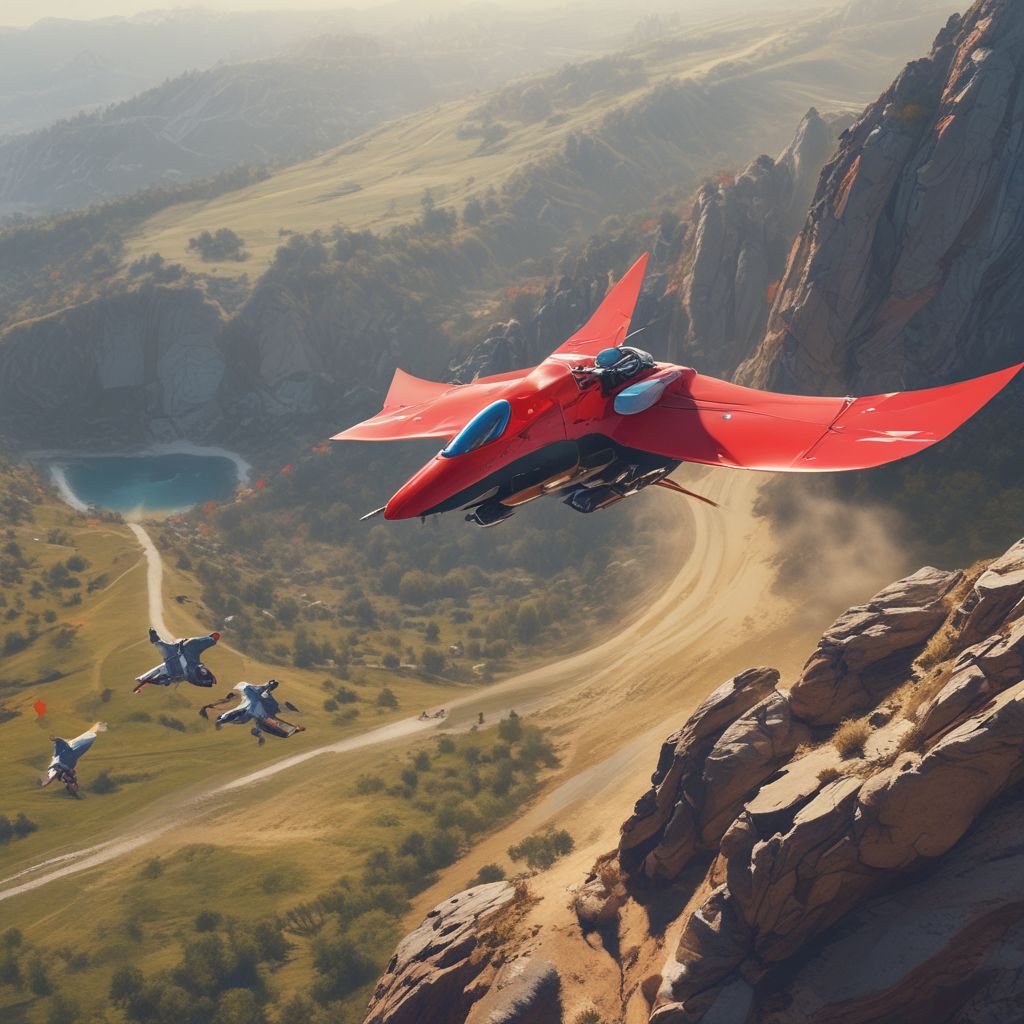
Drone-synced wingsuits are redefining what it means to fly close to the earth—pairing highly skilled wingsuit pilots with autonomous drones to push speed, choreography, and safety in proximity flying. This hybrid approach leverages real-time telemetry, machine vision, and predictive control so pilots can attempt faster runs, tighter formations, and more cinematic maneuvers while reducing risk.
What “drone-synced” means
At its core, drone-syncing is the coordinated partnership between a human flyer and one or more autonomous aerial systems. Instead of a drone acting only as a camera, synced drones become active partners: pacing, relaying telemetry, broadcasting visual cues, and providing a safety envelope that reacts faster than human reflexes.
How the system works
Low-latency telemetry and state sharing
Pilots wear lightweight sensor packs—IMUs, GPS/RTK modules, and radio telemetry transmitters—that stream position, velocity and body orientation to nearby drones and ground stations. Drones receive this data and run predictive models to match trajectories and anticipate maneuvers, keeping formation without compromising the pilot’s freedom of movement.
Machine vision and relative positioning
Onboard cameras and LiDAR let drones maintain relative position even when GPS is unreliable in canyons or dense terrain. Computer vision tracks the pilot’s silhouette and suit markers, allowing the drone to hold exact offsets for pacing or to cue formation changes with lights or haptic signals sent back to the pilot.
Autonomy and choreography engines
Specialized flight controllers host choreography engines—software that executes synchronized sequences, enforces safe separation, and can trigger contingency behaviors. These engines fuse pilot intent (telemetry + planned sequence) with real-time sensor inputs to maintain both performance and safety.
Benefits: speed, choreography, and safety
- Speed gains: Drones can act as pace leaders that hold precise lines at high speed, enabling pilots to optimize aerodynamics and exploit safe slipstream corridors while minimizing the mental load of pace-keeping.
- Advanced choreography: Synchronized drones make complex formation flying possible—timed light cues, position holds, and automated path-following yield tighter, more repeatable sequences for competition and film.
- Improved safety: Drones provide an autonomous second set of sensors and rapid response capabilities—geofencing, predictive collision avoidance, and automated emergency signaling (e.g., deployable drogue or audible alarms) add layers of protection beyond a solo pilot.
Training and operational protocols
Adopting drone-syncing requires new training standards and protocols that blend skydiving best practices with UAS operations:
- Pre-flight briefings that include choreography timelines, drone roles, and emergency abort criteria
- Progressive practice: simulator and tethered training, then low-speed syncs, before advancing to high-speed proximity
- Redundant communications, encrypted telemetry links, and a dedicated safety pilot monitoring drone behavior
- Automated safety triggers—if the drone detects a sudden deviation, it can call an audible abort cue and move to a safe standby position
Real-world examples and creative use-cases
Teams experimenting with drone-synced wingsuits are already splitting into two camps: performance crews refining formation and choreography for competitions and film, and technical teams focused on pushing edge-case speed records under controlled conditions.
- Filmmaking: Swarms of synced drones provide dramatic multi-angle coverage while maintaining consistent spacing, enabling shots that were once impossible without helicopters or multiple jumpers.
- Competitive flying: Choreographed runs judged on precision can benefit from drone pacing to ensure fairness and repeatability.
- Speed trials: Controlled drone pacing creates reproducible corridors for pilots attempting to break proximity speed barriers while preserving emergency margins.
Technical and regulatory challenges
Integrating autonomous systems into human flight is technically exciting but legally complex. Key challenges include:
- Airspace regulation: Operating multiple unmanned systems near human flyers often requires waivers, BVLOS approval, and close coordination with aviation authorities.
- Reliability and redundancy: Sensor failures, radio interference, or software bugs can create dangerous situations—safety-critical systems must be vetted thoroughly.
- Ethics and risk acceptance: Determining acceptable risk levels for experimental speed runs or commercial productions requires clear informed consent and transparent incident protocols.
Design best practices for safe implementations
Teams building drone-synced wingsuit systems should follow conservative design principles:
- Fail-safe actuations and clear contingency behaviors (e.g., immediately break formation and ascend to safe altitude)
- Multi-sensor fusion—don’t rely on a single data source for critical decisions
- Human-in-the-loop oversight with the ability to physically cut or land drones remotely
- Comprehensive logging for post-flight analysis and iterative improvements
Looking ahead: what the next five years may bring
Expect steady improvements in autonomy, lighter sensor packs for pilots, and standardized choreography protocols that let teams swap formations across sites. Advances in edge computing and low-latency 5G or dedicated mesh radio will shrink reaction times, and certified training programs will help bring drone-synced wingsuits into mainstream competition and commercial filming—always under the watchful eye of regulators and safety engineers.
Conclusion
Drone-synced wingsuits are a creative synthesis of human skill and autonomous precision, opening doors to safer, faster, and more spectacular proximity flying. With rigorous testing, transparent protocols, and close collaboration with regulators, this emerging discipline can transform both performance sport and aerial storytelling while keeping pilots at the center of the experience.
Ready to explore drone-synced wingsuit filmmaking or training for a synced run? Reach out to a certified UAS flight safety team to start planning your first supervised session.