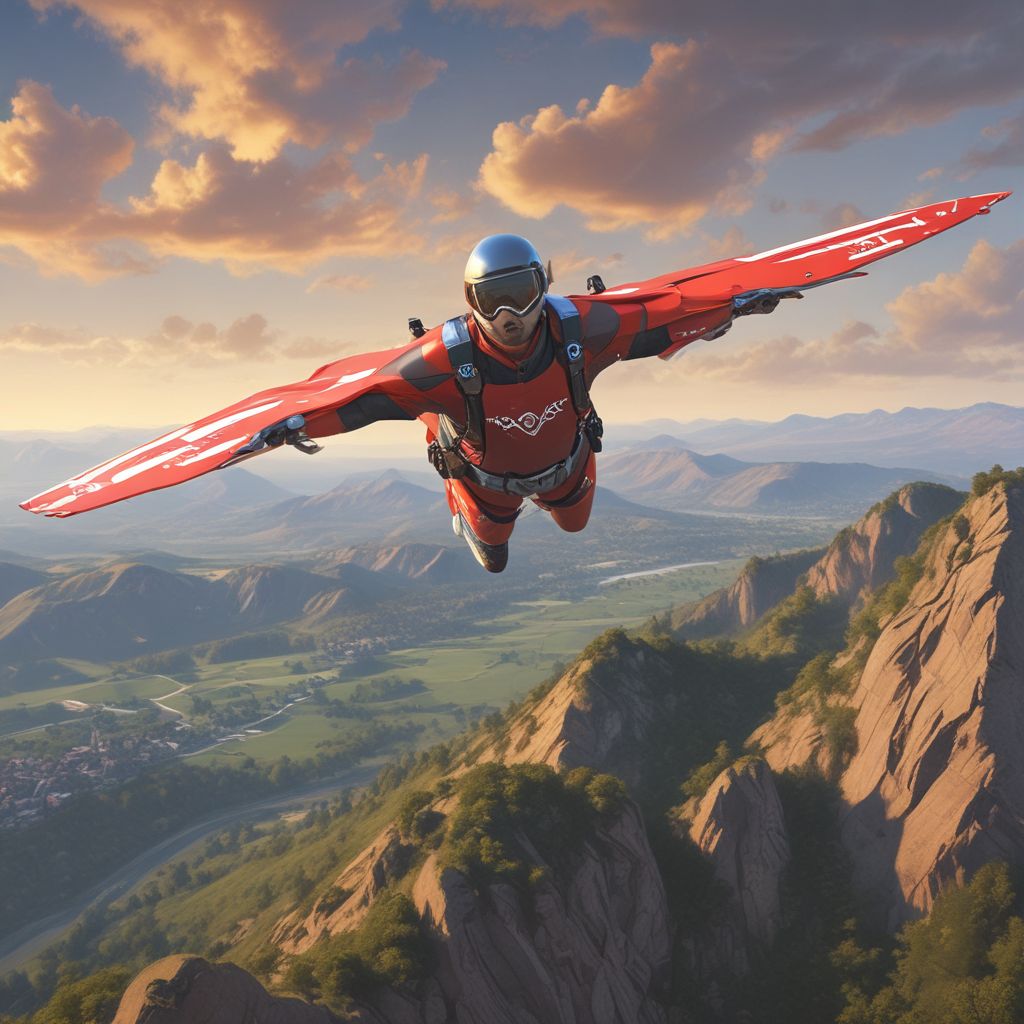
The rise of drone-guided wingsuit racing is redefining what proximity flying can be—autonomous drones and edge AI now design, monitor, and manage courses so pilots race faster while staying safer, and spectators experience the sport like never before. Drone-guided wingsuit racing combines real-time computer vision, localized AI, and autonomous aircraft to create dynamic, adaptive courses that reduce human risk and open new pathways for training, sponsorship, and regulation.
Why AI-Curated Courses Matter
Traditional wingsuit races rely on static gates and human-run safety teams; AI-curated courses change that by continuously analyzing pilot telemetry, environmental data, and crowd conditions to shape the course flow. This means gates can shift, safe corridors can expand or contract, and emergency responses can be triggered automatically—turning a high-risk spectacle into a controllable competitive environment.
Key benefits at a glance
- Dynamic risk reduction: courses adapt to wind, visibility, and pilot behavior.
- Improved spectator safety: autonomous boundaries and geo-fencing keep crowds clear.
- Enhanced broadcast: drones provide cinematic, data-rich feeds for viewers and sponsors.
- Data-driven fairness: AI enforces consistent gate placement and timing for fair competition.
How It Works: The Tech Behind the Flight
At the core of drone-guided wingsuit racing is a distributed edge-AI network—multiple autonomous drones acting as gatekeepers, tracking beacons, and dynamic camera platforms while a low-latency mesh coordinates decisions locally without cloud lag.
- Perception: Lidar, stereo cameras, and radar build a millimeter-accurate scene model of racers and surroundings.
- Edge inference: Onboard AI models predict trajectories, compute collision probabilities, and optimize gate placement in real time.
- Autonomy: Drones reposition themselves, deploy or retract virtual gates, and harmonize with pilot telemetry to maintain safe separation.
- Failsafes: Multiple redundancy layers—backup power, parachute recovery, and dedicated emergency drones—ensure hardware failures never translate directly into human harm.
Safer by Design: New Safety Paradigms
Safety in drone-guided wingsuit racing is procedural and systemic rather than purely reactive. Organizers design risk budgets for each course: how close pilots can come to terrain, acceptable tailwind magnitudes, and the minimum reaction window for autonomous systems.
Safety features implemented
- Dynamic safety bubbles that expand automatically when a pilot is flagged as unstable.
- Automated course softening—if gusts spike, AI increases gate spacing and reduces mandatory max speeds.
- Dedicated rescue drones that shadow each pilot at a safe offset and are prepared to guide or deploy recovery tools.
- Integrated medical telemetry that alerts on biometrics crossing critical thresholds.
Transforming Training and Athlete Development
Edge AI converts race data into personalized training plans. Coaches and pilots get granular playback with 3D reconstructions and risk annotations, making complex maneuvers teachable outside dangerous live runs.
- Simulator loop: AI-curated courses feed advanced simulators, exposing pilots to rare failure modes in a zero-risk environment.
- Performance analytics: Sponsors and teams track g-forces, line fidelity, and split-time consistency to benchmark progress.
- Safety coaching: Real-time nudges—haptic or HUD warnings driven by AI—help pilots correct lines before small errors become catastrophic.
Sponsorship, Broadcasting, and New Business Models
Drone-guided races create premium broadcast layers: multi-angle cinematic drones, live telemetry overlays, and augmented-reality spectator views that make proximity flying a televised sport ready for mainstream sponsorship. Sponsors can buy data-rich ad placements tied to split times, pilot biometrics, or course segments.
Monetization opportunities
- Pay-per-view VR experiences that let fans ride the line with a pro pilot via a drone feed.
- Data sponsorships where analytics dashboards are branded and provided to teams.
- Event insurance products priced to performance metrics captured by the AI systems.
Regulation, Airspace, and Governance
As drones enter the competition footprint, regulators must balance innovation with public safety. The first harmonized frameworks will likely mandate certification for racing drones, standardized emergency protocols, and clear rules for autonomous decision-making liabilities.
- Mandatory redundancy and certification for all autonomous drones operating within a race envelope.
- Pre-approved course templates that comply with local airspace rules and environmental protections.
- Transparent data logging for every event to support investigations and continual rule refinement.
Policy questions to resolve
- Who is liable when an autonomous drone mispositions a gate or fails to enforce a geo-fence?
- How to protect pilot and spectator privacy while using rich telemetry and video feeds?
- What minimum pilot training should be required where AI enforces course parameters?
What to Expect Next
In the coming years, expect hybrid events that mix human and AI-defined segments: pilot skill zones where human decision-making is paramount, and AI-curated sprint sections designed for spectator spectacle and safety. Local clubs will adopt scaled-down systems for weekend training, while international circuits push for global standards enabling cross-border competition.
Conclusion
Drone-guided wingsuit racing is more than a technological gimmick—it’s a platform shift that promises safer proximity flying, richer fan experiences, and new economic ecosystems for athletes and sponsors. By combining edge AI, autonomous drones, and thoughtful regulation, the sport can accelerate responsibly toward mainstream visibility without sacrificing the adrenaline at its core.
Ready to see the future of flight live? Sign up for alerts on upcoming AI-curated wingsuit events and VR viewing tickets.