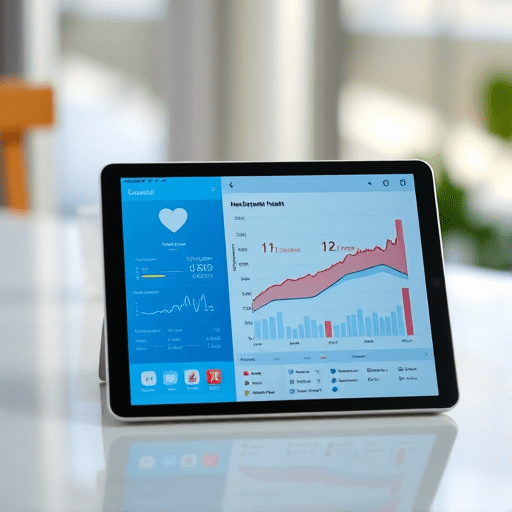
Conversational data summaries are a new generation of AI-powered interpretive tools that translate streams from wearables, remote monitoring devices, and electronic health records (EHRs) into clear, conversational insights patients and clinicians can act on together. By converting raw metrics into plain-language explanations, prioritized problems, and specific next steps, these summaries make chronic disease management more collaborative, reduce clinician administrative load, and improve treatment adherence.
What are conversational data summaries?
At their core, conversational data summaries use natural language generation and clinical reasoning models to synthesize multimodal health data into short, structured narratives. Instead of pages of lab results or dashboard charts, patients and care teams receive:
- One- or two-sentence health highlights (what changed and why it matters)
- Prioritized concerns ranked by clinical urgency and patient goals
- Actionable suggestions tied to a shared care plan (medication tweaks, behavior tasks, follow-up timing)
- A simple “conversation” history that explains past decisions and next steps in everyday language
Why these summaries matter for chronic care
Chronic diseases—diabetes, heart failure, COPD, hypertension—require continuous monitoring and frequent adjustments. Traditional care models make patients passive recipients of instructions; conversational data summaries shift them to co-managers by:
- Lowering cognitive barriers: Patients digest what matters most without needing clinical expertise.
- Improving adherence: Clear rationale and small, prioritized tasks increase follow-through.
- Reducing clinician burden: Summaries surface only the abnormal or actionable signals, cutting review time.
- Enabling shared decision-making: Patients come to visits prepared, having understood tradeoffs and options beforehand.
How they work: from device to shared plan
The pipeline for a conversational summary usually includes these stages:
- Data ingestion: Continuous feeds from CGMs, BP cuffs, spirometers, activity trackers, and the EHR are normalized and timestamped.
- Signal detection: Algorithms flag trends, outliers, and gaps in monitoring (e.g., rising fasting glucose, missed medication doses).
- Clinical context mapping: The system maps signals to diagnoses, current medications, allergies, and recent appointments.
- Natural language synthesis: A model generates a short, prioritized summary tailored to the patient’s literacy level and clinician preferences.
- Action plan generation: Suggestions aligned with clinical guidelines and the patient’s goals are formatted as tasks and follow-ups for the shared care plan.
Example summary (for a patient with diabetes)
“This week your average fasting glucose rose from 110 to 140 mg/dL, mainly after two days when sleep dropped below 5 hours. Consider checking your morning glucose for three more days and scheduling a quick med review with your nurse; try adding a 10-minute evening walk to help stabilize morning readings.”
Design principles for patient-centered co-management
To be effective and equitable, conversational summaries must follow careful design principles:
- Clarity over completeness: Prioritize the most actionable information first.
- Personalization: Respect the patient’s health literacy, language, and cultural context.
- Shared ownership: Present tasks as shared responsibilities—what the patient can do and what the care team will do.
- Explainability: Provide a short rationale and a link to more detail so both patients and clinicians can audit the summary.
- Fail-safe escalation: Flag uncertain or high-risk findings for clinician review rather than automatic action.
Protecting privacy and clinician trust
Trust is essential. Systems must protect PHI, log changes, and keep clinicians in the loop:
- Privacy-first architecture: End-to-end encryption, strict access controls, and consented data sharing.
- Audit trails: Every summary and action is timestamped and attributable.
- Clinician-in-the-loop: Configure thresholds that require clinician sign-off for medication changes or urgent escalations.
- Transparent models: Provide clinicians with easy ways to see the data points and rules that generated the summary.
Measuring success: outcomes and metrics
Demonstrating value requires both clinical and operational metrics:
- Clinical outcomes: changes in HbA1c, blood pressure control, hospitalization and ER visit rates.
- Engagement metrics: patient-open rates, task completion, message response times.
- Workflow impact: clinician time spent on chart review, number of unnecessary alerts reduced.
- Patient-reported outcomes: confidence in self-management, perceived clarity, and satisfaction.
Implementation checklist for health systems
Practical steps to pilot conversational summaries in a clinic:
- Choose a focused condition and a small cohort (e.g., heart failure clinic or type 2 diabetes panel).
- Map data sources and ensure reliable device integrations.
- Co-design templates with clinicians and patients to set tone, level of detail, and escalation paths.
- Run a shadow period where summaries are generated but not acted upon, to calibrate thresholds.
- Measure outcomes, iterate on prompts and escalation rules, then scale gradually.
Potential pitfalls and how to avoid them
Beware of information overload, algorithmic bias, and brittle integrations. Mitigate these risks by:
- Starting conservative with alert sensitivity and expanding as trust grows.
- Validating models on diverse patient samples and monitoring for disparate impacts.
- Providing clear fallback routes (hotline, nurse review) when summaries are ambiguous.
Conversational data summaries are not a replacement for clinicians; they are a force multiplier—helping patients understand their health and enabling clinicians to focus on high-value conversations and decision-making.
Conclusion: When thoughtfully designed and ethically implemented, conversational data summaries convert fragmented device and EHR data into shared, actionable care plans that empower patients as co-managers, boost adherence, and reduce clinician burden.
Ready to pilot conversational summaries in your practice? Reach out to start a focused, low-risk trial and see the difference in patient engagement and clinician workflow.