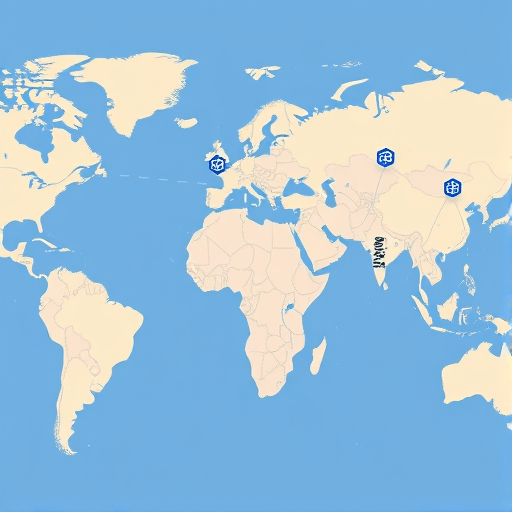
For tech‑savvy startups launching across Asia, Europe, and Africa, the combination of cloud‑native agility and strict regional data‑protection regulations presents a unique challenge. A cloud‑native ops blueprint for startups that hinges on a multi‑region Kubernetes architecture can provide the scalability, resilience, and compliance you need. This article walks through the key components—regional control, data residency, governance, and operational automation—so you can build a compliant, high‑performance platform without compromising speed or innovation.
1. Understanding Regional Compliance Landscape
Regulations differ significantly across continents. The European Union’s GDPR mandates that personal data be processed within EU borders or by providers with adequate safeguards. In India, the Personal Data Protection Bill requires data localization for certain categories. African nations like Kenya and South Africa have emerging data‑protection laws that stress transparency and user consent. A foundational step is to map each jurisdiction’s legal requirements to the services your startup will use, ensuring that every data flow respects local boundaries.
Mapping Legal Constraints to Cloud Regions
- EU GDPR: Keep EU‑centric workloads in EU regions; employ data‑processing agreements with cloud providers.
- India PDP Bill: Store and process “critical personal data” in India; use regional accounts.
- Kenyan Data Protection Act: Mandates local processing for data involving Kenyan citizens.
- South African POPI: Requires evidence of lawful processing and the ability to audit.
By aligning each service with a corresponding region, you eliminate the risk of accidental cross‑border data transfer.
2. Choosing a Cloud Provider that Supports Multi‑Region Kubernetes
Not all providers deliver the same granularity of regional control. Look for platforms offering dedicated regions or availability zones that align with your compliance map. AWS, Google Cloud, and Azure all support Amazon EKS Anywhere, Google Kubernetes Engine (GKE) Multi‑Cluster Management, and Azure Kubernetes Service (AKS) Federated Clusters. For startups focused on cost efficiency, consider the following:
- Cost per Region: Compare data egress fees; some providers charge more for cross‑region traffic.
- Local Support: Prefer providers with local data centers and support teams in the region.
- Compliance Certifications: Verify ISO, SOC, and local certifications (e.g., ISO 27001, SSAE‑18).
After selecting a provider, you’ll move to the cluster design phase.
3. Designing a Federated Kubernetes Architecture
A federated cluster setup distributes control across multiple regions while preserving a unified view. Each regional cluster runs its own Kubernetes API server, but a central federation control plane orchestrates workloads and policies. This architecture offers:
- Data Residency: Pods in each region handle local data exclusively.
- Latency Optimization: Services run closer to users, reducing round‑trip times.
- Resilience: Region‑specific outages don’t cascade globally.
- Governance: Central policies can enforce encryption, RBAC, and audit logging uniformly.
Step‑by‑Step Cluster Creation
- Provision Regional Clusters: Use the cloud provider’s CLI or Terraform modules to spin up clusters in each targeted region.
- Install Federation Components: Deploy the
kube‑federation‑2control plane to a central cluster (often in a neutral region). - Configure Global Namespace: Create shared namespaces for services that require global access (e.g., CI/CD pipelines).
- Set Up Data‑Local Namespaces: Allocate separate namespaces for each region’s user data, enforcing local storage policies.
- Enable Cross‑Cluster Service Discovery: Use
FederatedServiceobjects to expose services globally while keeping endpoints regionally isolated.
With this foundation, you can proceed to the operational layer.
4. Data Governance and Encryption Strategy
Compliance isn’t just about where data lives—it’s also about how it’s protected. A layered encryption approach ensures data confidentiality at rest and in transit across all regions.
Encryption at Rest
- Cloud‑Provided Keys: Use provider key management services (KMS) tied to each region.
- Custom Key Rotation: Automate key rotation with
SealedSecretsorVaultintegration. - Transparent Storage: Store persistent volumes in region‑specific storage classes (e.g.,
pd-ssdin GCP,StandardSSD_LRSin Azure).
Encryption in Transit
- Enable
Transport Layer Security (TLS)for all internal traffic using mutual TLS (mTLS) via Istio or Linkerd. - Leverage
kubernetes.io/managed-certificatesfor external ingress to ensure HTTPS everywhere. - Use
Data‑Plane Encryptionfor egress traffic between regions if the provider offers it.
Additionally, enforce data classification to differentiate between public, internal, and sensitive datasets, applying the appropriate security controls accordingly.
5. Observability and Audit Logging Across Regions
Regulators require evidence of data handling. A unified observability stack captures logs, metrics, and traces from every region, then aggregates them into a compliance‑ready dashboard.
- Logging: Deploy Fluent Bit to ship logs to a central Loki or Splunk instance; include region metadata in log tags.
- Metrics: Use Prometheus with a federation scrape config to pull metrics from regional clusters into a central Prometheus server.
- Tracing: Run OpenTelemetry collectors in each cluster, forwarding traces to Jaeger or Zipkin for end‑to‑end visibility.
- Audit Trails: Enable Kubernetes audit logging, storing logs in immutable cloud storage (e.g., GCS bucket, Azure Blob with versioning).
These layers not only satisfy compliance but also provide actionable insights into performance bottlenecks and security incidents.
6. Automating Compliance Checks with GitOps
GitOps practices bring infrastructure and configuration under version control, making compliance checks repeatable and auditable.
Infrastructure as Code (IaC)
- Write Terraform modules that define region‑specific clusters, storage classes, and network policies.
- Store modules in a Git repository with protected branches; every change triggers a CI pipeline that validates against policy checks.
Policy Enforcement
- Integrate
Kube‑ConformorOpa/Gatekeeperto enforce constraints like “only use encrypted volumes” or “must have mTLS enabled.” - Run
kube-scoreorkube-hunterscans as part of the CI process to detect misconfigurations. - Generate compliance reports automatically and store them in a separate compliance branch.
By treating every cluster update as a commit, you maintain a clear audit trail and facilitate quick rollback if an issue arises.
7. Performance Optimization for Latency‑Sensitive Services
Users in Asia, Europe, and Africa expect responsive experiences. Optimize for latency by strategically placing services and balancing traffic.
Edge Caching
- Deploy a CDN (e.g., CloudFront, Akamai, or Azure CDN) that caches static assets at edge locations nearest to users.
- Configure cache invalidation policies to keep content fresh without incurring excessive bandwidth costs.
Service Mesh Routing
- Use Istio’s
DestinationRuleto direct traffic to the nearest region based on latency metrics. - Implement weighted traffic splits for gradual rollouts and canary deployments.
Database Replication Strategies
- Choose a multi‑region database (e.g., CockroachDB, Amazon Aurora Global Database) that replicates writes with minimal latency.
- Enable read replicas in each region to reduce read latency for local users.
Combined, these tactics deliver a seamless, compliant user experience.
8. Cost Management in a Multi‑Region Setup
Operating clusters in multiple regions can inflate costs. Adopt a disciplined cost‑management framework:
- Tagging: Tag resources with
Environment=Production,Region=EU, etc., to track spend per region. - Reserved Instances: Commit to reserved capacity for steady‑state workloads.
- Autoscaling: Configure cluster autoscaler with regional scaling policies to shut down under‑utilized nodes.
- Spot/Pre‑emptible VMs: Use spot instances for batch jobs where interruption is acceptable.
Regularly review billing reports and apply budget alerts to avoid surprises.
9. Disaster Recovery and Data Backup
Compliance mandates data durability and availability. A robust backup strategy protects against regional outages.
- Cross‑Region Backups: Use
Veleroto backup cluster state and persistent volumes to an external bucket in a different region. - Immutable Snapshots: Leverage cloud snapshots that cannot be modified to ensure backup integrity.
- Recovery Time Objective (RTO) & Recovery Point Objective (RPO): Define RTO/RPO per region based on regulatory requirements and business impact.
Test restores quarterly to confirm that recovery procedures meet RTO/RPO targets.
10. Continuous Compliance Monitoring
Compliance is not a one‑off task. Set up continuous monitoring to catch policy drift and emerging threats.
- Policy-as-Code Checks: Automate OPA Gatekeeper evaluations during every deployment.
- Security Scans: Run container scanning (e.g., Trivy) on images before they are pushed to the registry.
- Audit Log Retention: Ensure logs are retained for the required period (e.g., GDPR mandates 2 years).
- Third‑Party Audits: Schedule semi‑annual external audits to validate compliance frameworks.
By integrating these checks into your CI/CD pipeline, you create a self‑healing compliance ecosystem.
Conclusion
Deploying a multi‑region Kubernetes platform that satisfies the stringent data‑protection laws of Asia, Europe, and Africa is achievable with a structured, cloud‑native ops blueprint. By aligning each region’s legal mandates to dedicated clusters, enforcing encryption and governance, and automating compliance through GitOps, startups can scale rapidly without compromising on security or local residency. Coupled with observability, performance tuning, and disciplined cost management, this blueprint offers a resilient, compliant foundation that adapts to the dynamic demands of the global market.