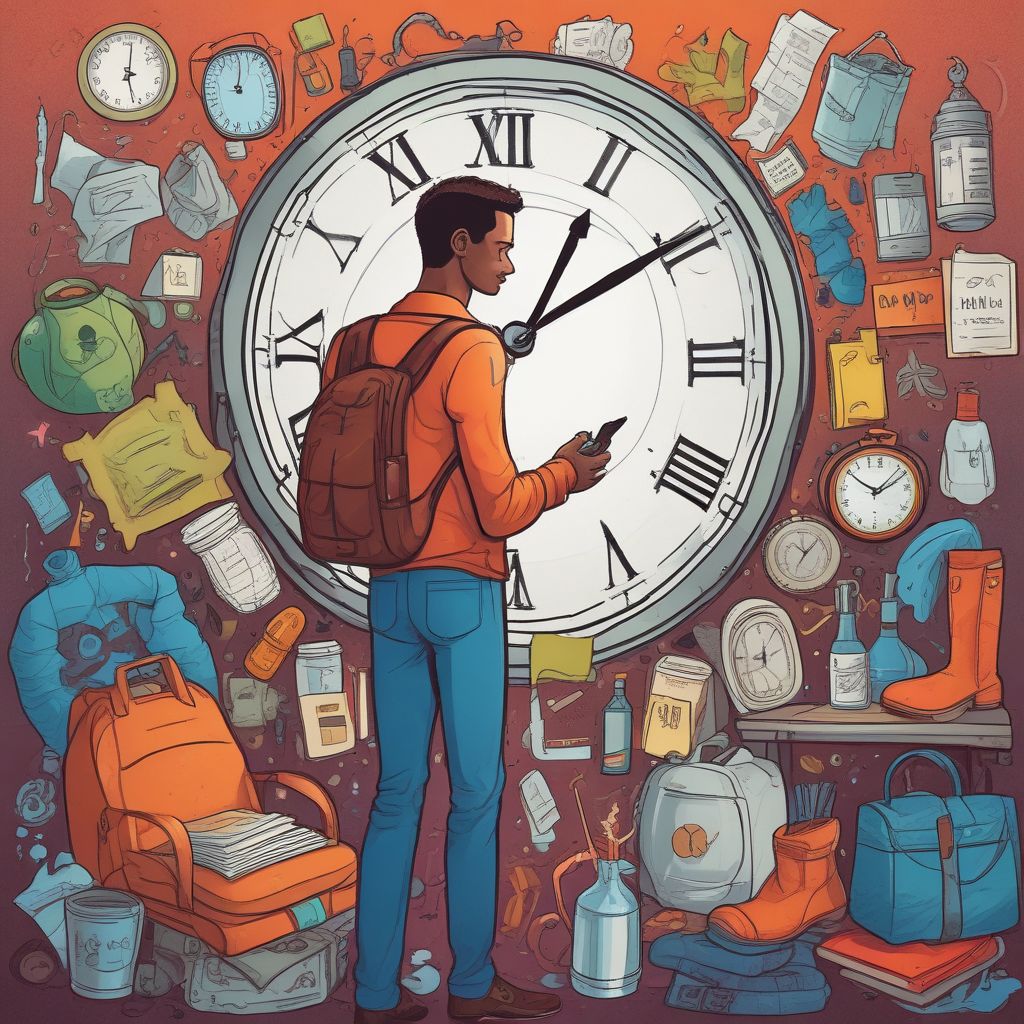
The science-backed concept of Circadian Packing helps travelers reset their internal clock faster by planning more than luggage—syncing light exposure, meal timing, and simple behavioral cues like outfit changes to destination time. Whether crossing one time zone or seven, Circadian Packing lets you arrive functional and rested by treating your schedule as an essential travel item.
Why circadian alignment matters on travel days
Your circadian rhythm is the body’s 24-hour clock that regulates sleep, appetite, hormone release, and alertness. Light is the dominant signal (or zeitgeber) that sets that clock, while meals, activity, and predictable routines serve as secondary cues. Jet lag happens when your internal clock is out of sync with the local day-night cycle; Circadian Packing uses simple, portable strategies so your body adjusts faster with minimal disruption.
Core principles of Circadian Packing
- Set destination time early: Switch your watch and phone to local time before you leave to begin psychological adjustment.
- Use light deliberately: Seek bright natural light or carefully timed artificial light to shift your clock in the desired direction.
- Time meals and caffeine: Eat and drink in alignment with destination meal times to cue metabolic rhythms.
- Anchor routines with outfit changes: Pair changing clothes (e.g., into “day clothes” or “sleep clothes”) with the new local wake or sleep time to reinforce the switch.
- Keep naps strategic: Short power naps help recovery but should not undermine nighttime sleep in the destination time zone.
Pre-flight preparation (48–24 hours before departure)
Start circadian changes before you board. If possible, shift your bedtime and wake time 1–2 hours toward destination time per day for two days. For longer shifts, begin three days prior, moving incrementally.
Checklist
- Change devices to destination time and set alarms accordingly.
- Pack a compact daylight lamp or bright-light visor if traveling across many time zones or to higher latitudes.
- Pack one set of “arrival” clothes and one set of “departure/pajama” clothes in an easy-to-reach layer of carry-on luggage for outfit-change cues.
- Bring sleep aids you’ve tested before (eye mask, earplugs, melatonin if you use it with your doctor’s advice).
In-flight strategy: align while airborne
Use the flight as an opportunity to begin adjusting rather than fighting the plane’s schedule. Immediately adopt the destination time for sleep and meals on your watch and in your mind.
Light management in the air
- For eastward travel (advance clock): try to sleep on the plane during the destination night; use an eye mask and avoid screens before your intended sleep.
- For westward travel (delay clock): stay awake during the plane’s daytime and seek cabin light or open window shades when possible.
- If you need to be alert soon after landing, use brief bright light exposure (sit near a window) and avoid alcohol and heavy sedatives.
Meal and caffeine timing mid-flight
- Eat the meal that corresponds to destination time—even if it’s a light snack—because mealtime cues influence peripheral clocks.
- Use caffeine strategically: consume it in the local morning window and avoid it in the local afternoon/evening.
Arrival: use cues to lock in the new time
On arrival, take immediate steps to entrain your body to local time. The first 24–48 hours are the most malleable; handle them intentionally.
Light and activity
- Expose yourself to bright outdoor light in the local morning when adapting to an earlier time; avoid bright light in the evening if trying to fall asleep earlier.
- Use sunglasses when you want to avoid phase-shifting if arriving during a misaligned daylight period—e.g., fly through destination morning but actually need to sleep.
- Take a brisk 20–30 minute walk after arrival to increase alertness and reinforce daytime signals.
Outfit-change cue: a simple but powerful trick
Behavioral cues are surprisingly effective. Change into “day clothes” when you want your brain to register wake time, and put on sleep-specific clothing (or pajamas) when ready for bed. Pack a small, distinctive item—like a lightweight scarf, a different pair of socks, or a travel robe—to use exclusively as your bedtime cue. Repeat this association for multiple trips and your brain will learn to re-synchronize faster.
Sample schedules for common directions
Brief, actionable templates help you apply Circadian Packing without guesswork. Adjust by 1–2 hours for personal tolerance and chronotype (morning person vs night owl).
Eastward travel (e.g., New York → London, 5 hours ahead)
- Pre-flight: shift bedtime earlier by 1–2 hours for two nights if possible.
- In-flight: try to get sleep aligned to destination night; use melatonin (0.5–3 mg) about 30–60 minutes before intended sleep only after consulting your doctor.
- Arrival: get outdoor morning light and have a substantial protein-rich breakfast at local morning time; change into “day clothes” within 30 minutes of waking.
Westward travel (e.g., London → New York, 5 hours back)
- Pre-flight: push bedtime later by 1–2 hours if possible.
- In-flight: stay awake through the destination day; use light exposure mid-flight to delay the clock.
- Arrival: remain active into the local evening; take a short nap (20–30 minutes) if necessary but avoid long naps that disrupt night sleep; change into sleep clothes at local bedtime.
Packing list for circadian success
- Light-blocking eye mask and comfortable earplugs
- Compact daylight lamp or bright-light visor (for long-haul or polar travel)
- Small pouch labeled “arrival” with outfit-change item and deodorizing wipes
- Melatonin (pre-approved by your clinician), caffeine gum or sachets for controlled dosing
- Blue-light–blocking glasses for evening device use, or install night-shift display settings
- Healthy snacks timed for destination meal windows (nuts, protein bars)
Special cases and cautions
Shift workers, people with sleep disorders, pregnant travelers, and older adults may need personalized plans—consult a healthcare provider. Avoid heavy alcohol, untested prescription sedatives, or experimenting with high-dose melatonin right before important meetings. Use Circadian Packing tools consistently across trips to build stronger routine associations over time.
Quick troubleshooting
- If you wake in the middle of the night: avoid bright light, use relaxation breathing, and avoid screens—only get up if necessary.
- If you feel overly sleepy during the day: a 20–30 minute nap and bright light exposure on waking are effective resets.
- If meals are misaligned (e.g., meetings): prioritize timing of light and outfit cues and shift main meals gradually over 2–3 days.
With a few intentional choices—managing light, timing meals, and using simple behavioral anchors like outfit changes—Circadian Packing turns travel into a controlled, predictable transition rather than a disorienting scramble. The result: more energy, clearer thinking, and better sleep at the destination.
Ready to travel smarter? Try a single-trip experiment: set destination time on devices, pack one outfit-change cue, and follow the light/meal plan—track your sleep and energy to see how quickly your clock adapts.