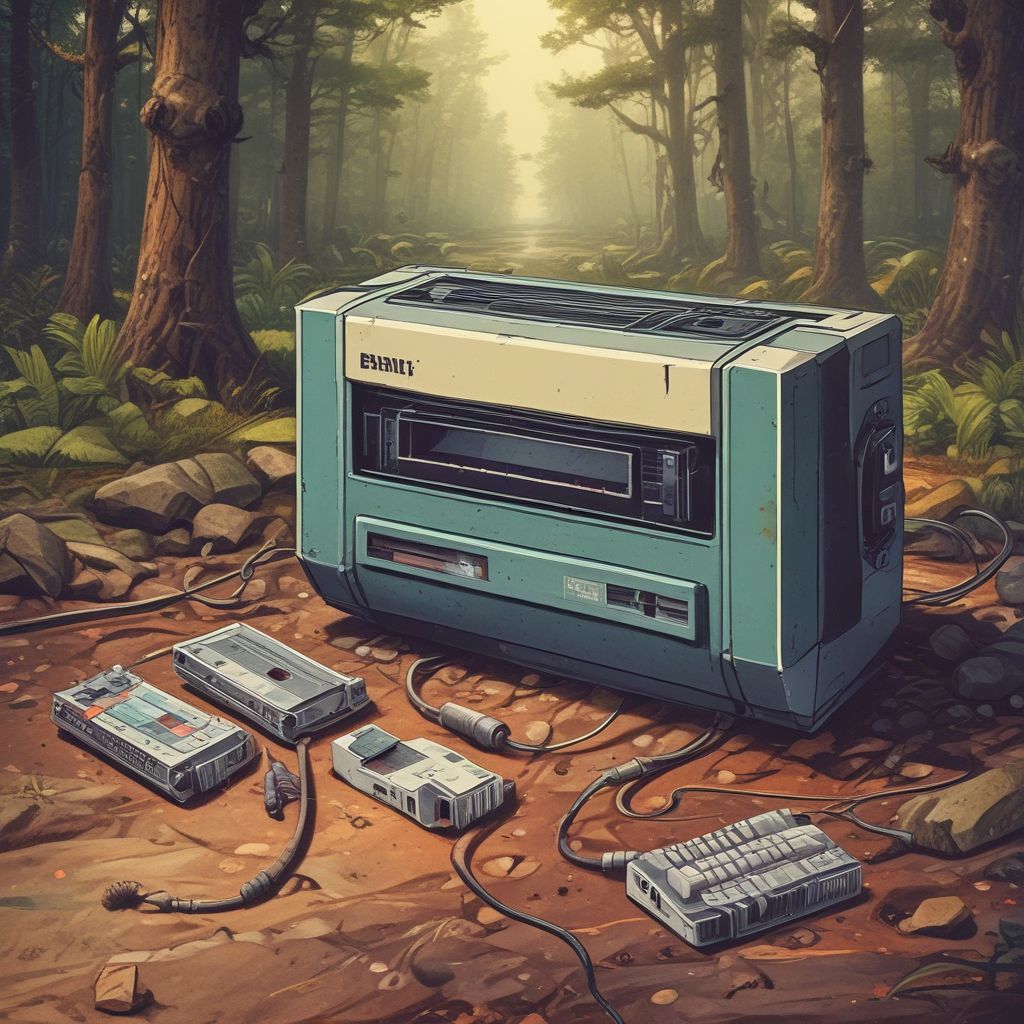
Cartridge Archaeology has become a rallying cry for retro game preservationists and hobbyist coders who are painstakingly recreating lost retro games from corrupted ROM fragments. As older cartridges degrade, boards are damaged, and original source code is lost, communities use a blend of digital forensics, hardware sleuthing, and creative reconstruction to bring abandoned classics back to life.
Why ROM fragments matter
Many cartridge-based games were produced in limited runs or shelved before release; physical media can suffer bit rot, corrosion, and connector wear, leaving only partial or corrupted ROM dumps. Even tiny fragments—header bytes, sprite banks, or level data—carry critical clues that can be analyzed, reassembled, and sometimes used to reconstruct playable builds or faithful remakes.
Core forensic techniques used in cartridge archaeology
1. Binary carving and file signature analysis
Investigators use file carving tools and signature databases to detect embedded formats and known headers inside corrupted dumps. By scanning for magic numbers, tilemap patterns, or compressed block signatures, researchers can extract usable chunks of graphics, audio, or code.
2. Checksums, CRCs, and redundancy recovery
Old cartridges often include checksums or redundancy that help verify and repair data. Comparing multiple imperfect dumps, applying CRC-based error detection, and leveraging parity-like structures allow reconstitution of missing bytes through majority voting or heuristic correction.
3. Pattern matching and reverse engineering
Experienced reverse engineers recognize opcode sequences, sprite encodings, and level layouts. Tools like hex editors, disassemblers, and pattern-matching scripts reveal repeated structures that point to function boundaries, compression schemes, or map formats.
4. Hardware-assisted recovery
Specialized hardware—EPROM programmers, logic analyzers, and FPGA-based readers—can read marginal chips more successfully than consumer dumps. Cold-soldering techniques, decapping for chip analysis, or probing traces on a cartridge PCB sometimes recover data that software-only methods cannot.
5. Emulation and test harnesses
Once fragments are interpreted, emulators and custom test harnesses let developers load partial data, stub missing routines, and iteratively refine reconstructions. This rapid feedback loop is crucial for validating guesses about level structure, palette mapping, or sprite alignment.
Community projects bringing lost games back
Online communities are the backbone of cartridge archaeology, pooling skills and resources across forums, Discord servers, and GitHub repositories.
- Dump-sharing networks: Collectives coordinate multiple dumps from different cartridge copies, creating composite images that average out corruption.
- Open-source reconstruction: Repositories host patched ROMs, conversion scripts, and extraction tools under permissive licenses, enabling collaborative iteration.
- Crowdsourced reverse engineering: Discord groups assign microtasks—identify palettes, tag sprite sheets, or reverse a function—turning a complex project into tractable steps.
- Preservation archives: Digital museums and libraries catalog restored builds, document provenance, and provide metadata to future researchers.
Illustrative case study: resurrecting a region-locked prototype
A small team recently reconstructed a region-locked prototype platformer leaked as a heavily corrupted dump. By extracting tile sheets and matching sprite sequences to screenshots from a magazine preview, they recreated level geometry and then wrote replacement initialization code to bypass a corrupted bootloader. Within months, the prototype ran in emulation with restored music and playable levels—proof that partial fragments plus community expertise can yield astonishing results.
Tools of the trade
Key software and hardware commonly used by practitioners:
- Hex editors (HxD, 010 Editor) and binary templates
- Disassemblers and decompilers tailored to target CPUs (6502, Z80, M68000)
- Graphics extractors and tilemap viewers
- Checksum and diff utilities for comparing dumps
- FPGA cartridge readers, logic analyzers, and breadboard setups
Legal and ethical considerations
While the technical work is fascinating, preservationists carefully navigate intellectual property issues. Many projects operate under explicit permissions, rely on orphan works exceptions, or focus on documenting historical artifacts rather than distributing commercial ROMs. When distributing reconstructed builds, the community often strips copyrighted assets or seeks rights-holder approval to avoid legal trouble while maximizing cultural preservation.
How to get involved
Enthusiasts with diverse skills can contribute: coders write parsers and patches; artists clean up sprites and reconstruct palettes; archivists document provenance; hardware tinkerers refine dumping techniques. Start by joining preservation-focused forums, contributing to GitHub projects, or helping with small tasks like tagging sprite sheets—every contribution helps an entire title inch closer to resurrection.
Challenges and future directions
As cartridges age and rare prototypes surface, the most pressing challenges are knowledge loss and standardization. Better tooling for documenting dumps, standardized metadata for preservation, and partnerships with museums or rights-holders would accelerate work. Machine learning also shows promise for reconstructing lossier fragments by learning common tile and music patterns from large corpora of retro games.
Cartridge Archaeology is equal parts detective work, engineering, and community storytelling: fans are not just replaying nostalgia, they’re actively preserving digital culture for future generations.
Conclusion: By combining forensic techniques, hardware ingenuity, and collaborative effort, communities are successfully recreating lost retro games from corrupted ROM fragments and proving that no fragment is too small to matter.
Call to action: Join a preservation project today—share a dump, test a patch, or volunteer a skill and help resurrect gaming history.