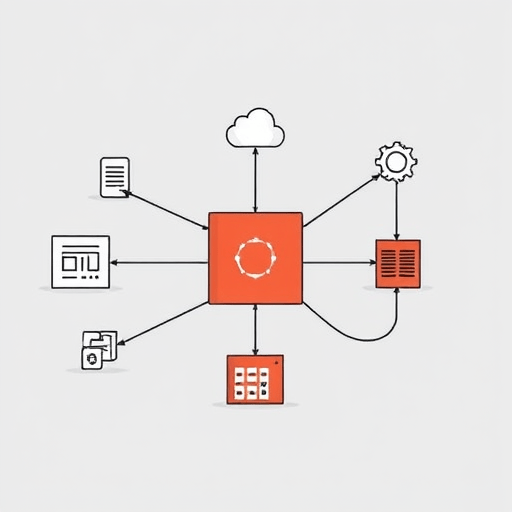
Automating Trust is an operational approach to ensure LLM-generated code is safe, correct, and maintainable before it reaches production. As teams adopt AI-assisted development, integrating the main keyword—Automating Trust—into CI/CD pipelines becomes essential: it moves validation from ad hoc reviews to reproducible, automated gates that combine unit and property tests, contract checks, adversarial prompts, and runtime monitoring.
Why Automating Trust matters now
Large language models accelerate development by generating functions, tests, and patches, but they also introduce novel risks: hallucinated APIs, fragile edge-case behavior, and non-deterministic outputs. Relying on manual review alone doesn’t scale. Automating Trust provides systematic validation that is repeatable, auditable, and adaptive to the unique failure modes of LLM-generated code.
Core pillars of the framework
1. Model-aware unit and property tests
Traditional unit tests check expected inputs and outputs; model-aware tests go further by encoding model uncertainty and typical LLM failure modes into the test design. Use the following patterns:
- Semantic unit tests: Validate not only return values but invariants and side effects, e.g., database state, idempotency, and resource cleanup.
- Property-based tests: Use property testing (e.g., Hypothesis, fast-check) to explore a wide input space and reveal brittle logic that only fails under certain inputs.
- Model drift assertions: When code generation is seeded by model outputs, assert that outputs conform to schema and style constraints over LLM versions or prompt variations.
2. Contract checks and type-safe wrappers
Contracts make expectations explicit. Wrap LLM-generated code with small, verifiable contracts that assert shapes, ranges, and units:
- Use type systems where available (TypeScript, MyPy) and runtime validators (JSON Schema, pydantic) to reject malformed outputs early.
- Add API contract tests that verify behavior across upstream/downstream integrations to avoid hallucinated or deprecated endpoints.
3. Adversarial prompt tests
LLMs respond differently when prompts are adversarial or malformed. Simulate adversarial prompts and injection attacks as part of pre-merge checks:
- Feed boundary, malformed, and malicious-like prompts to the same generation pipeline and assert the produced code still meets safety constraints.
- Introduce prompt-amplification tests that ensure safety guards and sanitizers survive chained prompt transformations.
4. Runtime monitoring and observability
No test suite catches everything. Complement static and pre-deployment checks with runtime monitoring:
- Behavioral metrics: Track error rates, input distributions, and feature flags for LLM-driven paths.
- Contract telemetry: Emit contract validation failures and schema mismatches as structured logs and metrics.
- Automated rollback triggers: Define SLO-based thresholds and configure the pipeline to initiate rollbacks or canary halts when thresholds are breached.
Integrating the framework into CI/CD
Build the Automating Trust pipeline as a layered gate system—fast checks first, deep validation later:
- Pre-commit hooks: Linting, formatting, and light static contract checks to catch obvious issues before pushing.
- CI pre-merge: Run unit tests, model-aware tests, and property tests against cached or mocked LLM responses for speed.
- Staging / pre-prod: Execute adversarial prompt suites and integration/contract tests against real model endpoints (with quotas and throttles).
- Canary release: Route a small percentage of real traffic through the LLM-generated paths with enhanced monitoring.
- Production monitoring: Continuous observability, alerting, and automated rollback rules.
Practical implementation patterns
Test generation and maintenance
Leverage the LLM to generate tests, but validate those tests with human review and automated meta-tests.
- Use the model to propose unit tests, then run property tests to validate their coverage and robustness.
- Maintain a curated set of adversarial prompts indexed by failure class to reproduce regressions.
Mocking vs. live model checks
For CI speed and determinism, mock model responses using deterministic seeds or response fixtures; reserve live checks for staging.
Automated gating rules
Translate risk appetite into simple, enforceable rules:
- Fail the merge if contract violations exceed X per 1,000 test runs.
- Require human approval for any generated code that touches security, billing, or privacy-sensitive modules.
- Block deployments when adversarial prompt coverage decreases or new unknown prompt types appear in telemetry.
Example workflow: From PR to safe deployment
Imagine a PR that adds a model-generated data transformer.
- Pre-commit: formatting and static contract checks run locally.
- CI pre-merge: unit and property tests execute using deterministic fixtures; quick adversarial prompt sanity checks run.
- On merge: staging pipeline runs real-model integration tests and expanded adversarial suite; results are stored and compared to a baseline.
- Canary: 1–5% of production traffic exercises the new transformer with contract telemetry enabled; monitoring evaluates drift and error budget.
- Full rollout: only proceeds if canary metrics remain within thresholds for a fixed observation window.
Best practices and common pitfalls
- Keep tests maintainable: Automatically generated tests can become noisy—periodically prune and prioritize by risk.
- Instrument everything: Without fine-grained telemetry, silent failures are inevitable.
- Avoid over-reliance on mocks: Mocks are useful, but real model behavior can differ significantly, so stage and canary checks are crucial.
- Human-in-the-loop: For high-risk changes, retain human approval steps informed by comprehensive test reports and telemetry.
Measuring success
Track these KPIs to evaluate Automating Trust effectiveness:
- Pre-deployment contract violations per build
- Canary rollback rate vs. baseline
- Time-to-detect and time-to-mitigate LLM-induced regressions
- Coverage of adversarial prompt categories
Automating Trust is not a one-time project—it’s a continuous program combining engineering rigor, observability, and responsible governance to safely scale AI-assisted development.
Conclusion: Implementing a layered framework of model-aware tests, contract enforcement, adversarial prompts, and runtime monitoring lets organizations gate AI-generated code in CI/CD with measurable safety and confidence. Start small—introduce deterministic fixtures and contract checks—then expand to adversarial testing and canaries as confidence grows.
Ready to harden your pipeline? Start by adding schema validation and a basic adversarial prompt suite to your CI today.