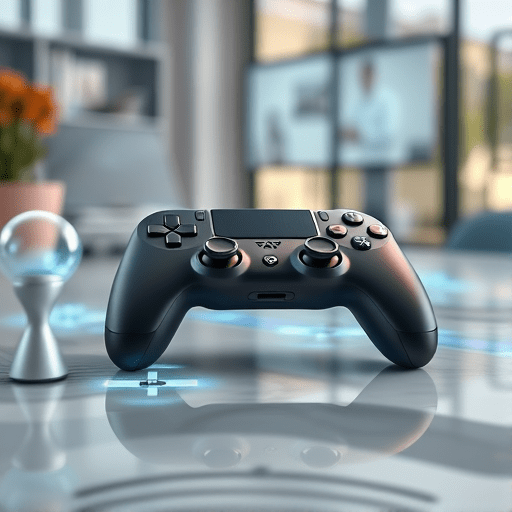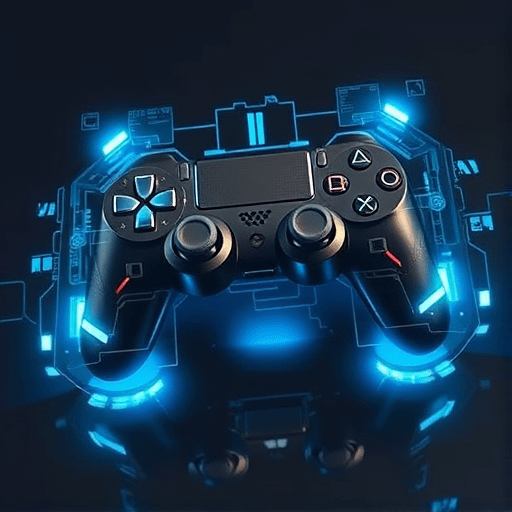
By 2026, the convergence of machine learning, sensor fusion, and real‑time rendering has turned adaptive gaming controllers from static assistive devices into dynamic, AI‑powered companions. AI‑Driven UI Personalization for Adaptive Gaming Controllers allows the hardware to automatically reconfigure button mapping, enhance visual contrast, and fine‑tune haptic output based on a player’s physical abilities, preferences, and context. This article explores the technologies behind the personalization pipeline, practical implementation strategies, and the ethical landscape that developers must navigate.
Why Adaptive Controllers Need AI in 2026
Traditional adaptive controllers rely on fixed remapping options and simple toggles, requiring players to manually set up each configuration. However, the variability in motor control, vision acuity, and even fatigue levels demands a fluid solution that adapts on the fly. AI brings the ability to:
- Learn a player’s unique movement patterns and predict the most efficient controls.
- Detect changes in visual contrast needs due to lighting or fatigue.
- Adjust haptic intensity to match individual sensitivity thresholds.
- Offer predictive assistance that anticipates player intent, reducing reaction time.
These capabilities make gameplay more inclusive, reducing frustration and enabling competitive participation for users with diverse impairments.
Key AI Components Driving Personalization
Several AI sub‑systems collaborate to deliver real‑time personalization:
- Reinforcement Learning (RL) Models – Learn optimal button mappings by rewarding actions that lead to successful in‑game outcomes.
- Computer Vision Pipelines – Use depth cameras or eye trackers to gauge visual context and adapt contrast or color schemes.
- Sensor Fusion Algorithms – Combine data from inertial measurement units (IMUs), force sensors, and biometric monitors to assess motor control and fatigue.
- Edge‑Inference Engines – Run lightweight neural nets on the controller firmware for low latency adjustments.
By blending these components, developers create a seamless experience where the controller feels like an extension of the player’s own body.
Button Mapping Automation: Making Controls Intuitive
AI reconfigures button layouts by observing interaction patterns. Two core techniques dominate:
1. Policy Gradient Reinforcement Learning
The controller samples a small set of mapping variants and evaluates their impact on gameplay. Positive outcomes, such as faster level completion or fewer errors, reinforce the policy, guiding future mapping suggestions. Over time, the system converges on a configuration that maximizes performance for that player.
2. Hierarchical Clustering of Input Sequences
Clustering helps identify which physical buttons a user naturally gravitates towards. The system can then reassign high‑frequency actions to more accessible inputs, while moving rarely used functions to secondary or programmable buttons.
Implementation tip: Store mapping states locally with a cloud backup, allowing the player to roll back to a prior configuration if needed.
Contrast and Visual Adjustment Algorithms
Players with visual impairments face challenges like glare, low contrast, and color discrimination issues. AI tackles these problems through adaptive rendering pipelines that modify on‑screen elements in real time.
- Dynamic Color Transformation – Neural networks map standard UI colors to palettes optimized for individual color vision deficiencies.
- Contrast Stretching via GANs – Generative adversarial networks enhance edge definition without introducing noise.
- Ambient Light Sensing – The controller’s internal light sensor feeds data to adjust brightness levels and reduce eye strain.
These visual adjustments can be applied to both controller displays (OLED screens) and external overlays, ensuring a consistent experience across devices.
Haptic Feedback Fine‑Tuning for Motor Impairments
Haptic engines provide tactile cues that help players gauge in‑game events. For users with reduced proprioception or motor control, precise haptic calibration is crucial.
Adaptive Vibration Profiles
By monitoring response times and error rates, the system tunes vibration amplitude and frequency. A lightweight recurrent neural network predicts when a higher intensity cue would aid awareness versus when a subtle pulse suffices.
Force Feedback Customization
When controllers include mechanical actuators, AI learns the force thresholds at which a user can perceive movement. This data informs a scaling function that adjusts joystick dead zones and return forces to match individual comfort levels.
Integrating Data Streams: User Sensors and Cloud Learning
Personalization thrives on rich data. The following sensor modalities feed into the AI stack:
- Inertial Measurement Units (IMUs) – Capture fine‑grained motion of the controller.
- EMG Sensors – Detect muscle activation patterns in the user’s hand or arm.
- Eye‑Tracking Cameras – Provide gaze data for visual accessibility analysis.
- Heart Rate Monitors – Offer insights into fatigue and stress levels.
Data is processed locally for immediate adjustments, then uploaded to a secure cloud service for long‑term learning. The cloud model aggregates anonymized data from multiple users to refine mapping policies and visual enhancement algorithms.
Ethical Considerations and Accessibility Standards
While AI offers powerful personalization, developers must address privacy, consent, and fairness:
- Data Governance – Implement transparent data usage policies and allow users to opt‑in or out of cloud uploads.
- Algorithmic Bias – Regularly audit models to ensure equal performance across diverse user groups.
- Accessibility Certification – Align with WCAG 2.2 and Section 508 standards, providing documented compliance.
- Explainability – Offer users insights into why the controller reconfigured a button or adjusted contrast, fostering trust.
Adhering to these principles guarantees that AI‑driven personalization enhances inclusivity without compromising user autonomy.
Future Outlook: From Personalization to Predictive Play
Looking beyond 2026, the trajectory points toward fully predictive controllers that anticipate player intent and adapt before a button press is even made. Potential breakthroughs include:
- Cross‑modal fusion with VR headsets to merge controller and head movements into a unified motion model.
- Federated learning frameworks that let users train models locally while contributing to a shared knowledge base.
- Emotion‑aware feedback systems that modulate haptics based on detected frustration or excitement.
These advances promise to elevate adaptive gaming controllers from assistive peripherals to integral, AI‑enhanced extensions of the player’s skill set.
In sum, AI‑Driven UI Personalization for Adaptive Gaming Controllers represents a pivotal leap toward truly inclusive play. By harnessing reinforcement learning, sensor fusion, and edge inference, developers can deliver controllers that intuitively respond to individual needs, transforming accessibility from a set of options into a seamless, context‑aware experience.