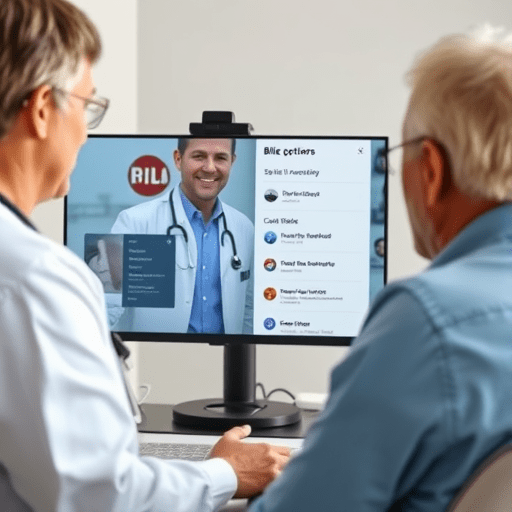
In 2026, emergency departments (ERs) across the country are turning to AI-driven data mapping to streamline electronic health record (EHR) integration. By automating the translation of disparate data formats, these systems cut integration errors by 30%, freeing clinicians to focus on patient care rather than data reconciliation. Yet the technology’s success hinges on robust staff training, real-time error monitoring, and continuous model iteration. This article explores how hospitals can implement, maintain, and refine AI mapping workflows to achieve lasting accuracy.
Understanding the AI Mapping Workflow in Emergency Settings
The core of AI-driven data mapping is a neural network that learns associations between source data fields (e.g., lab results from a point-of-care device) and target EHR schemas (e.g., HL7 or FHIR structures). During the initial phase, the model is trained on a curated dataset that reflects typical ER workflows. Once deployed, it performs real-time field alignment, flagging mismatches for review. This workflow reduces manual mapping time from minutes to seconds and minimizes the likelihood of critical data being omitted.
Designing an Effective Staff Training Program
Even the most advanced AI model requires human oversight. A well-structured training program should include:
- Foundational Knowledge: Teach clinicians and IT staff the basics of data standards—HL7, FHIR, LOINC, SNOMED CT—so they can recognize anomalies.
- Hands-On Workshops: Use sandbox environments to simulate real patient encounters, allowing staff to practice reviewing AI-mapped data and making corrections.
- Role-Based Learning Paths: Differentiate training for nurses, physicians, coders, and data engineers to address unique responsibilities.
- Continuous Learning Modules: Offer microlearning sessions whenever a new data source or EHR update is introduced.
Incorporating role play and scenario-based drills ensures that staff are not just familiar with the interface but also comfortable making critical decisions about data validity.
Leveraging Microlearning for Rapid Skill Refresh
Microlearning—short, focused lessons—has proven effective in healthcare training. By delivering concise content through mobile devices, staff can quickly revisit terminology, best practices, or recent updates without disrupting workflow. A 15-minute module on “Interpreting AI-Mapped Lab Results” can reduce the learning curve and boost confidence in using the system.
Monitoring Error Rates: The Key to Sustained Accuracy
After deployment, continuous monitoring is essential. Establish a real-time dashboard that tracks:
- Number of mapped records per shift
- Percentage of records flagged for review
- Resolution time for flagged records
- Types of errors (e.g., missing fields, incorrect units, duplicate entries)
These metrics provide a quantitative basis for assessing model performance and identifying training gaps. A threshold of 2% error rate is recommended; exceeding this triggers an automatic review cycle.
Automated Alerting and Feedback Loops
Integrate automated alerts that notify staff when the error rate spikes. Pair these alerts with a feedback mechanism that captures why an error occurred—was it a data source change, a mapping rule misconfiguration, or a clinician’s oversight? Feeding this data back into the AI training pipeline refines the model over time.
Iterating AI Mapping Models for Continuous Improvement
AI models are not static. To maintain high accuracy, hospitals should adopt a cycle of data collection, model retraining, and deployment. Key steps include:
- Data Augmentation: Incorporate new clinical scenarios, device updates, and coding changes into the training set.
- Model Versioning: Track each model iteration, noting changes in architecture, hyperparameters, and performance metrics.
- Controlled Rollouts: Deploy new versions in a staged manner—first to a subset of users, then to the full ER staff—while monitoring for regression.
- Human-in-the-Loop (HITL) Review: For complex or high-risk data, retain manual validation steps to guard against catastrophic errors.
By embedding these practices into the operational workflow, hospitals transform AI mapping from a one-off solution into an evolving partnership between technology and clinical expertise.
Case Study: Iterative Success at St. Catherine’s ER
St. Catherine’s ER implemented a new AI mapping platform in January 2025. After six months of iterative retraining—incorporating 15,000 new patient encounters and updating LOINC mappings—the error rate dropped from 5.2% to 2.8%. Staff reported a 40% reduction in time spent reconciling lab results, allowing nurses to dedicate more attention to bedside care.
Integrating AI Mapping with Existing Quality Assurance Processes
AI mapping should complement, not replace, established quality assurance (QA) protocols. Align AI insights with QA dashboards, ensuring that both systems communicate clearly. For instance, the AI model can flag potential medication reconciliation errors, while the QA team cross-verifies with pharmacy records. Such synergy maximizes data integrity and patient safety.
Cross-Functional Collaboration: IT, Clinical, and Analytics
Successful AI mapping relies on collaboration. Create a cross-functional committee that meets monthly to review performance reports, discuss emerging data challenges, and prioritize model updates. Including clinicians in these discussions ensures that the technology remains aligned with bedside realities.
Addressing Ethical and Regulatory Considerations
AI-driven mapping touches on sensitive patient data. Hospitals must ensure compliance with HIPAA, GDPR, and state-specific regulations. Key actions include:
- Encrypting data both in transit and at rest.
- Implementing role-based access controls to limit who can view or edit mapping rules.
- Documenting audit trails for all AI-generated decisions, supporting transparency and liability protection.
Transparency fosters trust among staff and patients, reinforcing the legitimacy of AI integration.
Future-Proofing Your AI Mapping Infrastructure
Emerging technologies—such as federated learning and explainable AI—offer new avenues to enhance accuracy and reduce bias. Consider adopting a modular architecture that allows plug-and-play integration of future AI components without overhauling the entire system. Regularly assess industry standards and incorporate updates to keep the mapping logic current.
In a rapidly evolving healthcare landscape, the ability to adapt quickly is a strategic advantage. By investing in robust training, vigilant monitoring, and iterative model improvement, ERs can harness AI mapping to achieve higher data quality and better patient outcomes.
Ultimately, AI-driven data mapping is a tool that amplifies clinical efficiency. Its true power emerges when technology, human expertise, and continuous learning converge in a well-orchestrated process. As hospitals refine these practices, the promise of reduced integration errors—and the safety benefits that follow—will become a standard reality rather than a future aspiration.