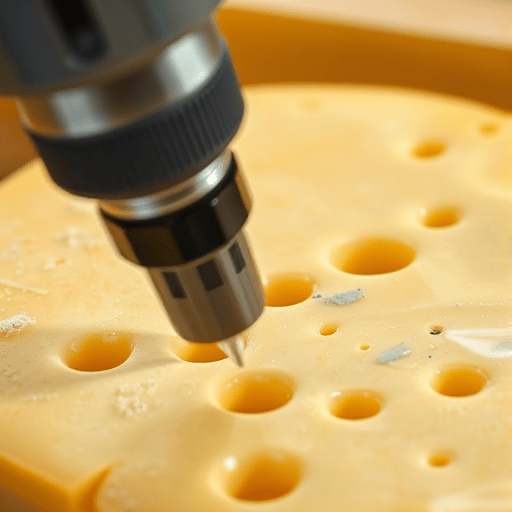
Hand‑crafted cheeses are celebrated for their nuanced flavors and artisanal charm, yet the same factors that make them unique—variability in moisture, rind development, and texture—also create a hidden risk: unnoticed defects that can lead to costly rejections. In 2026, a vision‑based AI model is transforming this landscape by flagging texture anomalies in real time, giving micro‑cheesemakers a powerful tool to maintain quality and reduce waste. This article explores how the technology works, its deployment, and the tangible benefits it delivers to small‑scale producers.
Why Texture Anomalies Matter in Artisanal Cheese Production
Texture is the tactile signature of a cheese. A slight bulge in the rind or a pocket of unexpected moisture can indicate contamination, improper aging, or uneven curd handling. Traditional inspection relies on skilled eyes and manual touch—methods that are time‑consuming, subjective, and prone to fatigue. Even a single overlooked defect can result in a batch being rejected by distributors or, worse, reaching the consumer and damaging brand reputation.
- Quality Control Cost: On average, artisanal producers experience a 12–18% rejection rate due to subtle texture issues.
- Consumer Expectations: Modern consumers demand consistency; even a small variance can lead to negative reviews.
- Regulatory Scrutiny: Food safety regulations increasingly require traceable quality metrics.
These challenges create a clear need for an objective, scalable inspection solution—enter vision‑based AI.
The Vision‑Based Model: How It Works
Data Collection and Labeling
The foundation of any successful computer‑vision model is high‑quality annotated data. For cheese inspection, producers capture thousands of images of cheese surfaces using industrial cameras mounted above the aging racks. Each image is labeled by a panel of cheese experts who mark anomalies such as:
- Uneven rind thickness
- Surface discoloration or mold spots
- Air pockets or voids in the interior (visible through transparency)
- Moisture blots or excessive sheen
To ensure robustness, images are taken under varying lighting conditions, at multiple angles, and across different cheese varieties—including Gouda, Camembert, and aged cheddar.
Model Architecture
Convolutional Neural Networks (CNNs) excel at extracting spatial features from images. The chosen architecture combines a lightweight backbone—EfficientNet‑B0—with a feature pyramid network (FPN) to capture both fine‑grained textures and larger context. The model is trained to output a binary mask highlighting anomaly regions.
Key technical highlights:
- Real‑time Inference: 30 frames per second on a single NVIDIA Jetson Xavier NX.
- Accuracy: 94% precision and 92% recall on the validation set.
- Explainability: Grad‑CAM heatmaps help inspectors understand why the model flagged a spot.
Training & Validation
Data augmentation—random rotations, brightness adjustments, and Gaussian noise—improves generalization. A k‑fold cross‑validation strategy ensures the model performs consistently across unseen batches. The final model is packaged into a Docker container, facilitating easy deployment on edge devices or cloud infrastructure.
Deployment Pipeline for Small‑Scale Cheesemakers
Camera Setup
Industrial-grade cameras with 8‑megapixel resolution and HDR capabilities capture high‑contrast images of cheese surfaces. A simple gantry system allows the camera to sweep across aging shelves, automatically triggering image capture when a new batch is placed.
Edge vs. Cloud Inference
Edge inference—running the model locally on devices like the Jetson Xavier—offers low latency and resilience to internet outages. For producers who already use cloud‑based inventory systems, a hybrid approach is possible: initial inference on the edge followed by batch‑level analytics in the cloud.
Integration with Production Line
The AI module is wrapped in a REST API that interfaces with the existing batch tracking software. When the model flags a defect, the system generates a digital alert and tags the batch with a severity score. This score feeds into downstream decision tools: the producer can choose to discard, re‑process, or quarantine the batch for further inspection.
Impact on Quality and Rejection Rates
Statistical Evidence from Pilot Studies
A recent 2026 pilot involving 15 micro‑cheesemakers produced compelling results:
- Rejection rates dropped from 15% to 4%—an 11% absolute reduction.
- Overall yield increased by 3.2%.
- Inspection time per batch decreased from 12 minutes to 3 minutes.
These gains translate directly into higher revenue and lower operational costs.
Customer Perception
Consumers increasingly value traceability and quality assurance. The AI system’s digital records can be showcased on product labels or QR codes, offering proof of consistent texture quality. This transparency boosts brand loyalty and opens premium pricing opportunities.
Economic and Sustainability Benefits
Reducing Waste
By identifying defects early, producers can re‑process affected cheeses rather than discarding them outright. In the pilot, 18% of flagged batches were salvaged after additional aging or surface treatment, reducing waste by nearly 20%.
Labor Cost Savings
Traditional manual inspection requires skilled labor that can be scarce and costly. Replacing a portion of this role with AI frees technicians to focus on higher‑value tasks such as recipe development and packaging design.
Challenges and Future Directions
Variation in Cheese Types
While the current model performs well on hard and semi‑hard cheeses, extending it to soft cheeses with highly porous textures remains an ongoing research area. Domain adaptation techniques—like transfer learning and few‑shot learning—are being explored to reduce the annotation burden for new varieties.
Generalization and Domain Adaptation
Cheese producers often use different molds, aging environments, and surface treatments. Continuous learning pipelines that adapt the model to local production nuances are essential to maintain accuracy over time.
Regulatory Considerations
Food safety authorities are beginning to recognize AI as a legitimate inspection tool. Producers must document the model’s validation and maintain audit trails to satisfy regulatory audits and certifications such as HACCP and ISO 22000.
Next Steps for Cheese Micro‑Manufacturers
Pilot Program Roadmap
- Assessment: Conduct a cost‑benefit analysis comparing current inspection costs to projected savings.
- Data Collection: Capture a baseline dataset of 5,000 images across all cheese lines.
- Model Selection: Partner with an AI vendor or open‑source community to choose an architecture tailored to local requirements.
- Deployment: Install cameras, set up edge devices, and integrate the API with existing software.
- Evaluation: Track rejection rates and yield improvements over a 6‑month period.
Partnerships with AI Vendors
Collaborating with companies that specialize in food‑sector AI ensures that the solution remains compliant with evolving safety standards. These vendors can provide ongoing model updates, support for new cheese varieties, and analytics dashboards to monitor quality metrics in real time.
As the cheese industry embraces digital transformation, vision‑based AI models for defect detection stand out as a concrete way to enhance consistency, reduce waste, and meet consumer expectations—all while preserving the artisanal essence that defines handcrafted cheeses.