When launching a new SaaS product, the biggest risk is investing time and money into a solution that the market never adopts. A single-page survey can act as a crystal ball—providing clear, actionable data on whether your idea resonates with potential users, all before you write a line of code. This article walks through a streamlined workflow that lets founders test product‑market fit (PMF) in under 48 hours, using a minimal design, smart targeting, and built‑in analytics.
Why One‑Page Surveys Work for Early Validation
Traditional beta programs and MVPs often require full development before feedback can be gathered, leading to costly pivots. One‑page surveys eliminate that lag by:
- Focusing on core assumptions—market need, willingness to pay, and feature importance—in a single, concise format.
- Reducing friction: users answer in seconds, increasing completion rates compared to multi‑page forms.
- Providing immediate data that can be visualized on a dashboard, allowing real‑time decision making.
Because the survey is lightweight, you can iterate on questions, target new segments, and redeploy within hours, keeping your validation cycle fast and agile.
Designing a High‑Converting Survey Funnel
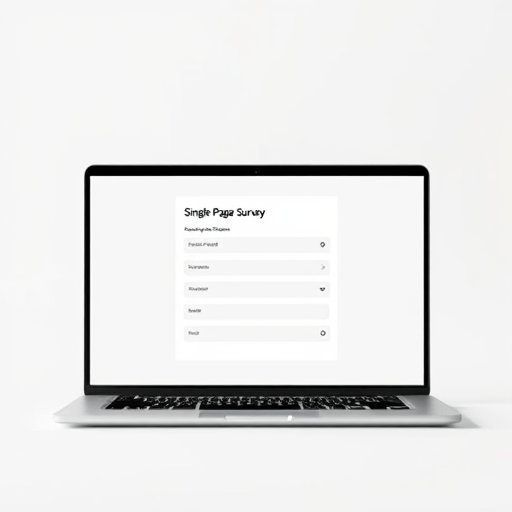
Structure your survey like a funnel: start with broad curiosity, narrow to specific pain points, and finish with a payment intent question. A typical layout looks like this:
- Header – A headline that clearly states the problem you solve.
- Question 1 – “How often do you encounter X?” (Multiple choice)
- Question 2 – “Which feature would solve this pain most effectively?” (Rank or checkbox)
- Question 3 – “What price point would you pay for a solution?” (Slider or scale)
- Optional Follow‑Up – “Would you like to join a beta?” (Email capture)
- Thank‑You – A short message with a link to share the survey.
Keep the total time under two minutes. Use conditional logic to skip irrelevant questions, and always include a single CTA button that changes based on the user’s path.
Targeting the Right Audience Quickly
Validity hinges on respondent relevance. Use a combination of channels to reach early adopters in your niche:
- LinkedIn InMail – Send personalized invitations to professionals who fit your ideal customer profile.
- Reddit AMA Threads – Tap into niche communities where users discuss the problem you’re solving.
- Twitter Polls – Embed your survey link in a short poll to spark curiosity.
- Email Outreach – Leverage existing contacts or use tools like Hunter to find relevant inboxes.
Segment your responses by industry, company size, or role to surface patterns early. A small cohort (50–100 respondents) is sufficient to spot statistically significant trends when questions are well crafted.
Automating Responses and Analytics
Set up an automated workflow that moves survey data from a landing page to a spreadsheet or BI tool. Tools such as Zapier, Integromat, or Airtable can:
- Collect each submission and store it in a master sheet.
- Trigger notifications for high‑priority answers (e.g., “$100+ willingness to pay”).
- Update a live dashboard with heat maps, funnel drops, and aggregate scores.
Use conditional formatting to flag outliers—such as a respondent who answers “I would pay $10,000” but has no company—so you can filter noise. Visualizing the data allows you to spot consensus quickly: if 70% of respondents indicate a pain score above 8/10 and are willing to pay a certain price, that signals strong PMF potential.
Interpreting Survey Data to Forecast Product‑Market Fit
Once you have a clean dataset, evaluate the core PMF indicators:
- Problem Severity – Average pain score; >7/10 is a good threshold.
- Solution Fit – Feature ranking; the top feature should align with your core MVP.
- Willingness to Pay – Price elasticity; if respondents agree on a price point within 10% of your target, you have a revenue model.
- Churn Prediction – Repeat interest; a significant portion of respondents wanting a subscription indicates lower churn risk.
Combine these metrics into a PMF score. For example, assign weights: Problem (35%), Solution Fit (25%), Willingness to Pay (30%), Churn Prediction (10%). A score above 70/100 suggests you’re on the right track. If below, revisit your assumptions or target a different segment.
Iterating Based on Feedback Loops
Validation is not a one‑shot event. After the initial survey, iterate on the questions that generated low response rates or ambiguous answers. Use A/B testing on headlines and question wording. If a certain feature receives low interest, consider removing it from the MVP scope or exploring a different angle.
For respondents who expressed high interest but are not ready to pay, use the optional email capture to build a waiting list. This queue can later be used for a closed beta, providing deeper insights and early adopters who can serve as evangelists.
Case Study: From Survey to Launch in 72 Hours
Startup TaskFlow used this exact workflow to validate their project‑management SaaS. They launched a one‑page survey targeting mid‑size tech teams, gathering 82 responses in 36 hours. Key findings:
- 85% rated their current task‑tracking pain as 8/10 or higher.
- 70% chose “Real‑time collaboration” as the top feature.
- 55% were willing to pay $12/month per user.
Armed with this data, the founders built a minimal MVP focused on collaboration, launched a beta with 25 users, and achieved a 4‑week sprint cycle with no major pivots. Within a month, they had 300 paying customers—demonstrating the power of rapid validation.
Best Practices to Avoid Common Pitfalls
- Keep It Short – Every extra question reduces completion rates.
- Test Internally First – Send the survey to your team to catch confusing logic.
- Use Clear Language – Avoid jargon that might alienate non‑technical respondents.
- Protect Privacy – Explicitly state data usage; comply with GDPR and CCPA.
- Follow Up – Thank respondents and keep them informed; this builds trust for future engagement.
By following these guidelines, you can reduce wasted effort and focus resources on building features that genuinely solve market problems.
Conclusion
Validating a SaaS idea with a one‑page survey before coding turns uncertainty into insight. By carefully crafting questions, targeting the right users, and automating analysis, founders can forecast product‑market fit in a matter of hours, avoid costly missteps, and launch with confidence. The next time you’re tempted to dive straight into development, pause and test—your future product (and team) will thank you.