In the fast‑moving world of 2026 DevOps, container security is no longer an optional add‑on—it’s a mandatory step that must be embedded into every build, test, and deployment pipeline. This article dives into the practical side of automating container security scans, comparing GitHub Actions and GitLab CI, two of the most widely used CI/CD platforms. We’ll look at how each platform handles image scanning, what the latest native integrations offer, and the best ways to keep your pipeline both secure and efficient.
Why Automate Container Scanning Right From the Start?
Modern applications increasingly rely on third‑party containers, each with their own vulnerability footprint. A single overlooked flaw can expose your services to data breaches or supply‑chain attacks. By automating scans within the CI/CD pipeline, teams catch vulnerabilities before they reach production, enabling a shift‑left security mindset. Automation eliminates the human error that still plagues manual scans, speeds up feedback loops, and aligns security with continuous delivery goals.
Key Components of an Automated Container Scan Workflow
Both GitHub Actions and GitLab CI share common building blocks for container scanning:
- Build Stage: Compile Dockerfiles into images.
- Scan Stage: Run vulnerability scanners such as Trivy, Aqua, or Snyk.
- Policy Check: Enforce security thresholds (e.g., CVSS scores, license compliance).
- Reporting: Generate artifacts and trigger notifications or PR comments.
- Mitigation: Auto‑rebuild or halt deployments if policy fails.
While the outline is similar, the way each platform implements these steps differs in configuration, tool integration, and ecosystem support.
GitHub Actions: Native Security Scanning in 2026
1. Built‑in Container Scanning Actions
GitHub Actions now ships with several officially supported container scanning actions. The github/codeql-action can analyze Dockerfiles for known patterns, while docker://ghcr.io/snyk/snyk-action pulls the Snyk scanner into your workflow. The flexibility of the GitHub Marketplace means you can mix and match scanners, but the key advantage is that actions are version‑controlled and reviewed by the GitHub community.
2. Security Policy Enforcement with GitHub Dependabot
Dependabot has expanded beyond dependency alerts to support container image vulnerabilities. In 2026, it can auto‑open pull requests that replace a base image with a patched one, automatically running the GitHub Actions workflow to re‑scan the updated image. This tight coupling of alerts and CI ensures continuous remediation.
3. Advanced Feature: GitHub Advanced Security (GHAS)
For enterprises, GHAS offers a full suite of security checks, including secret scanning, code scanning, and dependency graphing. Its integration with Actions allows for policy decisions based on real‑time scan results, with automatic blocking of merges if thresholds are breached.
4. Limitations to Watch For
While GitHub Actions provides great flexibility, its execution environment is limited to the GitHub-hosted runners unless you provision self-hosted runners. In some high‑security contexts, the shared environment may pose a compliance risk. Additionally, the GitHub marketplace can sometimes be fragmented, with varying levels of maintenance across third‑party actions.
GitLab CI: A Unified Pipeline Experience
1. Native Container Scanning Templates
GitLab CI offers built‑in templates such as container_scanning and dependency_scanning, which you can drop into your .gitlab-ci.yml file with a single line. These templates automatically install the most popular scanners, such as Trivy, and produce detailed reports in the GitLab UI.
2. Auto-Generated Secure Images with GitLab Container Registry
GitLab’s integrated container registry not only stores images but also streams scan results directly into the container’s page. When you push a new image, the registry triggers a scan in the background, updating the image’s security tab. This means the scanning step can be detached from the CI pipeline, reducing build times.
3. Compliance and Governance with GitLab’s Security Dashboard
In 2026, GitLab’s security dashboard aggregates vulnerability data across code, dependencies, and containers, providing a single view of an application’s risk profile. Automated gates in the pipeline can enforce that only images with acceptable risk levels pass to the staging environment.
4. Potential Drawbacks
GitLab’s CI templates are powerful but can be less granular compared to GitHub Actions. Customizing scanner behavior often requires editing Docker images or writing additional scripts. Also, if your organization uses GitLab Self-Managed, you’re responsible for maintaining the runners and ensuring they are up to date with the latest scanner versions.
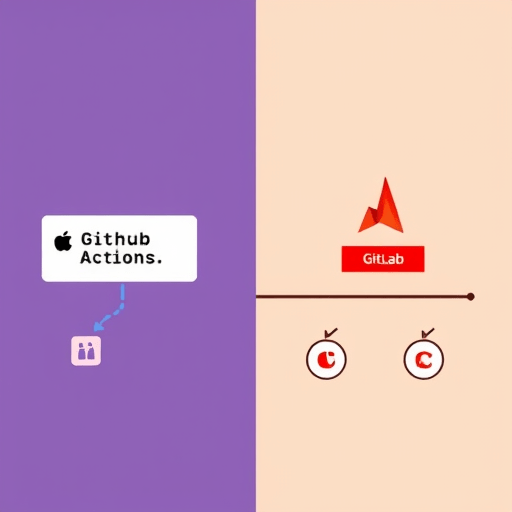
Side‑by‑Side Comparison: GitHub Actions vs. GitLab CI
- Configuration: GitHub Actions uses YAML files per workflow; GitLab CI uses a single
.gitlab-ci.ymlwith stage definitions. - Scanner Integration: GitHub relies on third‑party actions, while GitLab offers built‑in templates.
- Runtime Environment: GitHub provides shared runners by default; GitLab’s registry scans run independently of the pipeline.
- Policy Enforcement: GitHub’s GHAS allows fine‑grained merge checks; GitLab’s pipeline gates enforce risk thresholds directly.
- Reporting: GitHub shows scan results in PR comments; GitLab embeds them in the container registry and security dashboard.
- Compliance: GitHub Actions can be restricted via branch protection rules; GitLab’s pipeline gates provide a visual lock‑down.
Choosing between the two often boils down to organizational preferences: GitHub for its action marketplace flexibility, GitLab for its tightly coupled registry and built‑in security tooling.
Best Practices for 2026 Container Security Pipelines
1. Adopt a Zero‑Trust Image Model
Treat every image, even those pulled from trusted registries, as untrusted until proven otherwise. Enforce signed images with Cosign or Docker Content Trust, and verify signatures before deployment.
2. Use Multi‑Stage Builds to Minimize Surface Area
Strip unused layers, binaries, and build tools from the final image. Automated scanners should validate that the base image and runtime environment contain only the necessary dependencies.
3. Combine Static and Dynamic Analysis
Static analysis checks the Dockerfile and image metadata, while dynamic scanning runs the container in a sandbox to detect runtime vulnerabilities. A hybrid approach catches both build‑time and runtime issues.
4. Implement Rate‑Limiting and Credential Rotation
Automate scanning without overwhelming third‑party services by throttling scan requests. Rotate API keys and access tokens used by scanners to mitigate credential leakage.
5. Store Scan Results as Artifacts and Audit Logs
Persist scan reports in an artifact store, linking them to the commit hash and CI job ID. This provides traceability for compliance audits.
6. Continuous Feedback Loops
Automate remediation tickets in your issue tracker when scans reveal high‑severity vulnerabilities. The issue should be linked back to the offending image and the pipeline that created it.
Emerging Trends in 2026: From AI‑Driven Scans to Supply‑Chain Transparency
Artificial Intelligence is beginning to predict vulnerability exploitation likelihood, integrating risk scoring directly into CI pipelines. Both GitHub and GitLab are adding AI‑based suggestions for patching and image hardening. Another trend is the increased adoption of supply‑chain transparency tools such as Sigstore, enabling teams to trace every layer of a container back to its source code repository. Expect more out‑of‑the‑box integrations that automatically fetch provenance data during the scan phase.
Future‑Proofing Your Container Security Strategy
Investing in modular, plugin‑based pipelines ensures that as new scanners emerge, you can swap them in without rewriting your entire CI config. Adopt policy-as-code frameworks like Open Policy Agent (OPA) to keep your security rules in version control. Finally, schedule regular reviews of your scan thresholds—what was acceptable yesterday may not be today, especially as CVE databases grow and new attack vectors surface.
Conclusion
Automating container security scans is now a standard practice for any team that wants to ship fast while keeping risk in check. In 2026, both GitHub Actions and GitLab CI provide mature, feature‑rich paths to integrate scanning into every pipeline stage. GitHub excels with its marketplace flexibility and tight merge‑gate controls, whereas GitLab offers a unified registry and built‑in security templates that simplify the learning curve. By following the best practices outlined above and staying aware of emerging trends, teams can build pipelines that not only detect vulnerabilities early but also enforce remediation automatically, ensuring that container deployments remain secure, compliant, and resilient.