When a digital health company plans a clinical trial for a new medical device, the first strategic decision is the regulatory pathway. The FDA 510(k) and the De Novo classification are the two most common routes for class II devices, but they differ markedly in evidence requirements, review timelines, and post‑market obligations. This article breaks down the practical distinctions between the two pathways in 2026, providing a step‑by‑step framework for choosing the best route for your device’s clinical trial.
Understanding the Core Differences
Both the 510(k) and De Novo pathways aim to demonstrate that a device is safe and effective, yet they serve different market contexts.
- 510(k) Process: Requires demonstrating that the device is substantially equivalent to a legally marketed predicate. It is ideal when a similar device already exists in the U.S. market.
- De Novo Process: Provides a mechanism for novel devices that do not have a predicate and are considered low to moderate risk. It creates a new class II listing, which can later serve as a predicate for future 510(k) submissions.
The choice hinges on predicate availability, risk profile, and the speed of bringing the product to market.
Predicate Search: The First Decision Point
Before drafting any submission, conduct a thorough predicate search using the FDA’s Device Databases and the De Novo Database. The goal is to identify a device that shares the same intended use and technological characteristics.
- Successful Predicate Match: If you find a closely related device, the 510(k) route is usually faster.
- No Predicate Found: If no match exists, consider the De Novo pathway or an investigational new device (IND) if the device is intended for human use.
Predicate Search Tips for 2026
Recent FDA updates have expanded the digital device database, incorporating AI/ML-based algorithms and adaptive clinical trial data. Use the Digital Health Innovation Action Plan resources to refine your search.
- Check for Software as a Medical Device (SaMD) classifications.
- Verify that the predicate’s intended use matches your device’s exact clinical application.
- Review the predicate’s risk classification and any post‑market surveillance data.
Risk Assessment: Class II vs. Class I
Both 510(k) and De Novo submissions typically target Class II devices, but risk levels differ.
- Low‑Risk Devices: Often eligible for 510(k) with minimal preclinical data.
- Moderate‑Risk Devices: De Novo may be preferred if no predicate exists but risk is still acceptable for Class II.
- High‑Risk Devices: Require a pre‑market approval (PMA) or a De Novo with extensive clinical data.
In 2026, the FDA’s risk‑based guidance on software safety and cybersecurity strengthens the emphasis on risk assessment for digital health devices.
Data Requirements: Clinical, Technical, and Cybersecurity
Both pathways require robust data, but the composition differs.
510(k) Data Profile
The 510(k) submission must include:
- Clinical data proving safety and effectiveness (often retrospective studies or small prospective trials).
- Technical documentation comparing your device to the predicate.
- Labeling, instructions for use, and risk analysis.
- Cybersecurity risk assessments, especially for connected devices, per the FDA’s Post‑Market Surveillance of Connected Devices guidance.
De Novo Data Profile
De Novo submissions require:
- Comprehensive preclinical data and, ideally, a small to moderate‑sized prospective clinical trial.
- Detailed technical specifications and a comparison to the broader class of similar devices.
- Evidence of market demand and a clear business model.
- Cybersecurity and privacy compliance documentation, often aligned with NIST SP 800‑53.
Because De Novo establishes a new classification, the FDA scrutinizes the device’s safety profile more closely, expecting a higher level of clinical evidence than a typical 510(k).
Submission Timelines: Anticipated Review Durations
Timelines can be critical when clinical trial phases are time‑boxed.
- 510(k): Average review time is 90 days, but can extend up to 180 days if substantial data gaps exist.
- De Novo: Typically 180 days, but the FDA often issues a decision within 90 days for low‑risk devices with clear evidence.
In 2026, the FDA’s “Accelerated Review” program for digital health devices may reduce timelines for both pathways if the device addresses unmet medical needs.
Post‑Market Requirements and Surveillance
Both pathways mandate post‑market surveillance, but De Novo devices often carry stricter reporting obligations.
- 510(k): Periodic safety updates (PSURs) every 12 months and voluntary reporting of adverse events.
- De Novo: Mandatory post‑market surveillance plan, including quarterly safety reports and a robust data collection system for real‑world evidence (RWE).
The FDA’s 2025 RWE framework encourages developers to submit real‑world data from post‑market use to support ongoing safety evaluations.
Cost Considerations
Regulatory costs encompass submission fees, data generation, and advisory services.
- 510(k) Fees (2026):
- Standard fee: $11,500
- Small‑business fee: $2,900
- Additional fees for clinical data collection and cybersecurity assessments.
- De Novo Fees (2026):
- Standard fee: $26,500
- Small‑business fee: $6,500
- Higher clinical trial costs due to the need for prospective data.
Companies with limited capital may opt for 510(k) to reduce upfront expenses, but the long‑term cost of maintaining post‑market surveillance can offset initial savings.
Strategic Decision Flowchart
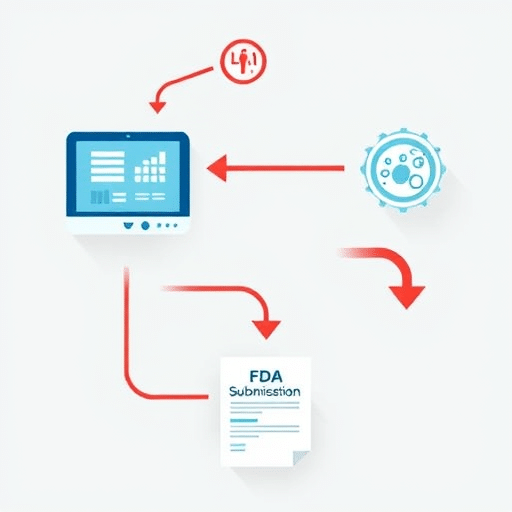
Use the following decision tree to guide your regulatory path selection:
- Is there a predicate device with the same intended use?
- Yes → 510(k)
- No → Go to step 2
- Is the device low‑ to moderate‑risk and lacking a predicate?
- Yes → De Novo
- No → Consider PMA or IND
- Do you have the resources for a full prospective clinical trial?
- Yes → De Novo
- No → Explore 510(k) with a predicate or seek a clinical study exemption.
When in doubt, consult with a regulatory affairs specialist to validate your chosen pathway.
Emerging Trends in 2026
The regulatory landscape for digital health is evolving. Key trends include:
- AI/ML Lifecycle Management: FDA requires documentation of algorithm versioning and performance monitoring.
- Real‑World Evidence Integration: Post‑market data can accelerate regulatory approvals, especially under De Novo.
- Cybersecurity Standards: FDA’s 2025 Cybersecurity Framework mandates a risk‑based approach for all connected devices.
- Global Alignment: International bodies like the EU MDR and Health Canada’s Medical Devices Bureau are harmonizing criteria, making cross‑border approvals smoother.
Implications for Clinical Trial Design
Design trials that collect data suitable for both regulatory submission and post‑market RWE collection. Include:
- Standardized outcome measures aligned with FDA endpoints.
- Robust data capture systems that support cybersecurity compliance.
- Clear documentation of algorithm updates if the device uses adaptive AI.
These steps help avoid costly redesigns during the review process.
Common Pitfalls and How to Avoid Them
- Predicate Mismatch: A predicate that differs significantly in intended use can lead to rejection. Verify matching criteria thoroughly.
- Insufficient Clinical Evidence: Both 510(k) and De Novo require evidence; under‑estimating required sample sizes can delay approvals.
- Cybersecurity Oversights: Inadequate risk assessments may result in safety alerts or post‑market recalls.
- Neglecting Post‑Market Plans: The FDA scrutinizes post‑market surveillance plans, especially for De Novo devices.
- Under‑estimating Costs: Include fees for submission, clinical trials, and cybersecurity audits in your budget.
Internal Collaboration and Documentation
Effective cross‑departmental communication ensures that clinical, engineering, and regulatory teams are aligned. Adopt a central repository for all design and data documents, and maintain a version control system that tracks changes in algorithms and software.
Conclusion
Choosing between FDA 510(k) and De Novo for your digital health device in a clinical trial hinges on predicate availability, risk classification, and data readiness. By conducting a thorough predicate search, assessing risk, and aligning your data strategy with FDA expectations, you can streamline the approval process. In 2026, with heightened emphasis on AI lifecycle management, real‑world evidence, and cybersecurity, a clear regulatory roadmap not only facilitates compliance but also positions your product for sustained market success.