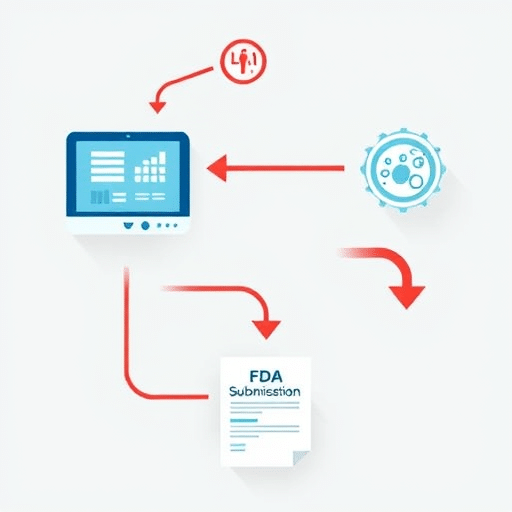
As the FDA moves to a Software Precertification (Pre-Cert) program in 2025, payers are increasingly looking for robust, payer‑acceptable evidence that digital therapeutics (DTx) deliver real value. This article presents a practical, step‑by‑step guide for developers, clinicians, and researchers to generate evidence that meets both FDA Pre‑Cert expectations and payer standards, ensuring faster adoption in 2026 and beyond.
1. The New Landscape: FDA Pre‑Cert Meets Payer Expectations
The FDA’s Pre‑Cert initiative accelerates review by shifting focus from extensive pre‑market studies to a robust post‑market evidence plan. Payers, meanwhile, demand outcomes that translate to cost savings, improved quality of life, and population health metrics. Aligning these two frameworks requires a dual‑focus strategy: compliance with FDA’s streamlined clinical evidence and a payer‑centric outcomes portfolio.
2. Understanding Payer Criteria for Digital Therapeutics
Payers evaluate DTx based on the following pillars:
- Clinical Effectiveness: Evidence that the software achieves measurable health outcomes compared to standard care.
- Economic Value: Cost‑effectiveness analyses demonstrating reduced downstream spending.
- Population Impact: Real‑world data (RWD) showing broad reach and adherence.
- Safety & Quality: Ongoing monitoring and data security compliance.
Key Payer Data Sources
- Electronic Health Records (EHR) integration
- Claims data analytics
- Patient‑reported outcome measures (PROMs)
- Adherence analytics from device logs
3. Evidence Types: Choosing the Right Mix for 2025‑2026
Developers must decide between three evidence categories: randomized controlled trials (RCTs), pragmatic trials, and real‑world evidence (RWE). Each serves a distinct purpose in the Pre‑Cert and payer ecosystem.
Randomized Controlled Trials
Traditional RCTs remain the gold standard for establishing causality. However, they are resource‑intensive. In a Pre‑Cert context, a nested RCT within a larger RWE study can satisfy both FDA and payer needs.
Pragmatic Trials
These trials reflect routine clinical practice and can generate high‑quality evidence on effectiveness and adherence. Payers favor pragmatic data because it mirrors real patient pathways.
Real‑World Evidence
RWE, drawn from EHRs, claims, and patient‑generated data, is critical for demonstrating population impact and long‑term safety. Payers increasingly use RWE for coverage decisions.
4. Designing a Payer‑Ready Evidence Program
Below is a step‑by‑step framework that aligns with both FDA Pre‑Cert and payer requirements.
Step 1: Define the Clinical Question
Translate the product’s value proposition into a clear, measurable question using the PICO framework (Population, Intervention, Comparator, Outcome). Example: “Does DTx X reduce HbA1c levels in adults with type 2 diabetes compared to standard care over 12 months?”
Step 2: Map Evidence to Stakeholder Needs
- FDA: Specify the primary endpoint, statistical plan, and post‑market surveillance strategy.
- Payers: Include secondary outcomes such as hospitalization rates, medication adherence, and patient satisfaction.
Step 3: Select Study Design
Choose a hybrid design that can deliver RCT evidence while collecting RWE concurrently. For instance, a pragmatic RCT embedded in a national health system can yield high‑quality data for both FDA and payers.
Step 4: Secure Data Infrastructure
Implement a secure, interoperable data platform that aggregates:
- Device telemetry (usage, adherence)
- EHR‑derived clinical outcomes
- Claims data for cost metrics
- Patient‑reported outcomes via mobile apps
Step 5: Establish a Data Governance Framework
Compliance with HIPAA, GDPR, and FDA data privacy guidelines is non‑negotiable. A clear data governance plan, including de‑identification and data sharing agreements, is essential for both regulatory and payer confidence.
Step 6: Define Statistical Analysis Plans (SAP)
Pre‑specify primary and secondary endpoints, handling of missing data, and subgroup analyses. Publish the SAP in the Pre‑Cert application to demonstrate transparency.
Step 7: Conduct Post‑Market Surveillance
Implement a risk‑based monitoring plan that captures adverse events, usability issues, and long‑term effectiveness. Payers value proactive risk mitigation plans that can be leveraged for reimbursement adjustments.
5. Data Collection & Quality Assurance
High‑quality data underpins robust evidence. Consider the following practices:
- Standardized Data Capture: Use common data models (e.g., OMOP) to ease integration.
- Real‑Time Monitoring: Employ dashboards that flag adherence drops or safety signals.
- Audit Trails: Maintain comprehensive logs for regulatory audits.
- Patient Engagement: Incorporate gamified reminders to improve data completeness.
6. Reporting and Communication Strategy
Transparent reporting is critical for both FDA and payers. Adopt the following approach:
Pre‑Cert Application
- Detailed study protocol
- Expected timelines for evidence generation
- Risk mitigation plans
Payer Evidence Package
- Executive summary highlighting key outcomes
- Economic analysis with cost‑effectiveness ratios
- Patient‑centric metrics (QoL, adherence)
- Case studies demonstrating implementation success
Public Disclosure
Publish results in peer‑reviewed journals and open‑access repositories. Share anonymized RWE datasets with the research community to build trust.
7. Case Study Snapshot: DTx for Chronic Obstructive Pulmonary Disease (COPD)
A recent DTx platform integrated a mobile app, spirometry sensors, and AI coaching. The hybrid study produced:
- RCT: 30% reduction in exacerbation rates (p < 0.01)
- Pragmatic data: 25% decrease in hospital readmissions across 150,000 patients
- Cost‑effectiveness: $12,000 per QALY gained, well below payer thresholds
- Real‑world adherence: 78% of users completed >80% of recommended sessions
This evidence portfolio enabled the product to secure coverage with national health plans in 2026.
8. Common Pitfalls and Mitigation Strategies
- Inadequate Sample Size – Use power calculations aligned with payer thresholds to avoid underpowered studies.
- Data Silos – Invest in interoperable data standards to prevent fragmentation.
- Ignoring Adherence – Embed adherence analytics into the core evidence plan.
- Delayed Post‑Market Surveillance – Establish real‑time safety dashboards from day one.
- Overreliance on Proprietary Endpoints – Use clinically meaningful, validated endpoints accepted by payers.
9. Timeline Blueprint for 2025‑2026
Below is a suggested timeline for a typical DTx evidence program under Pre‑Cert:
| Phase | Months | Key Activities |
|---|---|---|
| Pre‑Cert Application | 0‑2 | Protocol development, SAP, risk plan |
| Recruitment & Baseline | 3‑6 | Enroll participants, baseline data capture |
| Intervention | 7‑18 | Device deployment, adherence monitoring |
| Follow‑Up & Data Analysis | 19‑24 | Endpoint assessment, economic modeling |
| Regulatory & Payer Submissions | 25‑30 | FDA dossier, payer evidence package |
| Post‑Market Surveillance | 31‑48 | Safety monitoring, real‑world data updates |
10. Future Outlook: 2027 and Beyond
By 2027, payers are expected to adopt adaptive coverage models that link reimbursement to real‑time outcomes. DTx developers who have built evidence programs that are flexible, data‑rich, and payer‑centric will be well‑positioned to benefit from these evolving models. Continued investment in interoperable data ecosystems and patient‑engagement analytics will be the cornerstone of sustainable digital health solutions.
In summary, aligning FDA Pre‑Cert evidence generation with payer expectations demands a strategic, hybrid study design, robust data infrastructure, and transparent reporting. By following this roadmap, developers can accelerate regulatory approval and secure payer coverage, ensuring that digital therapeutics deliver measurable health benefits and economic value by 2026 and beyond.