Heart failure (HF) remains a leading cause of morbidity worldwide, yet early detection is hampered by limited sensitivity of conventional screening tools. Wearable electrocardiography (ECG) platforms have emerged as a promising avenue for continuous cardiac monitoring, offering the potential to identify subtle electrophysiologic changes that precede overt HF symptoms. This article presents a practical, step‑by‑step protocol for designing, executing, and submitting a clinical trial that validates wearable ECG biomarkers for early heart failure detection, incorporating current regulatory expectations and best practices for 2026.
1. Defining the Biomarker Landscape
Before embarking on a trial, clearly delineate which ECG-derived metrics will serve as biomarkers. Typical candidates include:
- Heart rate variability (HRV) indices (e.g., SDNN, RMSSD)
- QT interval dynamics and corrected QT (QTc) dispersion
- Accelerated repolarization or early afterdepolarization markers
- Fragmented QRS (fQRS) and T-wave alternans
- Temporal features of atrial electromechanical coupling (P-wave duration)
Each metric should be supported by pathophysiologic plausibility and preliminary evidence linking it to early HF remodeling. Align these biomarkers with the intended clinical endpoint: “early detection of systolic or diastolic dysfunction before clinical decompensation.”
2. Study Design: Pragmatic, Multicenter, Prospective Cohort
Adopt a pragmatic design to maximize external validity. Key elements include:
- Population: Adults aged 45–80 with risk factors (e.g., hypertension, diabetes, atrial fibrillation) but no diagnosed HF.
- Sample Size: Powered to detect a relative risk reduction of 20% in early HF events, assuming a baseline incidence of 4% over 3 years. A sample of ~3,000 participants yields >80% power (two-sided α=0.05).
- Duration: Minimum 3‑year follow‑up to capture incident HF events and biomarker trajectories.
- Endpoints:
- Primary: Composite of first hospitalization for HF or initiation of guideline-directed medical therapy.
- Secondary: Changes in left ventricular ejection fraction (LVEF) by echocardiography, natriuretic peptide levels, and quality‑of‑life metrics.
- Randomization: Not required if using a cohort; however, a nested case‑control sub‑analysis may enhance efficiency.
3. Wearable Device Selection and Calibration
Choose a wearable ECG device that meets the following criteria:
- High‑resolution single‑lead or multi‑lead recording (≥ 500 Hz).
- Validated artifact rejection algorithms.
- Secure, FDA‑cleared data transmission (Bluetooth, LTE).
- Long battery life and user‑friendly wearability.
Implement a calibration phase: collect baseline ECG data during clinical visits to confirm device accuracy against a reference 12‑lead ECG. Use a subset (10%) of participants for parallel recording to quantify measurement error and establish correction factors.
4. Data Collection Protocol
Structure the data flow into three tiers: acquisition, preprocessing, and analysis.
Acquisition
Participants wear the device continuously, with mandatory 30‑minute uploads during wake periods. Scheduled clinical visits at 6‑month intervals capture contemporaneous imaging and biomarkers.
Preprocessing
- Automatic segmentation of beats, R‑peak detection, and artifact flagging.
- Normalization of HRV metrics using age and sex‑specific reference ranges.
- Derivation of beat‑to‑beat variability and interval mapping for each biomarker.
Analysis
Apply machine‑learning models (e.g., random forest, gradient boosting) to integrate multi‑modal ECG features and predict early HF risk. Perform cross‑validation within the cohort, reserving 20% for external validation.
5. Statistical Considerations
Statistical rigor is essential for regulatory acceptance.
- Primary Analysis: Cox proportional hazards model adjusting for baseline covariates (age, sex, comorbidities). Time‑dependent covariates capture dynamic ECG biomarker trajectories.
- Missing Data: Employ multiple imputation with chained equations, ensuring sensitivity analyses under different missingness mechanisms.
- Multiplicity: Control false discovery rate (FDR) for secondary endpoints using Benjamini–Hochberg procedure.
- Subgroup Analyses: Predefined strata (e.g., hypertensive vs. non‑hypertensive) to explore effect modification.
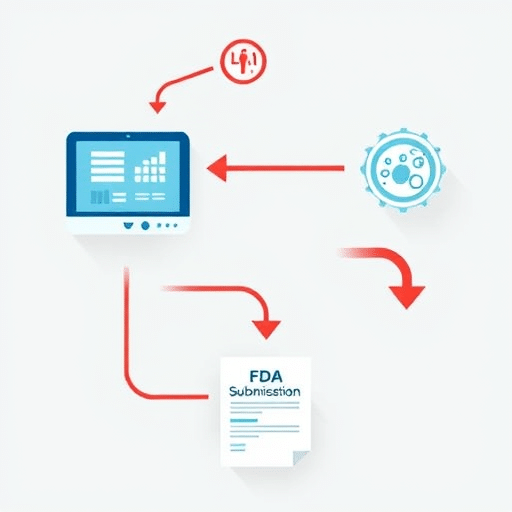
6. Regulatory Submission Strategy
In 2026, the FDA’s Digital Health Software Precertification (Pre‑Cert) pathway encourages early engagement. A phased submission approach is advisable:
Pre‑Submission (Pre‑Sub) Meeting
- Present the biomarker rationale, study design, and analytic plan.
- Request guidance on statistical thresholds for clinical significance and acceptable risk metrics.
Investigational Device Exemption (IDE) Application
- Include device technical documentation, validation data, and risk analysis.
- Provide a detailed informed consent form highlighting data privacy and participant responsibilities.
Pre‑Market Approval Submission
- Compile comprehensive clinical evidence: trial results, statistical analysis plan (SAP), and model validation.
- Submit as a Software‑as‑a‑Medical Device (SaMD) dossier under the FDA’s Digital Health Guidance.
- Align with the European Union’s In Vitro Diagnostic Regulation (IVDR) for potential global market entry.
7. Post‑Market Surveillance and Real‑World Evidence (RWE)
Regulators increasingly require ongoing evidence of safety and effectiveness. Leverage the wearable’s telemetry to establish a post‑market RWE pipeline:
- Monitor adverse events and device malfunction logs in real time.
- Conduct post‑market registries to assess longitudinal outcomes across diverse populations.
- Update predictive models with new data, using adaptive learning algorithms subject to regulatory oversight.
8. Ethical and Privacy Considerations
Continuous ECG monitoring raises privacy concerns. Ensure compliance with the following:
- Adopt end‑to‑end encryption for data in transit and at rest.
- Use de‑identified datasets for analysis, with a separate key for re‑identification only for clinical care.
- Offer participants the option to delete their data at any time.
- Implement transparent policies for data sharing with researchers and regulatory bodies.
9. Key Takeaways for Trial Success
- Choose biomarkers with strong physiologic linkage to early HF and robust preliminary evidence.
- Design a pragmatic, adequately powered cohort with clear endpoints.
- Validate device accuracy through parallel reference recordings.
- Employ rigorous statistical methods and plan for multiplicity and missing data.
- Engage regulators early through Pre‑Sub meetings and align with SaMD frameworks.
- Build a post‑market RWE strategy to demonstrate real‑world performance.
- Prioritize participant privacy and ethical data stewardship throughout.
By following this comprehensive protocol, investigators can generate high‑quality evidence that positions wearable ECG biomarkers as reliable tools for early heart failure detection, ultimately accelerating clinical adoption and improving patient outcomes.