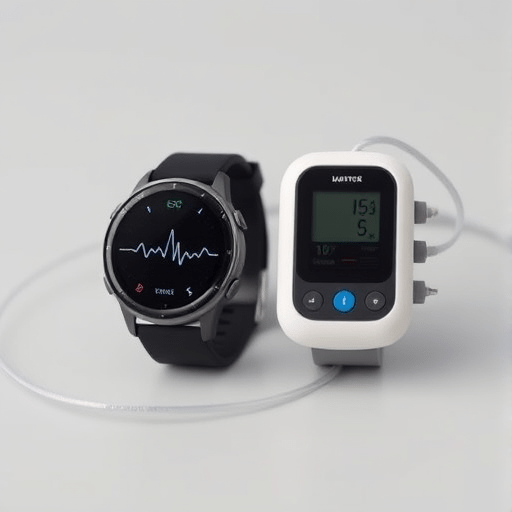
Heart failure digital biomarker validation has become a pivotal element in precision cardiology. In this guide, clinicians will learn how to construct a robust validation pipeline that translates wearable sensor data into clinically actionable insights. From defining endpoints to meeting regulatory expectations, this workflow is designed for healthcare professionals who want to bring digital biomarkers from research to routine care without compromising scientific rigor.
1. Clarify the Clinical Question and Endpoints
The foundation of any validation effort is a clear, clinically relevant question. Ask yourself: What patient outcome or physiological state will the digital biomarker predict or monitor? Typical endpoints in heart failure include:
- Hospital readmission within 30 days
- All-cause mortality at 1 year
- Changes in left ventricular ejection fraction (LVEF)
- Patient-reported dyspnea scores
Align the biomarker’s predictive capability with these endpoints. This alignment ensures that the validation metrics you choose (e.g., sensitivity, specificity, area under the receiver operating characteristic curve) truly reflect clinical utility.
Choose a Reference Standard
Without a gold standard, validation lacks meaning. For heart failure, reference standards might include echocardiography, cardiac MRI, or expert adjudication panels. Document the criteria for reference data collection, and ensure that the same patients are used for both digital biomarker measurement and reference assessment.
2. Build a High-Quality Data Cohort
A reliable validation pipeline hinges on a dataset that is representative, unbiased, and well-annotated. Follow these steps:
- Define Inclusion/Exclusion Criteria – Match the clinical question. For example, include patients with NYHA class II–IV and exclude those with atrial fibrillation if it confounds heart rate readings.
- Collect Multimodal Data – Combine wearable sensor streams (accelerometer, photoplethysmography), patient-reported outcomes, and electronic health record (EHR) data.
- Ensure Temporal Alignment – Synchronize timestamps across devices to avoid misclassification of events.
- Address Missing Data – Use multiple imputation or model-based approaches rather than simple deletion to preserve sample size.
When you reach 1,000–2,000 patients, the dataset is ready for the next step.
Data Governance and Security
Heart failure data is sensitive. Implement HIPAA-compliant encryption, access controls, and de-identification protocols. Document all data governance policies to satisfy institutional review boards (IRBs) and regulatory bodies.
3. Preprocess and Engineer Features
Digital biomarker extraction often begins with raw sensor data. The preprocessing pipeline should be reproducible and well-documented. Typical steps include:
- Signal Filtering – Remove motion artifacts using low-pass filters.
- Normalization – Scale sensor outputs to a common range (e.g., z-scores).
- Feature Extraction – Compute heart rate variability (HRV), step count, sleep efficiency, and circadian rhythm metrics.
- Dimensionality Reduction – Apply principal component analysis (PCA) or autoencoders if the feature space is high-dimensional.
Keep a feature audit trail. Every transformation should be recorded in a version-controlled notebook so that the pipeline can be replicated or audited later.
Assess Feature Stability
Use intraclass correlation coefficients (ICCs) to evaluate the repeatability of each feature across days or weeks. Features with ICC < 0.70 are candidates for exclusion or further refinement.
4. Split the Dataset: Training, Validation, and Test Sets
To avoid optimistic bias, partition the data into at least three mutually exclusive sets:
- Training Set (60%) – For model fitting.
- Validation Set (20%) – For hyperparameter tuning.
- Test Set (20%) – For final performance assessment.
Stratify the splits based on the outcome variable to preserve event proportions. If the dataset is small, consider nested cross-validation to maximize data utilization while still guarding against overfitting.
5. Choose and Tune the Model
For heart failure digital biomarkers, models range from simple logistic regression to complex deep learning architectures. Start with a baseline model to benchmark performance.
- Logistic Regression with L1/L2 Regularization – Offers interpretability and is robust for small datasets.
- Random Forests – Capture nonlinear relationships and provide feature importance.
- Recurrent Neural Networks (RNNs) – Handle time-series data directly but require larger samples.
Use grid search or Bayesian optimization on the validation set to tune hyperparameters. Record the performance metrics (AUC-ROC, precision, recall) at each iteration.
Model Explainability
Clinicians need to trust the algorithm. Employ SHAP (SHapley Additive exPlanations) values to illustrate how each feature contributes to predictions. Visual dashboards that map SHAP contributions to clinical variables can bridge the gap between black-box models and bedside decision-making.
6. Perform Statistical Validation
Once the model is finalized, assess its statistical robustness on the held-out test set.
- AUC-ROC and Confidence Intervals – Use bootstrapping (1,000 resamples) to compute 95% CI.
- Calibration Plots – Verify that predicted probabilities match observed event rates.
- Decision Curve Analysis – Quantify net clinical benefit across threshold probabilities.
Document any performance degradation relative to training and validation. If the test AUC drops significantly, investigate potential causes such as data drift or overfitting.
7. Address Regulatory and Ethical Considerations
Heart failure digital biomarkers may fall under medical device regulations. Prepare a compliance dossier early:
- FDA 510(k) or De Novo Pathway – If the algorithm is a medical device, outline the risk classification and provide clinical evidence.
- EU MDR (Medical Device Regulation) – For European deployment, compile technical files and post-market surveillance plans.
- Data Privacy – Ensure GDPR or HIPAA compliance, especially for data derived from wearable devices.
Engage with a regulatory affairs specialist to map out the submission timeline. Consider creating a minimal viable product (MVP) that satisfies regulatory thresholds before scaling.
Internal Link Placeholder
8. Plan for External Validation and Real-World Implementation
A validation pipeline is only as good as its external generalizability. Steps include:
- External Cohort Testing – Apply the model to a geographically distinct patient population.
- Prospective Pilot Studies – Deploy the algorithm in a controlled clinical setting to assess workflow integration.
- Continuous Learning – Set up a data pipeline that periodically retrains the model with new data while preserving audit trails.
Collect user feedback from cardiologists, nurses, and patients to refine interface design and alert thresholds.
9. Build an Evaluation Dashboard
A clinician-facing dashboard should provide:
- Real-time risk scores with confidence intervals.
- Historical trends and alerts for abnormal trajectories.
- Explainability visualizations (e.g., SHAP plots).
- Compliance logs for regulatory audits.
Integrate the dashboard with the EHR via FHIR APIs to ensure seamless data flow and reduce clinician burden.
10. Document, Share, and Iterate
Finally, compile a comprehensive technical report that includes:
- Data preprocessing steps and feature definitions.
- Model architecture, hyperparameters, and training curves.
- Statistical validation results with confidence intervals.
- Regulatory documentation and risk assessment.
- Implementation guidelines and user manuals.
Publish the pipeline as open-source (e.g., on GitHub) under a permissive license to foster community validation and improvement. Use version control tags to mark stable releases, and maintain a changelog that tracks modifications.
Conclusion
Heart failure digital biomarker validation is a disciplined, multi-step process that marries rigorous data science with clinical relevance and regulatory compliance. By following this practical workflow, clinicians can transform raw sensor data into reliable, actionable tools that enhance patient outcomes. The key lies in transparent documentation, robust statistical testing, and continuous collaboration between technologists and clinicians.