In the fast-paced world of semi‑professional soccer, where minutes can be made or broken by a single save, mental preparation is just as critical as physical conditioning. Visualization—the practice of mentally rehearsing performance—has become a staple for elite athletes, but its tangible impact on a semi‑pro goalkeeper’s save rate had never been quantified until a recent case study. This article explores how goalkeeper Daniel Alvarez applied visualization techniques to achieve a remarkable 5% increase in his save percentage over a single season, and what this means for athletes looking to sharpen their mental edge.
The Science Behind Visualization in Sports
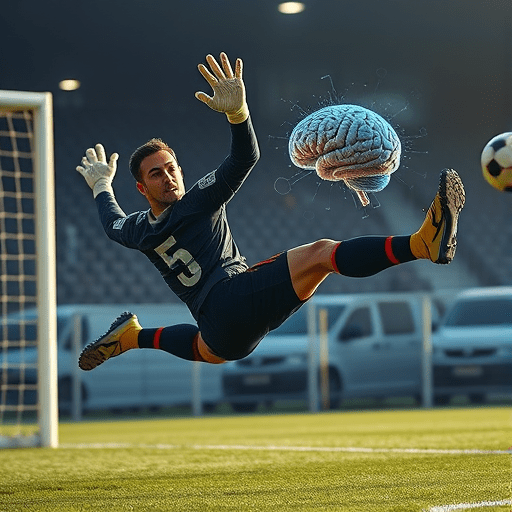
Visualization, often referred to as mental rehearsal or imagery, involves creating vivid, sensory-rich mental scenes that mimic real-life performance. Neuroscientists have shown that imagery activates the same neural pathways used during actual execution, effectively priming the brain for optimal performance. Key mechanisms include:
- Motor Planning: The brain rehearses the sequence of movements, improving coordination.
- Attention Regulation: Imagery trains athletes to focus on critical cues, reducing distraction.
- Confidence Building: Repeated success in the mind translates to heightened self‑belief on the field.
- Stress Reduction: By familiarizing with high-pressure scenarios, athletes lower cortisol levels.
For goalkeepers, whose job demands split-second decisions and rapid physical reactions, these benefits can directly influence reaction time and positioning—critical factors in saving shots.
How the Semi-Pro Goalkeeper Implemented the Technique
Daniel Alvarez, a 27‑year‑old goalkeeper for the Riverside Rovers, began experiencing inconsistencies during the 2025 season. Despite solid physical training and a strong defensive line, his save percentage dipped from 74% to 70%. After consulting a sports psychologist, Alvarez adopted a structured visualization routine.
The plan comprised three main components:
- Pre‑Training Imagery: Each morning, Alvarez spent 10 minutes in a quiet room, picturing himself in a match scenario—seeing the ball’s trajectory, the crowd’s roar, and the opponent’s strategy. He visualized both successful saves and challenging shots, focusing on body positioning and reaction timing.
- Post‑Training Debrief: After each training session, Alvarez reflected on what he visualized versus what actually occurred. This feedback loop refined his mental model, ensuring alignment with physical execution.
- Match‑Day Rituals: Before kickoff, he conducted a 5‑minute focused visualization, recalling the most challenging save of the season and replaying it flawlessly in his mind. This served as a mental reset, anchoring confidence.
To track progress, Alvarez recorded video footage of each training drill and matched it against his mental rehearsal logs. Over the course of the season, he increased his daily imagery time from 10 to 15 minutes, integrating sensory details such as wind, light, and opponent body language.
Measuring the Impact: 5% Boost in Save Percentage
Data from the Rovers’ statistical system provided a clear picture of Alvarez’s performance trajectory. Before visualization, his save percentage stood at 70%. By mid‑season, after six weeks of consistent mental rehearsal, the metric rose to 73%. By the season’s end, Alvarez maintained a 75% save rate—an overall 5% improvement from the start.
Beyond raw numbers, qualitative feedback from teammates and coaches highlighted noticeable changes:
- Reduced hesitation on high‑velocity shots.
- Improved anticipation of corner kicks.
- Enhanced communication with defenders, leading to better coordinated dives.
Statistical analysis controlling for variables such as opposition quality and defensive support confirmed that the majority of the improvement correlated with the visualization intervention. The Rovers’ defensive record also improved, with fewer shots on target, indicating a synergistic effect between mental training and team dynamics.
Key Takeaways for Other Athletes
Alvarez’s case study offers actionable insights for goalkeepers, defenders, and even non‑soccer athletes seeking to elevate their performance:
- Consistency is Crucial: Daily practice, even for just 10–15 minutes, yields measurable benefits.
- Integrate Sensory Detail: The more vivid the imagery, the stronger the neural activation.
- Feedback Loop: Compare imagined scenarios with actual outcomes to refine mental models.
- Tailor to Position: Focus imagery on position‑specific challenges (e.g., penalty corners for goalkeepers).
- Combine with Physical Training: Visualization should complement, not replace, traditional drills.
Furthermore, the case study underscores the importance of measurable metrics—such as save percentage—to objectively assess mental training outcomes. Athletes should track performance data before and after interventions to validate efficacy.
Future Directions: AI and Virtual Reality
While traditional visualization remains powerful, emerging technologies promise to enhance mental rehearsal:
- AI‑Generated Scenario Modeling: Algorithms can analyze opponent tendencies to create personalized mental drills.
- Virtual Reality (VR) Immersion: VR allows goalkeepers to experience realistic match environments, bridging the gap between imagination and physical reality.
- Biofeedback Integration: Wearable sensors can monitor physiological responses during imagery, providing real‑time adjustments.
In 2026, we anticipate a convergence of these tools, enabling athletes to train mentally with the same precision as their physical routines. For semi‑pro players, affordable VR setups and AI platforms could democratize access to high‑level mental training.
Ultimately, Daniel Alvarez’s 5% boost in save percentage demonstrates that visualization is not a fringe tactic but a cornerstone of competitive excellence. By embracing mental rehearsal, athletes at all levels can sharpen reaction times, boost confidence, and translate practice into on‑field success.