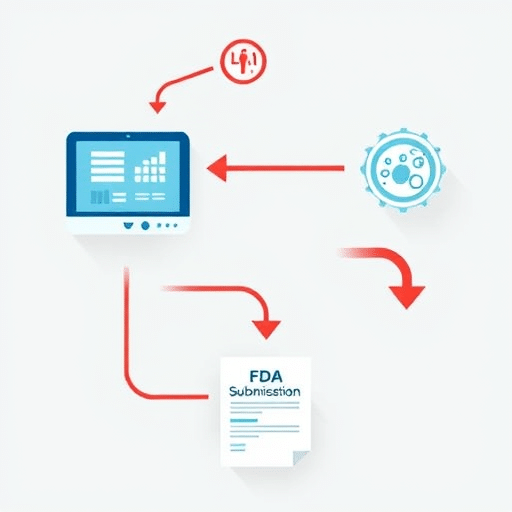
Designing and validating cardiovascular digital biomarkers for clinical trials is no longer a niche endeavor—it’s a strategic necessity for modern drug development. The phrase “Design & Validate Cardiovascular Digital Biomarkers for Trials” encapsulates a complex journey that intertwines rigorous science, stringent regulatory pathways, and innovative data science. This article breaks down the process into actionable steps, guiding sponsors from initial concept to a clean regulatory submission, all while aligning with FDA, EMA, and other global authorities.
Understanding the Regulatory Landscape for Digital Biomarkers
Regulatory agencies now recognize digital biomarkers as legitimate clinical endpoints, yet the expectations differ across jurisdictions. The FDA’s Digital Health Innovation Action Plan and the EMA’s Digital Health Innovation Hub provide frameworks, but each organization demands specific evidence for safety, efficacy, and data integrity.
- FDA 21 CFR Part 820 – Relevance of the Quality System Regulation for software as a medical device (SaMD).
- ISO 13485 – Guidance on quality management systems that extend to digital products.
- EMA Digital Health Action Plan – Emphasizes post‑market surveillance and real‑world data.
- ICH E6(R2) Guidance – Updated good clinical practice (GCP) principles now include digital data capture.
Aligning early with these frameworks sets a solid foundation, avoiding costly re‑engineering later.
Step 1: Define the Clinical Endpoint and Digital Biomarker Scope
Clinical Endpoint Alignment
Choose an endpoint that is clinically meaningful, measurable, and correlates directly with patient outcomes—e.g., mean arterial pressure, heart rate variability, or arrhythmia burden. Validate that the digital biomarker will be accepted by the target regulatory authority by cross‑referencing approved biomarker registries.
Biomarker Characteristics
Define the key attributes: sensitivity, specificity, reproducibility, and data latency. Consider whether the biomarker will serve as a surrogate endpoint or a confirmatory measure.
Step 2: Develop a Robust Data Acquisition Protocol
Device Selection and Calibration
Use validated wearable or implantable devices that meet IEC 60601‑1 standards. Perform regular calibration against gold‑standard instruments, and document the calibration process in a device master file.
Patient Enrollment & Sensor Placement
Standardize sensor placement to reduce inter‑subject variability. Provide training videos for site staff and patients, and conduct mock deployments before the trial begins.
Data Governance and Security
- Implement end‑to‑end encryption (AES‑256).
- Use a Health Insurance Portability and Accountability Act (HIPAA) compliant cloud platform.
- Maintain audit trails for every data transfer.
Step 3: Build and Validate the Algorithmic Model
Algorithm Development Phases
Divide development into three phases: Training, Internal Validation, and External Validation. Use a diverse dataset that captures the spectrum of disease states.
Internal Validation and Cross‑Validation
Apply k‑fold cross‑validation to assess overfitting. Report performance metrics—AUC, mean absolute error, and Bland‑Altman limits of agreement—in a transparent manner.
External Validation with Real‑World Data
Test the algorithm on independent datasets from registries or post‑market surveillance. Demonstrate consistency across device manufacturers and patient demographics.
Step 4: Document for Regulatory Submission
Technical File & Software Validation
Prepare a comprehensive technical file that includes software architecture, source code, version control logs, and a risk‑based testing matrix. Follow ISO/IEC 62304 for software lifecycle processes.
Risk Management & GAMP 5
Apply the Good Automated Manufacturing Practice (GAMP) 5 model to assess risks associated with data integrity, device malfunction, and algorithm drift. Document mitigation strategies and residual risk acceptance.
Clinical Validation Report
Present a clinical validation report that links the digital biomarker to a clinically relevant endpoint, providing statistical analysis, hypothesis testing, and a discussion of limitations.
Step 5: Pilot Studies and Adaptive Trial Designs
Proof‑of‑Concept Pilot
Conduct a small‑scale pilot to test the feasibility of data capture, patient compliance, and algorithm accuracy in the trial setting. Use findings to refine the protocol.
Adaptive Design Elements
Leverage adaptive trial designs to incorporate interim analyses of digital endpoints. Consider Bayesian adaptive randomization or group‑sequential approaches to accelerate decision‑making.
Statistical Considerations for Digital Endpoints
- Account for multiple comparisons using False Discovery Rate control.
- Employ mixed‑effects models to handle intra‑subject correlation over time.
- Implement imputation strategies for missing sensor data.
Common Pitfalls and Mitigation Strategies
- Data Quality Gaps – Mitigate with real‑time monitoring dashboards and automated flagging.
- Regulatory Misalignment – Maintain a continuous dialogue with regulators via pre‑submission meetings.
- Algorithm Drift – Schedule periodic re‑validation and version updates.
- Patient Non‑Compliance – Use gamification and reminder systems to enhance adherence.
- Insufficient Sample Size – Conduct power calculations specific to digital endpoints, considering signal‑to‑noise ratios.
Future‑Proofing Your Digital Biomarker Strategy
Interoperability Standards
Adopt HL7 FHIR and IEEE 11073 standards to ensure seamless data exchange between devices, electronic health records, and trial data warehouses. This interoperability also facilitates post‑market surveillance and data pooling across studies.
Post‑Market Surveillance
Establish a post‑market surveillance plan that monitors real‑world performance, patient safety, and algorithm accuracy. Use adaptive learning frameworks to update the biomarker model as new data accrue.
Conclusion
Designing and validating cardiovascular digital biomarkers for clinical trials is a disciplined, multi‑disciplinary effort that blends clinical insight, data science, and regulatory acumen. By systematically defining endpoints, rigorously acquiring and validating data, and meticulously documenting every step, sponsors can not only meet regulatory standards but also accelerate trial approvals, ultimately bringing safer, more effective cardiovascular therapies to patients faster.