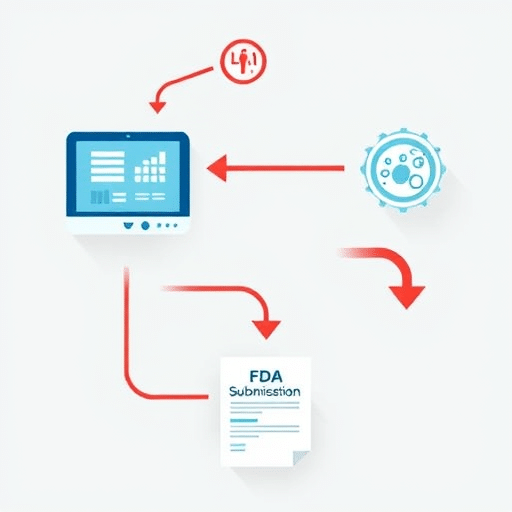
When the FDA opens a new portal for real‑world evidence (RWE) submissions, companies must adapt quickly. A robust, well‑structured digital health registry can accelerate this process, ensuring that data are collected, curated, and reported in a manner that satisfies the FDA’s evolving RWE guidelines. This article provides a detailed, practical workflow that takes an existing registry or one being built from scratch and aligns it with the FDA’s expectations for RWE submissions.
1. Define the Clinical Question and FDA Submission Type
The first step is to clarify the evidence you aim to provide. Is the registry supporting a post‑marketing safety study, a label extension, or a pharmacovigilance request? The FDA’s RWE framework outlines specific submission types—such as a Real‑World Data (RWD) Evidence Summary or a Data Analysis Plan (DAP)—and each has distinct data and documentation requirements.
- Identify the primary endpoint that the FDA will evaluate.
- Confirm whether the data source meets the FDA’s definition of real‑world data (e.g., electronic health records, claims, patient‑reported outcomes).
- Document the expected data volume, time horizon, and geographic scope.
2. Map the Registry Architecture to FDA Data Standards
FDA guidance emphasizes data interoperability and the use of common data models (CDMs). Aligning your registry with a CDM such as the Observational Medical Outcomes Partnership (OMOP) or the Sentinel CDM reduces the need for custom data transformations.
- Choose a CDM that matches your clinical domain and regulatory needs.
- Design the data schema to capture all required variables, including identifiers, demographics, clinical events, lab values, and patient‑reported outcomes.
- Implement audit trails and version control to support FDA traceability requirements.
Leverage FHIR for Data Exchange
Fast Healthcare Interoperability Resources (FHIR) offers modular, JSON‑based data exchange, which the FDA has encouraged for RWD integration. Incorporating FHIR endpoints in your registry allows seamless data ingestion from diverse sources.
3. Establish Governance and Data Quality Processes
FDA requires robust governance to ensure data integrity, privacy, and compliance. A governance framework should include:
- Data Stewardship roles: appoint a data steward responsible for data curation and compliance.
- Standard Operating Procedures (SOPs) for data capture, cleaning, and validation.
- Data Quality Metrics: completeness, timeliness, and accuracy thresholds aligned with FDA’s Data Quality Framework.
Internal link suggestion:
4. Incorporate Patient‑Reported Outcome (PRO) Instruments
PROs are increasingly valued in RWE studies. The FDA recommends using validated instruments that map onto the FDA’s Patient‑Reported Outcome Measurement Information System (PROMIS). Embedding these tools directly into your registry reduces post‑hoc data transformations.
- Select PRO instruments that are disease‑specific and FDA‑acceptable.
- Embed electronic PRO collection within the registry’s user interface.
- Apply real‑time scoring algorithms and flag missing data for follow‑up.
5. Design the Statistical Analysis Plan (SAP) Early
The FDA’s RWE guidance stresses that the statistical analysis plan (SAP) must be pre‑specified. Integrate SAP development with registry data architecture to ensure that all variables required for analysis are captured reliably.
- Define analytic cohorts, inclusion/exclusion criteria, and exposure definitions.
- Specify primary and secondary endpoints, along with sensitivity analyses.
- Align data fields in the registry with the SAP’s variable definitions to avoid mismatches during extraction.
6. Automate Data Extraction and Report Generation
Manual data pulls are time‑consuming and error‑prone. Automate the extraction of clean, FDA‑ready datasets and report templates using ETL (Extract, Transform, Load) tools or custom scripts.
- Use secure APIs to pull data from the registry into a data warehouse.
- Automate de‑identification and encryption in line with the FDA’s Data De‑identification Standards.
- Generate draft reports (e.g., Statistical Analysis Plan, Data Flow Diagram, Data Dictionary) in formats the FDA accepts.
7. Conduct Internal Review and External Validation
Before submission, perform an internal audit to verify that all regulatory requirements are met. Additionally, consider engaging an external validator or FDA liaison to review the registry’s data quality and SAP compliance.
- Review data provenance logs and audit trails.
- Validate that all required variables are present and correctly mapped.
- Confirm that the SAP aligns with the extracted dataset.
8. Submit Through the FDA’s RWE Submission Portal
Once the registry is fully aligned, package your submission. The FDA’s portal requires:
- Submission envelope with a cover letter, data dictionary, and SAP.
- Data files in the mandated format (e.g., CDISC SDTM, OMOP CDM).
- Proof of data security measures, including encryption and access controls.
Track the submission status via the portal and be prepared to provide clarifications if the FDA requests additional documentation.
9. Maintain Continuous Registry Improvement Post‑Submission
Regulatory submission is not a one‑off event. Use the FDA’s feedback to refine your registry. Continuous improvement practices include:
- Implementing new data quality dashboards.
- Updating the SAP to reflect emerging evidence.
- Extending the registry to capture additional outcomes or patient populations.
Ongoing engagement with the FDA through post‑marketing commitments keeps the registry relevant and compliant.
By following this step‑by‑step workflow, you can transform a digital health registry into a dynamic, FDA‑ready source of real‑world evidence that speeds regulatory decision‑making while maintaining high data quality and transparency.