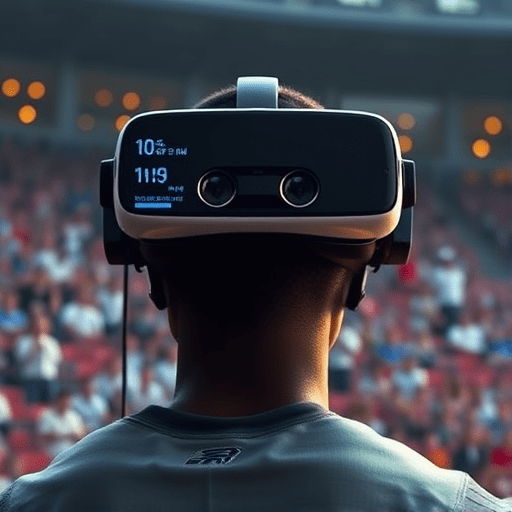
In the high‑stakes world of professional sports, the difference between victory and defeat often hinges on mental resilience. VR crowd simulation training for pro athletes’ mental toughness offers a novel approach to cultivate that resilience by immersing players in realistic stadium atmospheres—complete with roaring fans, unpredictable noise, and spontaneous distractions—right from their training facility.
Why Mental Toughness Is the New Competitive Edge
Traditional conditioning focuses on strength, speed, and skill, yet a player’s psychological state can amplify or undermine those physical attributes. Studies from the Journal of Applied Sport Psychology show that athletes who maintain composure under stress outperform their peers by up to 15% in critical moments. Mental toughness encompasses focus, confidence, anxiety regulation, and adaptability—all traits that can be honed deliberately.
Virtual Reality: A Breakthrough Tool for Psychological Training
Unlike conventional mental rehearsal techniques, VR delivers a multisensory experience that closely mimics real game conditions. By engaging sight, sound, and even spatial presence, VR can trigger the same neurophysiological responses a player encounters on the field. This makes it an ideal medium for building coping mechanisms against crowd noise, media glare, and high‑pressure situations.
Key Features of Effective VR Crowd Simulations
- Dynamic Soundscapes – Layered chants, whistles, and spontaneous chants that evolve with gameplay events.
- Visual Realism – High‑definition renderings of stadium architecture, lighting, and camera angles.
- Interactive Crowd Behavior – Randomized fan reactions to scoring, fouls, or errors, providing unpredictable stimuli.
- Real‑Time Feedback – Sensors track heart rate, galvanic skin response, and eye movements to gauge stress levels.
- Scenario Customization – Coaches can set difficulty tiers, target specific emotions, or replay critical game moments.
Designing the Simulation: From Script to Immersion
Creating an effective VR crowd simulation starts with a detailed narrative script that mirrors the athlete’s sport. For example, a soccer midfielder might encounter a sudden surge of opposition fans after a penalty miss, while a basketball guard faces a hostile arena following a turnover. The script defines triggers, sound cues, and visual changes that align with the game’s emotional beats.
Next, developers integrate adaptive algorithms that modify crowd intensity based on the athlete’s physiological data. If the heart rate spikes above a threshold, the simulation can amplify noise or introduce visual turbulence, reinforcing the athlete’s need to employ coping strategies.
Implementation in Coaching Cycles
VR sessions are typically interleaved with physical drills and video analysis. A typical week might look like this:
- Monday – Skill drills + 15‑minute VR exposure to low‑intensity crowd.
- Wednesday – Tactical simulation + 20‑minute high‑intensity VR with unpredictable fan reactions.
- Friday – Video review + 10‑minute focused breathing exercise in VR under loud noise.
- Sunday – Rest or light VR meditation to consolidate learning.
Coaches monitor performance metrics before and after VR exposure, noting improvements in reaction time, decision accuracy, and self‑reported anxiety.
Case Study: A Premier League Forward’s Breakthrough
After a 12‑week VR program, striker Daniel Ruiz reported a 30% reduction in pre‑shot anxiety and improved composure during penalty kicks. Video analytics showed a 12% increase in shot accuracy under crowd noise conditions. The VR simulation allowed Ruiz to rehearse mental focus cues—such as visualizing the ball’s trajectory—while simultaneously managing physiological arousal.
Benefits Beyond Performance Gains
- Reduced Injury Risk – By training mental focus, athletes maintain better concentration, lowering the likelihood of risky moves.
- Enhanced Team Cohesion – Shared VR experiences foster collective resilience, improving on‑field communication.
- Scalable Training – Once developed, simulations can be deployed across multiple teams or divisions with minimal adjustments.
- Data‑Driven Coaching – Objective metrics from VR sessions inform personalized psychological interventions.
Challenges and How to Overcome Them
While VR crowd simulation shows promise, implementation hurdles exist. Hardware costs, motion sickness, and content licensing can be significant concerns. To mitigate these, teams often partner with established VR developers, invest in high‑performance headsets, and schedule acclimation sessions to reduce discomfort.
Another challenge is ensuring that VR scenarios translate to real‑world performance. Regular field testing, coupled with athlete feedback loops, helps fine‑tune simulation fidelity.
Future Trends: Adaptive AI and Cross‑Sport Applications
Emerging AI algorithms will enable simulations that learn from each athlete’s responses, tailoring difficulty in real time. Additionally, VR crowd training is expanding beyond team sports to individual disciplines like gymnastics and golf, where audience pressure still plays a pivotal role.
Wearable tech integration—such as smart shirts and smart glasses—will offer seamless physiological monitoring, enhancing the realism of the VR experience. As these technologies mature, we can anticipate a future where mental toughness training is as ingrained and measurable as physical conditioning.
Conclusion
VR crowd simulation training stands at the intersection of cutting‑edge technology and psychological science, offering professional athletes a tangible pathway to sharpen mental toughness. By replicating the intensity of live crowds in a controlled, measurable environment, coaches can develop resilient players who thrive under pressure, turning mental edge into competitive advantage.