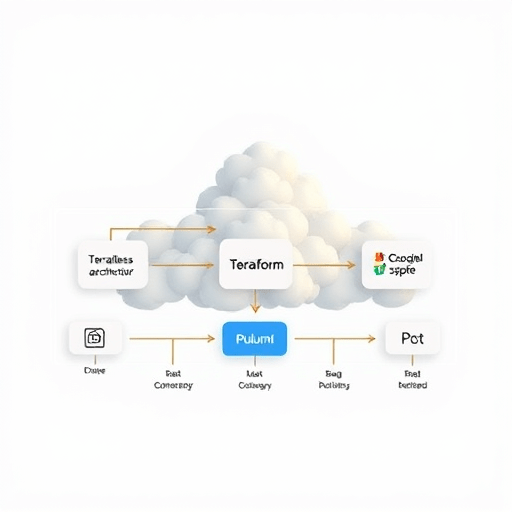
In 2026, enterprises are deploying serverless workloads across AWS, Azure, GCP, Alibaba Cloud, and Oracle Cloud while demanding strict idempotency and consistent state. Coordinating Terraform, Pulumi, and Ansible for multi‑cloud serverless offers a powerful workflow: Terraform provisions the infrastructure, Pulumi injects business logic and CI/CD pipelines, and Ansible ensures configuration consistency inside functions and runtimes. This guide walks you through a practical, reproducible orchestration that keeps your serverless stack idempotent and consistent across all clouds.
1. Lay the Foundation: Define Shared Infrastructure with Terraform
Terraform remains the de‑facto language for declaratively describing cloud resources. Begin by creating a mono‑repo that holds a top‑level Terraform workspace for each provider. Use terragrunt or the new tfstate-migrator module to keep provider‑specific state isolated yet discoverable.
- Use
backendblocks with remote state storage (S3, Azure Blob, GCS, OCI Object Storage). Enabledynamodborcosmosdbfor state locking. - Create provider modules that export the service principal or IAM roles needed by Pulumi and Ansible.
- Define a
serverless-inframodule that provisions API Gateways, EventBridge/Event Grid, Cloud Functions, and associated IAM policies.
With Terraform you guarantee that the foundational pieces—networking, identity, event buses, and storage—are reproducible and versioned. Commit the Terraform code to Git, tag releases, and trigger a terraform plan pipeline that runs before any Pulumi or Ansible changes.
Best Practice: Use Workspaces for Canary Releases
Terraform workspaces allow you to spin up identical environments with different names (e.g., dev, staging, prod). This keeps the infrastructure state separate and prevents accidental cross‑environment drift.
2. Infuse Business Logic: Pulumi for Runtime Dependencies and CI/CD
While Terraform handles the skeleton, Pulumi is the ideal tool for embedding application‑level logic and CI/CD hooks. Pulumi’s SDKs (Python, TypeScript, Go) let you treat serverless resources as objects, and Pulumi’s preview capability aligns well with Terraform’s plan stage.
- Create a
pulumi.yamlthat references the Terraform outputs viapulumi importorstack referenceAPIs. - Define a
FunctionDeploymentcomponent that pulls in the latest code bundle from a CodeArtifact or S3 bucket, applies environment variables, and sets concurrency limits. - Use Pulumi
hooksto run integration tests against the deployed function immediately after creation. - Integrate Pulumi Cloud or the Pulumi
Stackprovider with your GitHub Actions workflow to trigger updates on merge to themainbranch.
By chaining Terraform and Pulumi, you avoid the “two‑stage” deployment pitfalls: Terraform ensures infrastructure is ready, Pulumi brings the function code into that infrastructure. The result is a seamless, idempotent deployment pipeline.
3. Fine‑Tune Runtime Configuration with Ansible
Serverless runtimes often require custom libraries, runtime patches, or configuration files. Ansible excels at idempotent configuration on a per‑function basis when combined with a lightweight container build step.
- Write an Ansible role that builds a minimal Docker image containing the language runtime, dependencies, and your application code.
- Use
community.general.pipornpmmodules to install dependencies in isolated layers. - Push the image to a registry (ECR, ACR, GCR) and let Pulumi reference it.
- Employ Ansible facts to ensure environment variables are correctly set and validated before the function runs.
Because Ansible roles are idempotent, re‑applying them to an existing function will not alter the runtime state—only the necessary changes will be pushed, preserving consistency.
4. Automate Everything with GitOps and Flux
For a true multi‑cloud serverless setup, you need continuous delivery that is both cloud‑agnostic and observable. GitOps bridges the gap: your Git repo is the single source of truth, and Flux watches for changes, automatically reconciling state.
- Create a Flux
GitRepositorythat points to the Terraform repo. - Configure
HelmReleaseobjects that reference Pulumi stacks via the Pulumi Helm chart. - Use
kustomizeoverlays for environment‑specific values. - Set up a
Prometheusstack to collect metrics from all cloud providers, aggregated through the OpenTelemetry Collector.
When a commit lands, Flux triggers terraform apply, pulumi up, and the Ansible role. The entire deployment cycle is repeatable, auditable, and fully idempotent.
5. Preserve Idempotency Across Stacks
Idempotency is the hallmark of reliable infrastructure. Here’s how each tool contributes:
- Terraform: State locking prevents concurrent changes;
terraform taintmarks resources for recreation. - Pulumi: Snapshots the stack state in a JSON file;
pulumi refreshreconciles drift. - Ansible: Uses
changed_whenandcheck_modeto report no‑change states. - Flux: Implements reconciliation loops that re‑apply manifests until the desired state matches the live state.
By aligning the state mechanisms of each tool and ensuring they reference each other via exported outputs and stack references, you create a chain of idempotent steps that can be rolled back or re‑played at any time.
6. Handle Secrets and Compliance Across Clouds
Secrets management is a perennial challenge in multi‑cloud environments. Adopt a single source of truth, such as HashiCorp Vault or AWS Secrets Manager, and inject secrets through Pulumi’s Config or Ansible’s vault_password_file.
- Define a Vault policy that grants read access to the necessary secrets for each environment.
- Use Pulumi’s
vault:secrets:Secretcomponent to fetch secrets at deployment time. - Configure Ansible’s
ansible-vaultto encrypt environment variables and configuration files. - Audit all secret usage via Terraform’s
aws_secretsmanager_secret_versionresources and CloudTrail logs.
By centralizing secrets, you reduce the risk of drift and make compliance reviews straightforward.
7. Monitor, Log, and Alert with a Unified Observability Stack
Serverless functions generate logs, metrics, and traces that span multiple cloud providers. A unified observability stack reduces noise and provides actionable insights.
- Deploy the OpenTelemetry Collector as a sidecar in each function container to export traces to Jaeger.
- Send logs to a cross‑cloud log aggregator like Loki or Datadog.
- Configure Prometheus exporters for each provider’s API gateway and compute services.
- Set up alerting rules in Grafana that trigger when a function fails in any cloud.
Observability ties the orchestration together: if one provider’s API gateway behaves differently, alerts surface immediately, allowing you to investigate or reroute traffic.
8. Security Hardening and Best Practices
With multiple tools and providers, security can become fragmented. Enforce the following hardening checklist:
- Use Terraform’s
required_versionandrequired_providersblocks to lock provider versions. - Apply Pulumi’s
policy-as-codeto reject non‑compliant stacks. - Employ Ansible’s
gather_factsonly when needed to reduce surface area. - Encrypt all state files and lock them in a secure bucket with fine‑grained IAM policies.
- Rotate credentials quarterly and use short‑lived tokens via STS or IAM roles.
These steps keep the orchestration secure, auditable, and compliant with frameworks like SOC 2 and ISO 27001.
9. Troubleshooting Common Pitfalls
Even the best pipelines can hit snags. Here are quick fixes for frequent issues:
- State drift: Run
terraform refreshandpulumi refreshto reconcile. - Ansible “changed” state: Verify that
changed_whenconditions are accurate; usecheck_modeto dry‑run. - Missing IAM permissions: Inspect the provider logs and ensure that roles are attached to the Pulumi stack and Ansible runner.
- Cross‑cloud latency: Deploy functions in the same region as the event source; use CloudFront or Azure Front Door for global caching.
- Secrets leakage: Enable Vault audit logs and enable encryption at rest for secrets stores.
Maintaining a troubleshooting cheat sheet ensures your team can quickly resolve issues without breaking the idempotent chain.
10. Future‑Proofing: Adding New Clouds or Serverless Platforms
As new providers emerge, the modular architecture makes expansion trivial:
- Add a new Terraform provider module for the new cloud.
- Define a Pulumi stack that references the new Terraform outputs.
- Create an Ansible role that builds a runtime image compatible with the new platform.
- Update Flux overlays to include the new environment.
Because each layer is independent, you can roll out a new cloud target in weeks, not months.
Conclusion
Coordinating Terraform, Pulumi, and Ansible for multi‑cloud serverless in 2026 requires a disciplined, modular approach. Terraform lays the groundwork, Pulumi injects application logic and CI/CD, and Ansible ensures runtime consistency. GitOps and Flux bring continuous delivery, while a unified observability stack guarantees that any drift is caught early. By embracing these tools together, you achieve true idempotency and consistency across AWS, Azure, GCP, Alibaba Cloud, Oracle Cloud, and beyond.