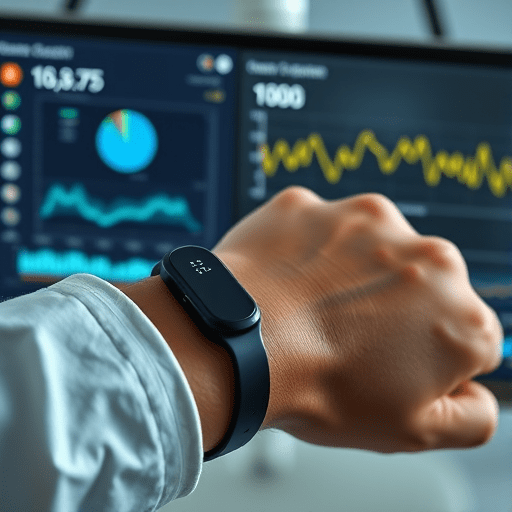
As telehealth expands, cardiac rehabilitation programs increasingly rely on remote monitoring devices to track patients’ heart rate, blood pressure, and physical activity. Clinicians must verify that these data streams are accurate and that all transmissions remain protected under HIPAA. This guide walks through a systematic, step‑by‑step process to validate remote monitoring accuracy for cardiac rehab while upholding data integrity and compliance.
1. Understand the Regulatory Landscape
HIPAA’s Privacy, Security, and Breach Notification Rules set the foundation for protecting electronic protected health information (ePHI). In 2024, the Department of Health & Human Services (HHS) added guidance for “Remote Patient Monitoring (RPM) and Mobile Medical Applications,” emphasizing:
- Encryption at rest and in transit.
- Audit trails for all device data uploads.
- Patient consent and access controls.
- Secure storage of device firmware updates.
Clinicians should first confirm that the chosen RPM platform aligns with these mandates before proceeding to accuracy validation.
2. Define Validation Objectives and Metrics
Set clear goals: are you validating heart‑rate precision, blood‑pressure accuracy, or data‑transmission latency? Typical metrics include:
- Mean Absolute Error (MAE): average difference between device readings and reference standards.
- Root Mean Square Error (RMSE): more sensitive to outliers.
- Intraclass Correlation Coefficient (ICC): assesses agreement between devices.
- Data loss rate: percentage of missed or corrupted packets.
Establish acceptable thresholds for each metric based on clinical relevance and regulatory guidance.
3. Select Reference Standards and Calibration Protocols
Accuracy assessment requires a gold‑standard comparator:
- For heart‑rate: 12‑lead ECG or validated pulse oximetry during rest and exertion.
- For blood‑pressure: automated cuff calibrated against a mercury sphygmomanometer.
- For activity: wearable accelerometers validated against a laboratory motion capture system.
Before testing, calibrate each reference device following manufacturer instructions and maintain calibration logs. Document calibration dates and methods in the validation report.
4. Design a Robust Validation Study
Structure the study to reflect real‑world use while controlling confounding variables. Key elements:
4.1 Participant Recruitment
- Include diverse age, sex, comorbidities, and device usage scenarios.
- Obtain informed consent that explicitly covers device data collection and sharing.
4.2 Test Environment
- Simulate typical patient settings: home, clinic, or during supervised exercise sessions.
- Record ambient noise, Wi‑Fi signal strength, and power source stability.
4.3 Data Collection Protocol
- Baseline measurement with reference device.
- Simultaneous data capture from the remote monitoring device.
- Repeat at multiple time points (e.g., 0, 15, 30, 45 minutes).
- Document any device or network errors.
Use a secure, encrypted data capture platform that logs timestamps and device IDs to support audit trails.
5. Perform Data Analysis and Verify Accuracy
After data collection, compute the metrics defined in Step 2. Visualize the results with Bland‑Altman plots and correlation matrices to spot systematic biases. When values exceed pre‑established thresholds, investigate potential causes:
- Signal interference (e.g., from other wireless devices).
- Poor sensor contact or skin impedance.
- Firmware glitches or outdated software.
Iterate the validation with corrected devices or updated firmware until metrics fall within acceptable ranges.
6. Implement Continuous Monitoring and Quality Assurance
Accuracy validation is not a one‑time event. Set up ongoing checks to detect drift or failures:
- Schedule quarterly calibration of reference devices.
- Deploy automated alerts for anomalous readings (e.g., sudden spikes in error rates).
- Maintain a log of all device updates and their impact on data fidelity.
Incorporate a “Data Integrity Review” into the clinical workflow, where a clinician reviews the most recent week’s data quality metrics before making treatment decisions.
7. Document the Validation Process for Audits
A comprehensive validation dossier supports regulatory audits and demonstrates compliance. Include:
- Study protocol and participant consent forms.
- Calibration records for all reference devices.
- Raw data files and processed metric reports.
- Version history of device firmware and software.
- Incident logs for any data loss or transmission errors.
Store this dossier in a HIPAA‑compliant, encrypted electronic health record (EHR) module with controlled access.
8. Leverage Interoperability Standards
To ensure seamless data exchange, adopt standards such as HL7 FHIR, IEEE 11073, and ISO 10993 for medical device communication. These frameworks:
- Promote consistent data formatting.
- Facilitate audit trail generation.
- Enable integration with clinical decision support tools.
Ensure that the chosen RPM platform implements these standards and can export data for downstream analytics.
9. Educate Clinicians and Patients
Technical validation is only part of the equation. Clinicians must understand how to interpret device data and recognize limitations. Patients should be trained on proper device placement and battery maintenance. Provide brief tutorials, quick reference guides, and a help desk hotline to resolve usability issues promptly.
10. Review and Adapt to Emerging Standards
HIPAA guidance evolves, especially with the rapid deployment of AI‑driven analytics in cardiac care. Stay informed of updates from HHS, the FDA’s Digital Health Innovation Action Plan, and the Centers for Medicare & Medicaid Services (CMS) regarding RPM reimbursement. Adjust validation protocols accordingly to maintain compliance and accuracy.
Conclusion
Validating remote monitoring accuracy for cardiac rehabilitation is a multifaceted endeavor that blends rigorous data science, stringent HIPAA safeguards, and continuous quality improvement. By following the outlined steps—defining metrics, calibrating reference standards, conducting controlled studies, analyzing results, and embedding continuous monitoring—clinicians can deliver reliable, secure patient data that informs timely, evidence‑based care. This systematic approach not only protects patient privacy but also builds trust in remote cardiac rehabilitation as a safe, effective modality for modern cardiovascular care.